Why Brand New Day Demands a Full Rewatch
On July 31, 2026, Tom Holland's Peter Parker returns in Spider-Man: No Way Home's long-awaited follow-up, and the film arrives carrying more baggage than any Spider-Man movie before it. Directed by Destin Daniel Cretton (of Shang-Chi fame) from a script rewritten by Challengers screenwriter Justin Kuritzkes, the sequel picks up four years after the memory-wipe finale of No Way Home, dropping us into a New York where Peter's closest friends and family no longer know he exists. The title itself is a signal flare to comics readers: "One More Day" and "Brand New Day" were the polarizing 2007–2008 arcs where Marvel used narrative magic to strip Peter down to his lonely essentials. Expect grief, reinvention, and a scale that leans smaller than the multiverse spectacle that preceded it.
Which makes now the ideal moment to look back at every live-action Peter Parker film — not as a checklist, not as MCU homework, but as three distinct authorial statements about what a superhero movies movie can be. Sam Raimi's operatic sincerity, Marc Webb's indie-teen melancholy, and Jon Watts's coming-of-age framing each reshaped the genre in their moment. What follows is a ranking guided by one question: how fully does each film commit to its own vision of Peter Parker?
The Three Peters: A Quick Actor-Era Primer
Tobey Maguire's Peter was the 2000s movies template — earnest, put-upon, prone to tears and monologues about responsibility. Raimi treated sincerity as a stylistic choice at a moment when superhero movies were still figuring out whether to apologize for their capes.
Andrew Garfield's Peter, arriving in 2012, was the reboot nobody quite asked for and many later grew to appreciate: a skateboarding wisecracker with skinny jeans and abandonment issues. His two films remain the misunderstood middle chapter, undone less by his performance than by studio panic.
Tom Holland showed up in 2016 as the kid-brother Avenger — the youngest screen Peter, the most integrated into a larger universe, and, by No Way Home's final scene, quietly the most tragic of the three. The path to Holland's version runs through the 2015 rights-sharing deal between Sony and Marvel Studios, an arrangement that made him a guest at someone else's franchise before he ever became the lead of his own.
The Ranking: All Eight Peter Parker Solo Films
8. The Amazing Spider-Man 2
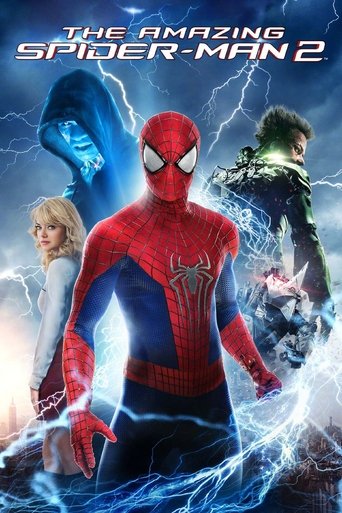
The film that broke Sony's plans. Trying to launch a shared universe in a single sitting, it stacks Electro, the Rhino, and a rushed Green Goblin on top of the Sinister Six seeds and Aunt May's nursing career, then wonders why nothing lands. What survives — and what makes this rewatchable even now — is Andrew Garfield and Emma Stone. Their Peter-and-Gwen chemistry is the truest romantic pairing the franchise has ever produced, and the film's climactic clock-tower sequence still hits like a punch. Everything around them is franchise scaffolding collapsing in real time. Its failure is what pushed Sony to the table with Marvel.
7. Spider-Man 3
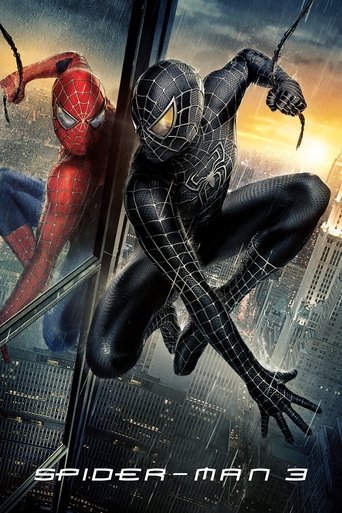
The Raimi trilogy's most notorious entry has been quietly reevaluated in recent years, and rightly so. Yes, the studio-imposed Venom subplot sits awkwardly against Raimi's operatic instincts. Yes, the pacing sags. But the much-mocked "emo Peter" strut down the sidewalk is not a mistake — it's a filmmaker with a horror-and-camp background committing fully to the ridiculousness of a corrupted nice guy. Thomas Haden Church's Sandman gives the film its melancholy soul; the birth-of-Sandman sequence is one of the most beautiful visual-effects passages of the 2000s movies. It remains the trilogy's weakest, but it is more interesting than its reputation.
6. The Amazing Spider-Man
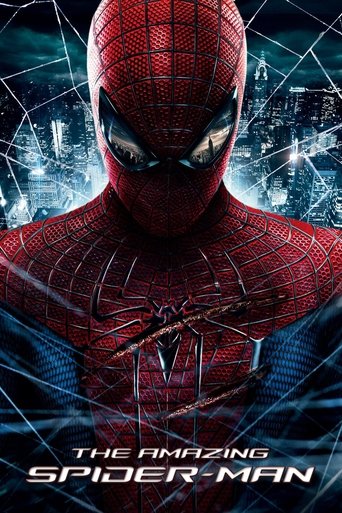
Marc Webb, fresh off (500) Days of Summer, tried to reframe Peter as a Linklater-esque loner drifting through a hazy New York — all skateboards, low-lit bedrooms, and pauses between lines. Rhys Ifans's Lizard is underrated as a tragic mirror to Peter's own father-hunger, and the Gwen Stacy scenes have a tender specificity the Raimi films didn't reach for. What sinks it is timing. Audiences had watched Uncle Ben die and the radioactive spider bite just five years earlier; running the origin again drained the film's oxygen before the second act even began.
5. Spider-Man: Far From Home
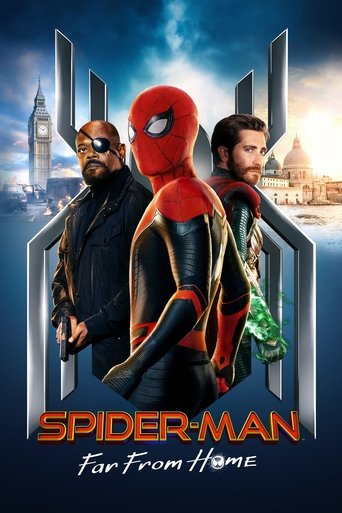
Effectively an extended second-act origin, this one puts Peter through grief for Tony Stark while trying to romance MJ on a European school trip. The European backdrop gives it a lightness the top-tier entries lack — it's the one Spider-Man movie you could reasonably call breezy. Jake Gyllenhaal's Mysterio is the franchise's slyest meta-commentary on illusion and image, a special-effects artist turned cape who uses drones and hologram spectacle to sell himself as a hero. In a genre built on VFX, that's a villain who knows exactly what he's satirizing.
4. Spider-Man: Homecoming
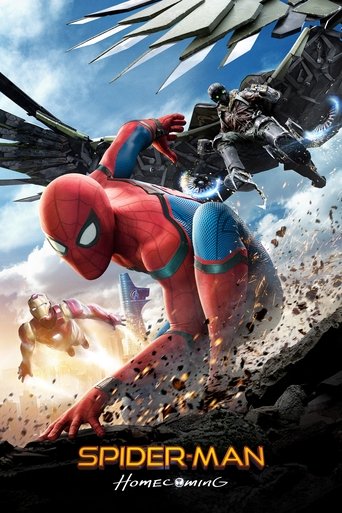
The reset that had to work, and did. After Amazing Spider-Man 2 left audiences exhausted, Jon Watts pared everything back to a John Hughes scale: a sixteen-year-old kid, a Queens neighborhood, a girl he likes, a dad's disapproval. Michael Keaton's Vulture is a working-class villain with an actual grievance — a contractor screwed by Stark Industries who arms up out of resentment. The car scene, when Peter realizes who he's sitting next to on the way to homecoming, remains one of the 2010s movies' great superhero-movie beats. Pure sustained dread, no punches thrown.
3. Spider-Man: No Way Home
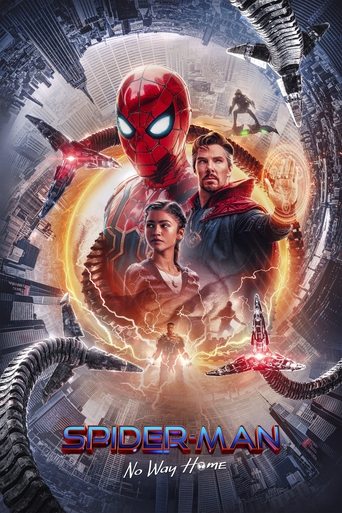
The multiverse gimmick works because it's not a gimmick. Yes, the Maguire and Garfield cameos are the reason it printed money, but what makes them play is that the film uses them to complete emotional threads left dangling for a decade. Garfield's Peter catches an MJ falling from a height, and fifteen years of accumulated audience feeling collapses into a single beat. Maguire, older and quieter, becomes the wise uncle he never had. And the film ends on the darkest choice any screen Peter has ever made — one that dissolves his identity from the memory of everyone who loved him. That's the door Brand New Day is opening.
Can't Decide What to Watch?
Let RandomFlix pick a movie for you. One click, one great movie.
Roll the Dice2. Spider-Man
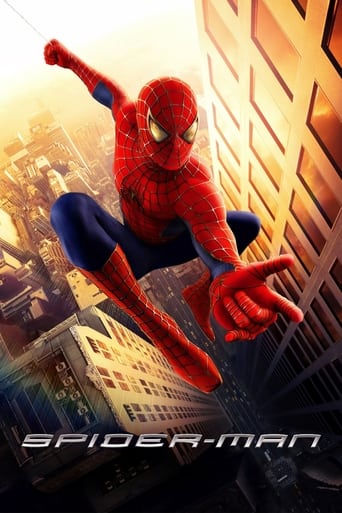
The 2002 original is a foundational text. Before Iron Man, before the MCU, this was the film that proved a superhero could carry a sincere, straight-faced blockbuster without smirking about it. Willem Dafoe's Green Goblin — mostly performed maskless in one of the great villain reveals — belongs on any short list of screen antagonists, superhero or otherwise. The Thanksgiving dinner scene where he silently pieces together Peter's identity is a masterclass in what a good actor can do with a fork and a stare. And the upside-down kiss remains pure movie iconography, the kind of image that outlives whichever franchise it belongs to.
1. Spider-Man 2
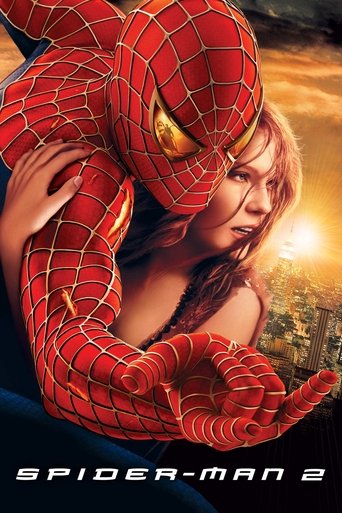
Still the ceiling. Raimi's 2004 sequel is a movie about the cost of being good — Peter losing his job, failing his classes, alienating MJ, and briefly quitting the mask because being a hero is ruining his life. Alfred Molina's Doc Ock is played with tragic gravity, a scientist mourning his wife and controlled by mechanical appendages that whisper in his ear. The elevated-train sequence, where an unmasked Peter stops a runaway subway car with his own body and is gently carried back to his feet by ordinary New Yorkers, is peak Raimi craft: horror-tinged, unashamedly religious in its imagery, and emotionally huge. Its DNA runs through Homecoming's stakes, No Way Home's sacrifice, and — from what we've seen of Brand New Day — the small-scale character work Cretton seems to be chasing.
What This Ranking Tells Us About Brand New Day
A pattern emerges: the best Spider-Man films commit fully to a specific director's sensibility. Raimi's horror-melodrama instincts. Watts's Amblin-era teen framing. Even Webb's flawed indie-romance impulses produced better scenes than any committee ever could. Which makes Cretton the most interesting variable in a while. His Short Term 12 was a small, devastating drama about traumatized kids; his Shang-Chi found genuine feeling inside a formula. If he brings that first mode to a Peter Parker who's lost every person he loved to a magic spell, we could be looking at the most emotionally exposed Spider-Man movie since 2004.
Holland's Peter, at this stage, sits closer to Maguire's isolation than to Garfield's swagger. He's alone in a way this character hasn't been on film before — no Aunt May, no Ned, no MJ who remembers him. Sadie Sink's casting and Kuritzkes' page-one rewrite suggest a smaller-scale, character-driven pivot, and everything the film seems to be doing — down to borrowing the title of the comics era that followed Peter's marriage being erased — points toward a story about identity rather than spectacle.
Three actors have played Peter Parker across two decades, and the ranking makes clear that Spider-Man is less a single character than a shape-shifting fable that keeps recasting itself to match the anxieties of its moment. In 2002 that meant post-9/11 sincerity. In 2012 it meant post-recession alienation. In 2017 it meant belonging to something larger. In 2026, if the tea leaves are right, it will mean starting over with nothing.
For further rabbit holes, dig into other comic-book-adaptations movies or wander the wider action movies shelf. Then queue up Spider-Man 2. It hasn't been topped yet.