The Closing-Day Deadlock
With less than 48 hours left on the Croisette, Park Chan-wook's jury has a problem most festivals would envy and most juries privately dread: a Best Actress shortlist that refuses to narrow. The critics' grids are split. The bookmakers are split. Even the actresses are split — against themselves. Léa Seydoux arrived with two competition titles (Gentle Monster and The Unknown); Virginie Efira arrived with two of her own (All of a Sudden and Parallel Tales). Four performances, two frontrunners, and a vote that won't sit still.
Neil Young's odds — Seydoux 4/1 for The Unknown, Efira and co-lead Tao Okamoto perched in the top tier for All of a Sudden — confirm what the screening-room buzz already implied: the field has genuinely bifurcated rather than consolidated around a single coronation. That alone makes 2026 unusual. What makes it interesting is what each pair of performances argues for. This is not really a horse race between two stars. It is a referendum on two opposing models of screen acting, and whichever woman walks away with the prize will tell us something about the kind of drama movies the festival is currently willing to canonize.
The Case for Seydoux: Two Performances, One Argument
Gentle Monster
Marie Kreutzer's film landed with the kind of six-minute standing ovation that festival publicists pray for and jurors quietly notice. Seydoux plays a woman whose composure cracks in slow geological increments — a register the actress has been refining for a decade, but rarely with this much patience around her. Kreutzer gives her long, unhurried takes and a script that withholds catharsis until the final reel. The result is a performance built on subtraction: a flinch held a beat too long, a smile that lands a half-second late.
There's also a narrative hook the jury rarely ignores. As The Hollywood Reporter noted in its premiere coverage, Seydoux shared the 2013 Palme d'Or for Blue Is the Warmest Color but has never been individually honored at Cannes — a piece of festival accounting that tends to attract corrective gestures from juries with long memories.
The Unknown
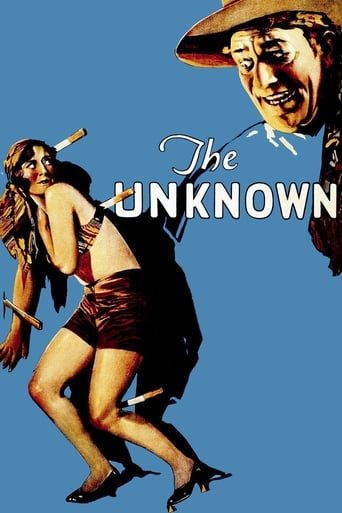
If Gentle Monster is the slow-burn argument, The Unknown is the highlight reel. Seydoux herself has called it the best part she's ever played, and the critics who saw it second tend to agree it's the stronger of her two bids. The role moves through registers — comic, erotic, grief-stricken, finally something close to feral — without ever losing the thread of a single recognizable woman. It's the kind of performance that makes a career retrospective rewrite itself in real time.
Double-billing in competition is always a gamble: it can split votes, dilute attention, or invite the lazy comparison that one performance is "the lesser" of the pair. But it can also do what it's doing here — double the impression of range. A juror watching both films back-to-back is, in effect, being handed an unfair advantage: a built-in case for versatility, prepackaged.
The Case for Efira: Hamaguchi's Anti-Performance
All of a Sudden
Ryusuke Hamaguchi's three-hour-and-sixteen-minute two-hander pairs Efira, as an elder-care director, with Tao Okamoto across a Parisian first half that Écran Large compared (not unfairly) to Before Sunset. The film's structural gambit — a long European prologue that resolves into something quieter and stranger in its second movement — depends entirely on the credibility of two faces talking to each other. Hamaguchi's reputation is built on extracting precisely this: actors who appear to have forgotten the camera is on.
In her interview with Numéro, Efira described Hamaguchi's method as an "anti-performance" direction — a deliberate stripping away of actorly intention, the conscious effort to do less rather than more. That aesthetic has been catnip to European juries since Drive My Car won here in 2021. Efira doesn't disappear inside the role so much as let the role pass through her, unforced. The Parisian café scenes in particular have the texture of overheard rather than acted dialogue.
Parallel Tales
If All of a Sudden is the manifesto, Parallel Tales is the proof of concept in reverse. It's a showier register — more architecture, more visible craft — which matters precisely because it demonstrates that the restraint of the Hamaguchi performance was a choice, not a ceiling. The two films together rebut the old criticism that quiet acting is just acting that hasn't been asked to do anything difficult.
This is the year Efira's stock as a continental lead becomes impossible to ignore. The arc from Sibyl through Benedetta to a 2026 in which she carries two competition titles tracks a steady climb to the position of Europe's most-requested actress, and the betting markets reflect what the programmers have been signaling for three years.
Two Models of Screen Acting on Trial
Here's the deeper question the jury is actually deciding. Seydoux's tradition is the actor as sculptor — visible transformation, audible decisions, a performance you can describe in verbs. Efira's Hamaguchi mode is the actor as window — transparency, withdrawal, a performance you can only describe by describing what surrounds it. Both are difficult. Both are valuable. They are not the same thing, and Cannes Best Actress citations historically swing between the two poles.
There's precedent on both sides. Juries have repeatedly rewarded the "invisible" performance when the surrounding film made the case for it — useful for Efira backers, especially with Hamaguchi's auteur capital intact. But juries chaired by stylists — and Park Chan-wook, whose own filmography includes the heightened performance languages of Oldboy and The Handmaiden, is a stylist — have a documented preference for authored, visible work. That favors Seydoux in Kreutzer's hands.
The dark-horse tier is real but thin. A handful of names from the 2020s movies festival circuit could spoil a split vote in a tight final session, and Okamoto's co-lead in All of a Sudden remains the wildcard a shared-prize scenario could elevate. None of them, on current evidence, has the cumulative weight of either frontrunner.
How the Vote Could Actually Break
Three scenarios are doing most of the work in the late-festival conversation.
Scenario 1: Seydoux consolidates. The jury treats her two-film slate as career recognition, formally citing The Unknown but implicitly honoring the Gentle Monster performance alongside it. This is the path Awards Radar currently projects, with Seydoux as winner and Efira as the top alternate.
Scenario 2: Efira wins solo for All of a Sudden, with Hamaguchi taking a directing or screenplay prize as part of the package — the kind of "complete film" outcome that lets the jury reward an entire authorial gesture without splitting hairs. This is the cleanest narrative the festival could write.
Scenario 3: The jury sidesteps the deadlock. Cannes has, when two leads dominated a single film, occasionally issued shared or ex-aequo prizes. With Okamoto in the All of a Sudden equation, that door is genuinely open, and it would let the jury duck the Seydoux–Efira binary altogether.
The last 24 hours of screenings rarely flip these calculations completely, but they tilt them. A late, well-received title can pull a swing voter; a tepid press conference can lose one. The vote is still in motion.
What to Watch Before the Ceremony
If you want to arrive at the announcement with the right frame of reference, the most useful homework isn't this year's titles — it's the films that built each actress's current vocabulary. For Seydoux, that means France (the controlled-collapse performance that anticipated Gentle Monster) and One Fine Morning (the warmer, more porous register The Unknown draws on). For Efira, the essential text is Other People's Children, where her quieter mode first announced itself as a serious counter-tradition to her earlier showcase work.
RandomFlix's "Roll the Dice" is a low-effort way to wander back through an actress's filmography when you don't feel like committing to a single title in advance — useful for the kind of comparative re-watching this race actually rewards. For ongoing festival coverage and the wider 2026 competition context, the cannes-film-festival movies hub and the foreign-language movies page track what's screening alongside these four films.
The Verdict, With a Caveat
The prize, on balance, most likely goes to Seydoux for The Unknown. The narrative is too clean — never individually honored, two competition titles in a single year, a jury president inclined toward authored performance — and the late-festival projections have hardened around it.
But the more interesting performance, and the one likely to age better, is Efira in All of a Sudden. Hamaguchi's films have a way of looking, a decade out, like the inflection points everyone else was slow to recognize, and Efira inside that idiom is doing something quietly radical with European screen acting. "Splitting the field" is itself the story here: a year in which two actresses each delivered two competition-worthy turns is rare enough to mark a generational shift, regardless of which name the envelope contains.
Whatever Park's jury writes on Saturday night will read as a verdict on more than four performances. It will signal whether the festival's appetite, in 2026, runs toward authored star presence or toward the kind of directorial submersion that erases the line between actor and role. Both answers are defensible. Only one of them gets the trophy.