The Group Chat Just Got Louder: Why
This Ranking Matters in May 2026
On May 22, 2026, Peacock did something no streamer has managed before: it gathered most of Quentin Tarantino's filmography under one roof and dropped it on a Friday like a cinder block through a coffee table. Seven films arrived that morning — Reservoir Dogs, Jackie Brown, Death Proof, Inglourious Basterds, Django Unchained, The Hateful Eight, and the long-promised crown jewel: the streaming exclusive premiere of Kill Bill: The Whole Bloody Affair, the four-hour-and-forty-one-minute uninterrupted cut that fuses Vol. 1 and Vol. 2 with bonus sequences and an animated extension of the House of Blue Leaves brawl. Until now, that cut existed mostly as a $7.5M theatrical curio for festival completists. As of this month, it's a click away.
There's one notable absence — Once Upon a Time... in Hollywood — but nine of ten films are now consolidated on a single service, which is unprecedented for a director this argued-about. And the timing is loaded. Tarantino has been telling anyone who'll listen for two decades that he'll retire after his tenth film, and after he abandoned The Movie Critic in 2024, the slate we have may genuinely be the slate forever. This isn't a hypothetical canon anymore. It's the canon.
A methodological note before the knives come out: critics still split on how to count Kill Bill: The Whole Bloody Affair. Den of Geek treats it as one entry, in line with Tarantino's own count. Collider splits the volumes. We're going with the director — ten films total — and using The Whole Bloody Affair as the version of record, because it's the version Tarantino always wanted you to see, and as of May 22, it's the version you can actually watch.
How We Ranked Them
Three criteria, ruthlessly applied: rewatchability (will you put this on a Tuesday for no reason?), formal ambition (does it try something the others don't?), and the indelibility of individual scenes — the Tarantino currency, the moments that get quoted in dorms and bars for thirty years. We pressure-tested our picks against the Rotten Tomatoes Tomatometer, Gold Derby's awards-weighted view, and Parade's freshly updated April 2026 ranking. Where Tarantino himself has weighed in — he's called Death Proof his weakest "left-handed" movie — we let the man cook.
If lists stress you out, his filmography lives squarely in crime movies territory and a quick spin via Roll the Dice will get you somewhere weird and worthwhile. Otherwise, on with it.
Can't Decide What to Watch?
Let RandomFlix pick a movie for you. One click, one great movie.
Roll the DiceThe Ranking: All 10 Tarantino Films, Worst to Best
10. Death Proof
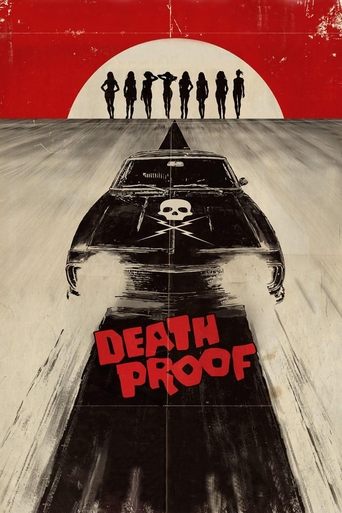
The grindhouse movies experiment Tarantino himself has all but disowned. Death Proof was the back half of the Grindhouse double feature with Robert Rodriguez, and Tarantino has been direct about it being his weakest effort — the "left-handed movie" framing is his, not ours. What works: Kurt Russell's Stuntman Mike is a genuinely menacing villain with a cowardly streak that flips the heel turn beautifully, the Texas chili parlor monologue is a small dialogue gem, and the climactic chase — shot practical, no CGI — remains one of the best vehicular setpieces of the century. What doesn't: the first forty minutes weaponize Tarantino dialogue against itself, drifting into self-parody. A stylistic exercise more than a statement, but a Tarantino floor is still most directors' ceiling.
9. The Hateful Eight
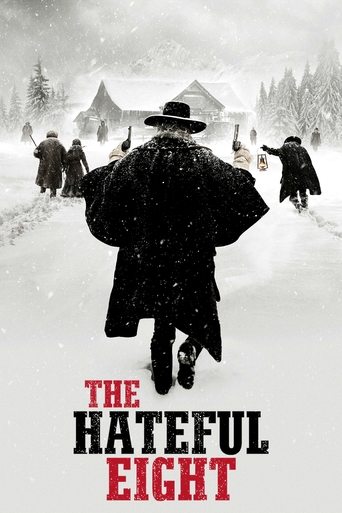
Tarantino's 70mm Ultra Panavision western disguises a chamber play about American distrust as a snowed-in whodunit. The film won Ennio Morricone his first competitive Oscar for Best Original Score — the only Tarantino film to ever win in the category, which is wild given the man's needle-drop reputation. The Roadshow vs. theatrical cut debate around The Hateful Eight is, in retrospect, a dress rehearsal for the Whole Bloody Affair conversation: Tarantino believes in length as a moral position. Polarizing because the third act tips into a nihilism that even by Tarantino standards leaves a bruise, but Walton Goggins and Jennifer Jason Leigh are delivering career-best work and Bob Richardson's snowscape photography is hypnotic.
8. Jackie Brown
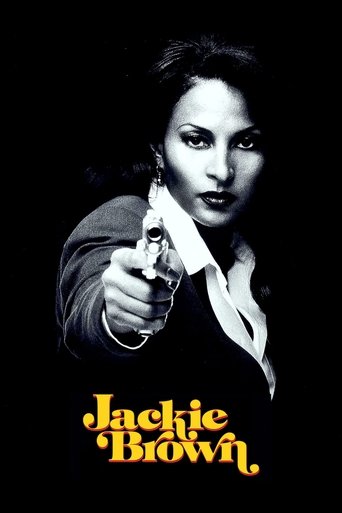
The Elmore Leonard adaptation, the Pam Grier showcase, and — full stop — the most emotionally mature film in the filmography. Jackie Brown tends to climb in retrospective rankings; Parade's most recent update has it considerably higher than legacy lists. It's a 1990s movies object lesson in restraint: the Delfonics needle drop, the mall money exchange shot from three escalating perspectives, Robert Forster's hangdog longing across from Grier's calm appraisal. A crime movies film that is secretly about aging, regret, and the small dignity of getting one over on the world before it gets one over on you. The performance Tarantino has yet to top as a director of actors.
7. Reservoir Dogs
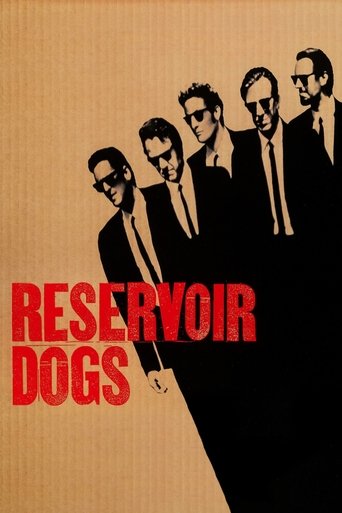
The $1.2M Sundance debut that announced a generation. Watching Reservoir Dogs in 2026 is like reading the Federalist Papers of indie cinema — every move it pulls is now law. Mr. Blonde, the ear, the chairs, "Stuck in the Middle With You," Harvey Keitel's weary professionalism, Steve Buscemi explaining tipping. Every crime film of the next decade is downstream of this single warehouse. It only loses ground because everything Tarantino made afterward got bigger, denser, and more formally daring. As a debut it's untouchable. As a ninety-minute one-room siege, it still hums.
6. Once Upon a Time... in Hollywood
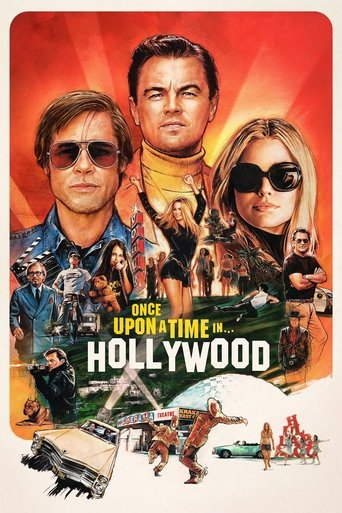
A note for the Peacock-only crowd: this is the holdout. Sony rights complications keep it off the main dump, so you'll have to hunt it elsewhere. Worth the hunt. Leonardo DiCaprio and Brad Pitt's hangout chemistry is the most relaxed thing Tarantino has ever put on screen, and the Manson Family reckoning at the climax is his most emotionally complicated revisionist gesture — tender and brutal in the same breath. Pitt won Best Supporting Actor; Tarantino picked up his third Best Original Screenplay nomination. It's a love letter to a 1960s movies Hollywood that never quite existed, which is precisely the point — Tarantino is grieving an idea, not a place.
5. Django Unchained
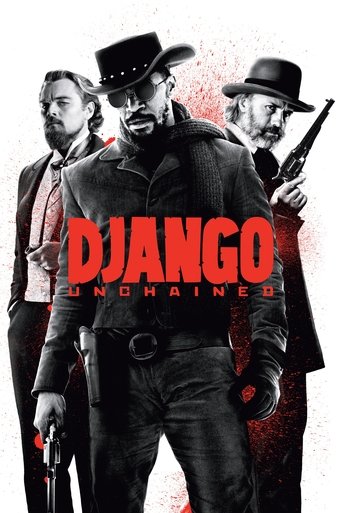
The Best Original Screenplay Oscar winner and Tarantino's biggest box office hit. Django is the film where his revenge-fantasy mode finds its most morally legible target — a former slave hunting the men who own his wife, in an America the movie refuses to flatter. Christoph Waltz collected his second Tarantino Oscar as Dr. King Schultz, and DiCaprio's Calvin Candie monologue — delivered after he sliced his hand on a real shattered glass and kept going, blood and all — is one of the great improvised passages in modern American film. The Candyland dinner sequence is a masterclass in tension and release, with Samuel L. Jackson quietly walking off with the entire movie.
4. Kill Bill: The Whole Bloody Affair
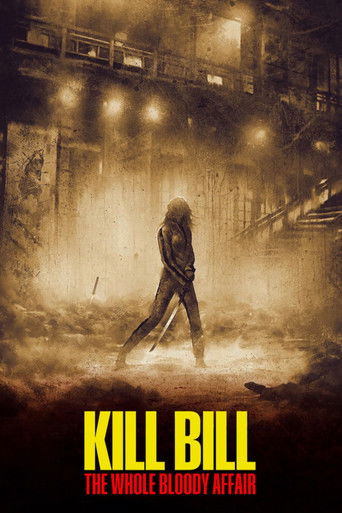
Now, finally, the definitive way to watch it: four hours and forty-one minutes uninterrupted, with bonus sequences and an animated extension of the House of Blue Leaves fight that the original split releases couldn't accommodate. The combined volumes pulled in over $330M worldwide on $30M budgets each, while The Whole Bloody Affair spent years as a $7.5M theatrical rarity for festivals and one-off engagements. The Peacock premiere ends that scarcity. Why does it work better as one film? The structural rhyme between the O-Ren Ishii chapter and the Bride's eventual confrontation with Bill — kung fu mythos in conversation with spaghetti western melodrama — only fully lands at full length, with no four-month gap to dilute the symmetry. This is genuinely the streaming event of the month.
3. Inglourious Basterds
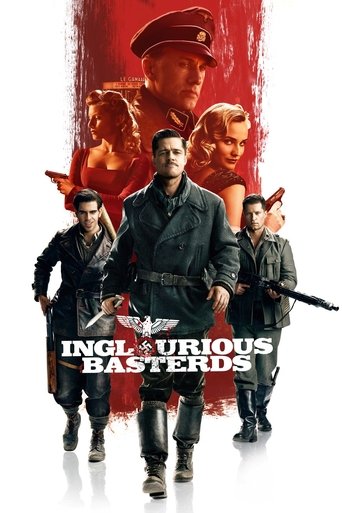
Christoph Waltz's Hans Landa is, and we will accept comments below, the greatest villain performance of the 21st century. The opening farmhouse scene is a twenty-minute suspense seminar that should be required viewing in every screenwriting program on earth. The strudel scene. The basement bar standoff. The burning-movie-theater finale. Three of the best individual setpieces Tarantino has ever filmed — and arguably the three best of any war movies movie this century, which is the trick: Inglourious Basterds is secretly a film about cinema's moral capacity to rewrite history, dressed in the clothes of a men-on-a-mission picture. Mélanie Laurent's Shosanna is the soul of the thing.
2. Pulp Fiction
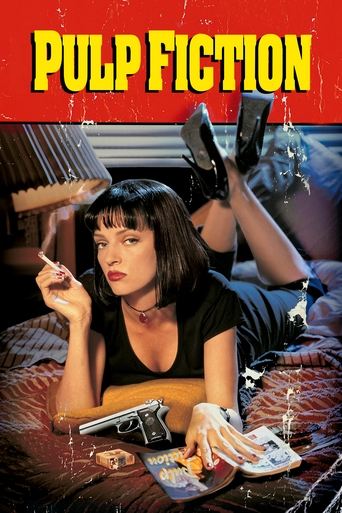
The Palme d'Or winner. Best Original Screenplay Oscar. The WGA named Pulp Fiction's screenplay the 16th greatest in movie history. It resurrected John Travolta, made Samuel L. Jackson a deity, and rewrote the economics of independent film overnight — Miramax's playbook for the next decade is just Pulp Fiction's footnotes. Watching it now, the thing that shocks isn't the violence or the nonlinear structure (we've all caught up); it's how funny it is, how relaxed in its confidence. Vincent and Mia at Jack Rabbit Slim's. Jules quoting scripture he barely understands. The Wolf solving the morning. The reason it lands at #2 and not #1 is narrow: it's the most influential film here, but the next one is the most complete.
1. Inglourious Basterds
Here's the fight, drawn cleanly. Pulp Fiction changed cinema. Inglourious Basterds perfected what Pulp Fiction started.
It has tighter structure — five chapters that interlock like a watch, each ending on a hard cut that resets stakes without losing thread. It has deeper thematic reach: this is a movie about whether art can answer atrocity, and it has the audacity to answer yes by lighting Hitler on fire in a Parisian cinema. It has a villain for the ages in Hans Landa, whose every scene is a cat playing with food it already knows it will eat. And it has a finale that — improbably, magnificently — makes the case that movies can rewrite history, and means it.
The Pulp Fiction counter-argument is real and we respect it: cultural impact, sheer rewatch density, the way the dialogue has colonized the language of three generations of filmgoers. If you want to put Pulp Fiction at the top, we won't fight you in the parking lot. We'll just disagree, loudly, in the group chat, which is what these movies are for.
This is the fight. Have it.
What's Missing, What's Next, and Where We Go From Here
The Peacock dump is missing one piece — Once Upon a Time... in Hollywood, parked elsewhere due to Sony's rights situation. It's available, just not here. The Movie Critic, Tarantino's planned tenth film, was abandoned in 2024, which means the slate above may be the entire conversation, forever. No more chances to revise. No new entries to argue about. Ten films, locked.
For newcomers wading into the Peacock dump, the cleanest entry point is to start at the beginning — Reservoir Dogs — and let the filmography breathe in roughly chronological order, leaving the deep cuts for later weekends. The pleasure of having most of Tarantino on one service isn't binge logistics anyway. It's that you can drop into any of these on a whim, lose two hours, and come out arguing.
Nine of ten films, one platform, one weekend the group chat won't shut up about. The Tarantino canon has never been more accessible — or more arguable. Pour a drink, pick a fight, and rank it yourself. Browse more crime movies essentials when you're ready for the next argument.