Disclosure Day and the Return of the Spielbergian Sky
Emily Blunt and Colman Domingo have spent the last week telling anyone with a microphone that Steven Spielberg's Disclosure Day is, at heart, a return — a conscious reach back to the texture of the film that made him Spielberg in the first place. Blunt has described the project as Spielberg circling back to the wonder and conspiracy-thriller textures of Close Encounters of the Third Kind, and Domingo has spoken of it in almost reverent terms, as a director returning to the question that has haunted his entire career: what would it actually feel like if they came?
That news cycle is the perfect provocation for a question the genre has been quietly begging us to ask for fifty years now. After half a century of UFO movies — from the mothership over Devil's Tower to the Empire State Building vaporized on the Fourth of July to a heptapod's ink-cloud sentence hanging in the air — what actually separates a great first-contact film from a forgettable one?
My argument is that nearly every great UFO movie commits, fully and unembarrassedly, to one of three irreconcilable visions of contact. Call them communion, conquest, and comprehension. Spielberg invented the first. Roland Emmerich industrialized the second. Denis Villeneuve crystallized the third. Each lineage has its own grammar, its own ethics, and its own theory of what aliens are for. science-fiction movies has been quietly fracturing along these lines since the late 1970s, and audiences instinctively know the difference even when critics rarely name it.
The Close Encounters Lineage: Contact as Communion
Everything begins on a runway in the Mojave, with five musical notes and a wordless face looking up.
Close Encounters of the Third Kind is the foundational text of the wonder mode, and Spielberg has always been candid about its design. He wanted an ordinary man — a power lineman, a father in a station wagon — whose life is upended by a sighting he cannot explain to anyone around him. The title itself is a borrowing from ufologist J. Allen Hynek's taxonomy of UFO encounters, a piece of pseudo-bureaucratic jargon Spielberg recognized as cinematic gold. The film treats the encounter not as an attack but as an invitation.
The grammar of this lineage is now so familiar we forget it had to be invented:
- Musical communication instead of military exchange.
- Childlike awe as the protagonist's primary affect.
- Government cover-up as obstacle, not as villain — the men in suits are bureaucratic, not malevolent.
- The alien as a force of grace rather than threat, often refusing to even appear until the final movement.
Once you see the template, you see it everywhere. E.T. the Extra-Terrestrial is the suburban-domestic variant, the same impulse miniaturized to a Reese's Pieces trail and a flying bicycle. The Abyss is the underwater translation, with Cameron swapping Devil's Tower for the abyssal plain but keeping the same secular religious structure: ordinary people, an inexplicable intelligence, a final encounter that reorganizes the soul.
What makes these films work is restraint. The 1970s movies and 1980s mastered the slow reveal in a way modern blockbusters rarely attempt; the wonder in Close Encounters is engineered as patiently as a cathedral. The Douglas Trumbull effects, John Williams' five-note motif, Vilmos Zsigmond's diffuse and almost liturgical light — these aren't atmospheric choices, they're the entire argument of the film. Wonder, in this lineage, is a technical achievement, not a tonal accident.
That's the lineage Spielberg appears to be returning to with Disclosure Day, and that's why the news matters: nobody else still believes in this mode with his particular discipline.
The Independence Day Lineage: Contact as Conquest
Then, in the summer of 1996, Roland Emmerich set the White House on fire and changed the genre permanently.
Independence Day is the founding text of the spectacle-invasion mode, and its DNA is everywhere now. Todd McCarthy's original Variety review famously called it "the biggest B-movie ever made," a description that was meant as praise and remains the most accurate single sentence ever written about the film. Emmerich's innovation was to fuse 1950s alien-invasion paranoia with 1970s disaster cinema and arrive at what we might call the "put more on screen" template — the blockbuster as escalating destruction-set-piece machine.
The moral logic of this lineage is unambiguous. Aliens exist to be defeated. Cities exist to be leveled. The third act demands a speech and a dogfight. That destruction template — the idea that a movie's climax must involve a recognizable skyline coming apart — now haunts every superhero movies blockbuster ever made. Every collapsing Manhattan in the Marvel canon owes a royalty to that mothership over Los Angeles.
The descendants form a clear bloodline:
War of the Worlds
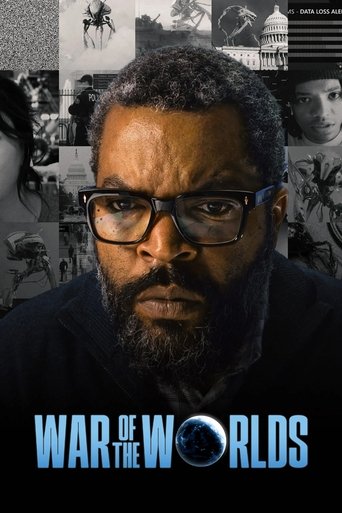
Spielberg himself unexpectedly visited the conquest lineage in 2005, smuggling in 9/11 imagery and a vision of contact that is purely predatory. It's the most interesting outlier in his filmography precisely because he so rarely works in this register.
Edge of Tomorrow
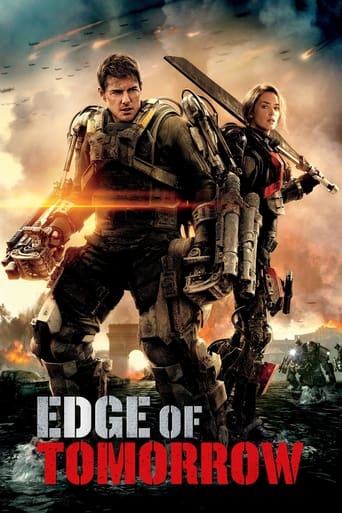
The conquest film as time-loop puzzle, retaining the invasion's stakes while reorganizing its narrative engine.
Battleship and Skyline
The pure form of the alien-invasion movies picture as commercial product — neither apologetic nor ambitious, just committed.
Critics who reflexively dismiss this mode tend to miss what it's actually offering. The conquest film is unembarrassed about being a popcorn picture; that lack of embarrassment is itself a kind of artistic position. The lineage's honest pleasures — the disaster-movie ensemble, the countdown clock, the speech — are not accidents but inheritances.
There is, of course, a tension to flag. The 1996 film leaned heavily into a specifically American nationalist subtext, and international audiences have always read that subtext more skeptically than domestic ones did. The conquest lineage is the most ideologically loaded of the three, and the best of its descendants know it.
The Arrival Lineage: Contact as Comprehension
The third lineage is the youngest, and the most philosophically ambitious.
Arrival arrived in 2016 and immediately made every other recent first-contact film look slightly embarrassed. Villeneuve's heptapods refuse the universal-translator shortcut of Star Trek and Star Wars — that lazy science-fiction convention where an alien just speaks English by paragraph two — and force the film to be, structurally, about the labor of understanding. The aliens are not a problem to be shot or hugged. They are a problem to be parsed.
The grammar of this lineage is distinct from the other two:
- Linguists, mathematicians, and scientists as protagonists, not pilots or fathers.
- Non-human cognition as the actual subject, not as a coat of paint over an action plot.
- Ambiguity preserved through the final frame, often through a structural device — a memory, a sentence, a recursion — that refuses easy resolution.
The antecedents and cousins clarify the shape. Tarkovsky's Solaris is the patron saint, an entire film about the impossibility of meeting a genuinely alien mind without it becoming a mirror of our own grief. Contact is the proto-Arrival, Zemeckis adapting Sagan into a film that takes the question of evidence and faith seriously enough to refuse a tidy answer. Under the Skin is the inverted version: a film in which we are the incomprehensible ones, observed from the outside with the same anthropological strangeness Villeneuve directs at his squid.
This is the lineage in which science-fiction movies becomes genuinely literary. The alien is treated as an epistemological problem — a question about the limits of human knowledge — rather than as a plot device. That's why these films age better than their invasion-mode contemporaries: a great destruction sequence is a craft achievement, but a great question is permanent.
A quick craft note: the Sapir-Whorf hypothesis (the idea that the language you speak shapes the thoughts you can think) isn't window dressing in Arrival. It's the actual engine of the film's structure, the reason the chronology folds the way it does. Villeneuve and screenwriter Eric Heisserer built a film whose form is its thesis, which is the kind of move you only get to make if you've fully committed to comprehension as your subject.
Where the Lineages Bleed: Hybrids and Heretics
The taxonomy is real, but it isn't airtight, and the best test of any theory is the films that resist it.
District 9 blends invasion spectacle with apartheid allegory, using the conquest lineage's iconography (motherships, military cordons, body horror) in the service of a political argument the conquest mode would normally refuse. Nope weaponizes the UFO as a parable about spectacle itself — an entire film about the ethics of looking at a sky-creature, which is closer to a Villeneuve epistemology than to an Emmerich attack. Signs hides a quiet wonder film inside an invasion movie's body; the aliens are nominally hostile but the actual subject is grief and grace.
The hybrids that work tend to share one trait: they pick a primary lineage and let the other two haunt the edges. District 9 is a conquest film with a comprehension film breathing through it. Nope is a comprehension film wearing conquest-film clothing. Signs is a communion film disguised as conquest. Failure, by contrast, happens when filmmakers can't decide whether the aliens are awe, threat, or mystery — when the script keeps swerving because the writers don't have a theory of what aliens are for.
The 2010s movies is the decade when the three lineages most visibly diverged. Arrival, Independence Day: Resurgence, and Super 8 all arrived within a handful of years and found wildly different audiences. The audiences sorted themselves not by demographic but by lineage loyalty — by which sky they wanted.
Which raises the question worth asking yourself before the credits roll on the next first-contact film you see: which lineage do you reach for, and what does that say about what you want from the sky?
What Makes Any of Them Great
The thesis, then, in its bluntest form: a great UFO movie commits — to communion, conquest, or comprehension — and earns its commitment through craft. Sound design that makes you believe the ship is real. Reveal pacing that respects how long a human face can hold a feeling. The actor's face in the moment of seeing, which is the single most important shot in any film in this genre and the one most often botched.
The worst UFO movies are the ones that hedge. They treat aliens as interchangeable McGuffins — vaguely menacing, vaguely awesome, vaguely mysterious — rather than as a thesis about humanity. Hedging reads as cowardice on screen, and audiences feel it before they can articulate it.
This is why Spielberg's return is genuinely interesting. He is the genre's most disciplined commitment-maker; he has never once made a first-contact film that didn't know exactly what its aliens were for. Disclosure Day is a chance to re-examine which lineage you've been loyal to all along — and, if you want to wander the three without picking a side first, RandomFlix's dice can drop you into any of them. The real point, though, is to watch with the taxonomy in mind. Once you can name the three modes, you can never unsee them.
A Disclosure Day Triple Feature
If the news peg has you in the mood, the cleanest way to feel the three lineages in your bones is to spend an evening with one film from each. Not as homework. Just to hear how different the silences are.
Close Encounters of the Third Kind
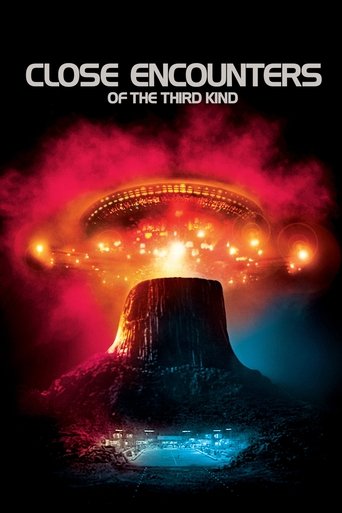
The communion text in its purest form. Watch for how long Spielberg makes you wait — the runway sequence is paced like a religious ritual — and how the waiting itself becomes the meaning. The mothership doesn't arrive despite the patience; it arrives because of it.
Independence Day
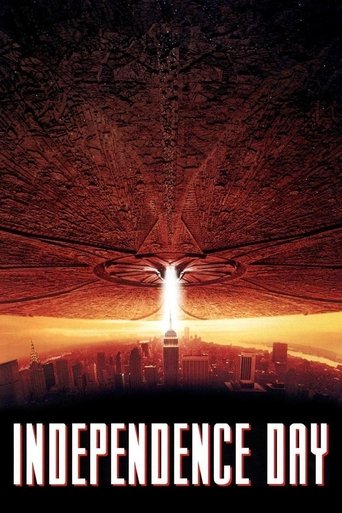
The conquest text at full volume. Watch for the disaster-movie bones under the sci-fi skin — the ensemble cast, the cross-cutting between locations, the countdown — and notice how Bill Pullman's speech still works despite every reason it shouldn't. Commitment beats cleverness every time in this lineage.
Arrival
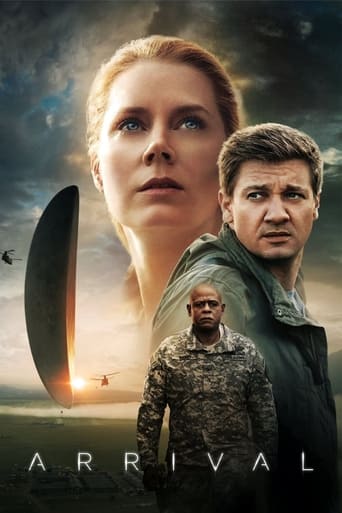
The comprehension text as its own argument. Watch for the exact moment language stops being a tool the characters are using and becomes the story the film is telling. Once you see the pivot, the whole structure clicks into place.
Three films, three skies, three theories of what the visitors are for. The next time a teaser drops and the internet starts arguing about whether a UFO movie looks good, you'll already know the real question being asked: which lineage is it committing to, and does it have the nerve to mean it?