The Clayface Moment: Why a DC Villain Is Suddenly a Body Horror Hero
On October 23, 2026, Warner Bros. will do something it would never have greenlit a decade ago: release a Batman villain movie with an R rating, a modest $40 million budget, and a marketing campaign that leans harder on David Cronenberg than on Bruce Wayne. Clayface is directed by James Watkins, whose résumé already includes two of the most unsettling studio horror films of the last fifteen years, and the screenplay comes from Mike Flanagan and Hossein Amini — a pairing that signals character-driven dread over cape-and-cowl spectacle.
That framing is deliberate. DC is leaning fully into horror territory with an R-rated spin on the source material, positioning the film as a Halloween-season body horror release rather than a traditional superhero tentpole. The release date shift from September 11 to October 23, 2026 reinforces the darker, horror-like theme, and Watkins' background on The Woman in Black and Speak No Evil practically guarantees the final product will care more about the texture of transformation than about setting up a cinematic universe.
Clayface is, of course, the perfect vehicle for this experiment: a man whose flesh literally loses its shape, whose face is never quite his face, whose body is both his weapon and his curse. He is a walking thesis statement for an entire subgenre — one that stretches from Cronenberg's suburban garages in the 1970s to Coralie Fargeat's Oscar campaign in 2025. If you've been hearing the phrase "body horror" everywhere lately and wondering what it actually means, Clayface is the clearest invitation yet to find out.
Defining Body Horror: The Rules of the Subgenre
Body horror is a horror variant focused on bodies subject to torture, mutilation, mutation, decay, and transformation shown in graphic detail. That academic definition — courtesy of Dartmouth's film studies guide — is clinical, but it points to something emotional: the terror isn't out there in the woods or down in the basement. It's inside the skin.
Four ingredients tend to recur across the subgenre:
- Involuntary transformation. The character does not choose what their body is becoming.
- Loss of bodily autonomy. Something — a disease, a drug, a parasite, a system — is deciding for them.
- Grotesque intimacy with the camera. The lens refuses to look away. Pores, pustules, tendons, teeth.
- A metaphor doing heavy thematic lifting. The mutation is always about something: puberty, grief, addiction, capitalism, womanhood.
That last ingredient is what separates body horror from a slasher movies or a haunted-house picture. A masked killer is an external threat you can run from. A ghost belongs to a house you can leave. In body horror, you are the house, and the house is on fire.
The subgenre's roots stretch back further than Cronenberg. Body horror's lineage traces back to 1950s hybrids like The Blob and Invasion of the Body Snatchers, where Cold War paranoia found its first fleshy metaphor — the fear that your neighbor, or your husband, or your own cells could be replaced by something alien while you slept.
Interestingly, the godfather himself has grown weary of the label. Cronenberg has said he wants to retire the term "body horror" — a telling complaint, because terms usually only get retired once they've become too successful to mean anything specific. Which is exactly where we are now.
The Cronenberg Blueprint
If body horror has a single architect, it's David Cronenberg. He gave the subgenre both its visual grammar — the latex, the orifices, the telephones that breathe — and its intellectual seriousness. Cronenberg's films are never gross for the sake of being gross. The transformation always means something.
- Shivers (1975) introduced the parasite-as-liberation idea that still echoes through contemporary infection horror.
- The Brood turned divorce and maternal rage into literal, scurrying offspring.
- Videodrome diagnosed media addiction thirty years before anyone had a phone to be addicted to.
- The Fly remains the emotional ceiling of the subgenre — a love story about watching the person you love become something you can no longer touch.
Cronenberg's foundational influence runs from Shivers, The Fly, The Brood, and Videodrome through contemporary films like Possessor, Censor, American Mary, and Slither, establishing him as the modern master whose DNA is detectable in nearly every serious entry in the genre.
His direct descendants in 2020s movies horror movies are easy to name: Julia Ducournau, whose Palme d'Or winner proved the aesthetic could still shock a Cannes jury; Brandon Cronenberg, who inherited the name and the preoccupations in equal measure; and a growing roster of writer-directors who cite the elder Cronenberg by name in nearly every press interview. Cronenberg himself has discussed his influence on contemporary directors like Coralie Fargeat and Julia Ducournau, who have cited him as inspiration for their body horror work.
The New Wave: Why Women and Queer Directors Took Over the Genre
The inflection point was The Substance. Coralie Fargeat's film grossed $77 million worldwide and received five Oscar nominations, essentially functioning as a mainstream permission slip for grotesque feminist filmmaking. Suddenly a movie in which Demi Moore birthed a younger version of herself out of her own spine was being discussed on morning talk shows and at the Academy Awards.
Can't Decide What to Watch?
Let RandomFlix pick a movie for you. One click, one great movie.
Roll the DiceThe new wave is defined by a thematic pivot. Where Cronenberg used flesh to interrogate sex, disease, and technology, this generation uses it to interrogate beauty standards, puberty, dysphoria, and bodily autonomy. A new golden age of body horror is being driven by films like The Substance, Love Lies Bleeding, Tiger Stripes, and I Saw the TV Glow, led by women and queer directors using the genre to explore corporeality, identity, and social anxieties.
Four voices to know:
- Coralie Fargeat — whose The Substance weaponized the Hollywood gaze against itself.
- Rose Glass — Love Lies Bleeding turned bodybuilding, queerness, and desire into a hallucinatory noir.
- Amanda Nell Eu — Tiger Stripes used Malaysian folklore to render adolescence as literal monstrosity.
- Jane Schoenbrun — I Saw the TV Glow is the quietest film on this list and perhaps the most devastating, treating dysphoria not as transformation but as suffocation.
Why does the metaphor hit so hard right now? Partly because the audience showing up has lived through a post-Roe reversal, an Ozempic-era obsession with reshaping flesh, and a decade of social media teaching everyone to see their own face as raw material. The body-as-battleground isn't a metaphor you have to work to understand anymore. It's a Tuesday.
Why 2026 Is Body Horror's Biggest Year Since the '80s
The benchmark year has always been 1986, give or take. In a roughly five-year window, audiences got The Thing, The Fly, Videodrome, Society, and Hellraiser — a run of practical-effects masterpieces that defined what the subgenre could do when it had money and craftsmen and nerve.
2026 is making a credible case for a second peak. Clayface arrives October 23, 2026, confirmed as a body horror-psychological thriller directed by James Watkins with a screenplay by Mike Flanagan and Hossein Amini, produced by DC Studios on an approximately $40 million budget. That's a major studio putting a nine-figure marketing push behind an R-rated transformation film built around a comic book villain almost no casual filmgoer could name a year ago.
Add to that the continued ripples of The Substance's awards run, a growing roster of mid-budget projects greenlit in its wake, and a theatrical audience that is visibly fatigued by weightless CGI. The practical-effects revival is real, and it is rewarding films that make people physically uncomfortable in a shared room. Discomfort, it turns out, is a feature, not a bug.
Clayface matters as a bellwether. If an R-rated body horror comic book movie opens well, the ceiling of the subgenre rises again, and the next five years of studio greenlights will reflect it.
A Starter Syllabus: Where to Begin if Clayface Is Your Entry Point
Four films, in roughly this order, teach the grammar.
The Fly

Start here. Cronenberg's 1986 remake is the emotional ceiling of the entire subgenre — a tragic romance disguised as a creature feature. Jeff Goldblum's slow dissolution is horrifying precisely because he narrates it with scientific curiosity, then dawning grief. Transformation here is not an attack. It's a diagnosis.
The Thing

John Carpenter's 1982 masterpiece is paranoia body horror. The threat is inside your friend, your colleague, possibly yourself, and you cannot tell by looking. Rob Bottin's practical effects remain unsurpassed, but what endures is the mood: a cold, hopeless suspicion of every warm body in the room.
Titane
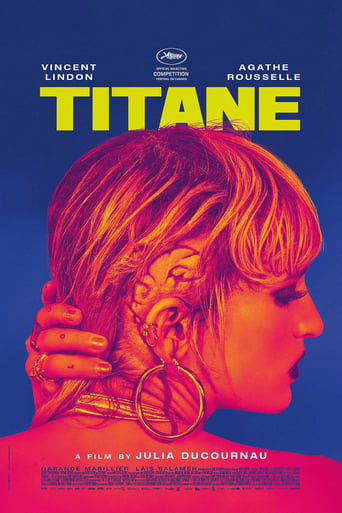
Julia Ducournau's Palme d'Or winner is the modern bridge. It proves the Cronenberg DNA mutated successfully into a new generation that is more interested in gender, chosen family, and the car-as-lover than in Reagan-era anxieties. Watch this and you'll understand why The Substance didn't come out of nowhere.
The Substance
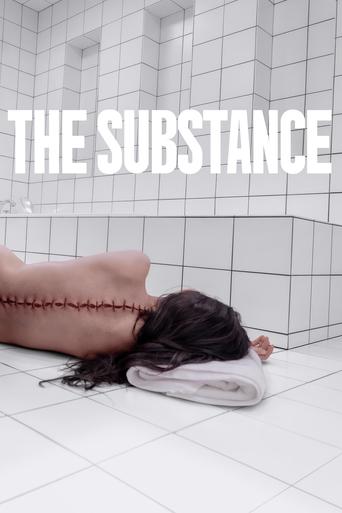
End here. This is the film that made Clayface's existence commercially plausible — a maximalist, gleefully disgusting assault on the beauty-industrial complex that nevertheless got nominated for Best Picture. If a studio executive greenlit a body horror project in the last twenty-four months, it was because of this movie.
If those four light something up in you, the deeper cuts — Possessor, American Mary, Censor, Raw, In My Skin — are waiting. A spin through RandomFlix's horror movies shuffle is a reliable way to stumble into them without having to know their names first.
The Takeaway: A Subgenre That Keeps Earning Its Scars
Body horror endures because the body is the one thing every viewer brings into the theater. You can leave your car in the parking lot and your phone in your pocket, but the thing on screen — the pore, the tendon, the second spine — is made of the same stuff you are. That's why the subgenre has outlived every "horror is dead" op-ed since 1975, and why it keeps finding new generations of filmmakers who recognize it as the most direct way to say something urgent about being alive in a body right now.
Clayface is both an ending and a beginning. It's the moment a once-niche subgenre officially becomes part of the blockbuster vocabulary, and it's the opening frame of whatever comes next. Roll the dice, pick a transformation, and see what the body has to say.