The Teaser That Smells Like the 14th Century
Robert Eggers wants you to smell it. In his Empire breakdown of the Werwulf teaser, he made the sensory pitch explicit: he wants audiences to come out of this movie feeling like they've actually been dragged through the mud and shit of 1300s England, not watched a stylized reconstruction of it. That single instinct — the conviction that the past has a texture, and that texture is the horror — is the entire thesis of the 90-second tease Focus Features dropped on June 29.
The setup is now familiar enough to read as a pattern. Aaron Taylor-Johnson, last seen as one of Count Orlok's pursuers, plays a medieval English farmer whose household becomes the stage for an inherited curse. Focus is releasing the film at Christmas — the same release strategy that turned Nosferatu into an unlikely holiday phenomenon. The crew is largely a Nosferatu reunion: DP Jarin Blaschke, editor Louise Ford, production designer Craig Lathrop and composer Robin Carolan are all returning, with Eggers writing the screenplay alongside his wife Sjón collaborator and longtime co-writer.
What follows is a frame-by-frame read of what's actually in the teaser, why every choice is doing historical work, and why Werwulf is shaping up to be a serious reinvention of horror movies werewolf cinema — one that finally drags the subgenre out of the silver-bullet, gypsy-curse pop mythology Universal welded onto it in 1941.
Frame by Frame: What the Teaser Actually Shows
The Full Moon Cold Open
The teaser opens, inevitably, on a full moon. For a director as allergic to cliché as Eggers, that's a confrontation, not a concession. In the Empire interview he explains the moon as a deliberately reclaimed image: in 1300s English Catholic imagination, the moon isn't a switch that flips a man into a wolf; it's a cosmological body charged with theological weight. He's quoting werewolf-movie shorthand back at us so he can then root it in the actual medieval framework that pop horror buried.
The Childhood-Curse Flashback
A boy appears in the cut — a flash of damnation inherited rather than acquired. Phantasmag's scene-by-scene description tracks the teaser from the full moon opening, through the childhood-curse flashback, the farmer's journey with wife and three children, and into the climactic transformation. The placement matters. By front-loading the boy before we meet the adult farmer, Eggers signals that this is not an infection story — no bite in the woods, no traveler cursed by a stranger. It's bloodline horror, the same engine of doom that drove the Puritan family in The Witch.
The Farmer, the Wife, the Three Children
The domestic tableau Eggers builds in the middle of the teaser — Taylor-Johnson's farmer, his wife, three children, a hovel — is the household he's going to burn. The composition is straight out of his earlier work: rigid, frontal, ritualistic. Compare it to the slow rot of the Puritan farm in The Witch, where the household functions as both refuge and prison, and you can already see the structural rhyme. Eggers builds families so that belief can break them.
The Wolf Hunters
The detail Eggers personally flagged in his Empire conversation is the wolf hunters — a piece of 1300s English bounty culture that most audiences will read as invented atmosphere but is, in fact, archival. Medieval England ran formal wolf-extermination programs, and Eggers has clearly built that economy into the film's social world. It's the same impulse that drove him to commission period-accurate Old Norse for The Northman: the supernatural only lands if the mundane is unassailable.
The Transformation
The teaser's climactic seconds are a withholding act. Phantasmag describes Taylor-Johnson's character as a "raving beast", and the sound design — bone-crunching, wet, close-miked — does most of the work the image refuses to do. TheWrap's coverage emphasizes the trailer's Silent Era imagery and bone-crunching sound design, and that combination — antique picture, brutally modern audio — is the teaser's signature trick. Eggers doesn't show us the full creature. He shows us a man becoming unbearable to be near.
The Old English Dialogue
The dialogue you hear in the teaser is not modern English with a costume on. Dark Horizons notes the authentic Old English dialogue from the period, continuing the linguistic rigor Eggers brought to The Northman's Old Norse and Slavic passages. This is the single most important severing gesture in the trailer: the moment you can't fully understand the protagonist, you stop reading him as a modern person in cosplay and start reading him as genuinely foreign — a 700-year-old stranger.
The Look: Orthochromatic Grain, Not Black-and-White
Here's the technical catch most write-ups have missed. The teaser isn't true black-and-white. Dark Horizons flags that the film uses an orthochromatic post treatment on color stock, with grain structure applied to color film to mimic how 1910s emulsions rendered the world — darkening skies, reddening skin tones, flattening certain blues into near-black.
That's a specific quotation, not a vibe. IndieWire connects Werwulf to the 1913 silent The Werewolf and to Universal's 1941 The Wolf Man, and Eggers is reaching past the latter to the former — past the talkie pop-mythology to the pre-Hays-Code, pre-folklore-codification moment when the werewolf was still being figured out on film. CinemaCon footage notes describe the classical aspect ratio and the black-and-white sequences flagged from the early presentations, and the formalist DNA is identical to The Lighthouse: a constrained frame, period-specific emulsion behavior, grain as authorship.
The narrative effect is the real point. Orthochromatic stock makes the 1300s feel pre-photographic — dredged up rather than reconstructed. You're not watching a film about the Middle Ages; you're watching a film that the Middle Ages produced and someone unearthed. That inversion is what almost no period horror manages, and it's the single largest argument that Werwulf isn't operating in the same register as its genre peers.
Why Eggers Is the Medieval-Horror Successor to Himself
The Eggers throughline is now legible enough to chart. The Witch took 1630s New England Puritanism on its own theological terms. The Northman did the same for 10th-century Norse vengeance ritual. Nosferatu extended it into 1830s Mitteleuropan folk dread. Werwulf, set in 1300s English Catholic damnation, completes a quadrilogy of pre-modern belief systems treated as period-accurate fact rather than picturesque backdrop.
The business case for that approach now exists. Variety's box office context notes Nosferatu's roughly $40M Christmas debut and $181M+ worldwide gross on a $50M budget, which is what earned Eggers a longer leash and a repeat Focus partnership. Deadline confirms the official tagline — "a harrowing tale of devotion, damnation, and the devil within" — and that wording is doctrinal, not monstrous. This is being marketed as a religious-horror movies film as much as a creature feature.
Can't Decide What to Watch?
Let RandomFlix pick a movie for you. One click, one great movie.
Roll the DiceReinventing the Werewolf: What Eggers Is Throwing Out
The werewolf has been a stuck subgenre for eight decades. The silver bullet, the Romani curse, the moonrise-as-trigger, the pentagram on the palm — most of that stack was invented or codified by Universal in 1941 and has been recycled, parodied, and gently subverted ever since without ever being meaningfully replaced. Eggers is going back behind 1941 to actual medieval lycanthropy lore, where the wolf is a manifestation of damnation, demonic possession, or hereditary curse — not a viral folk-pharmacology problem to be solved with the right ammunition.
The Middle English dialogue alone severs the Universal lineage. You cannot have a character explain the rules of being a werewolf in a language a modern audience can't fully parse. The exposition apparatus that every werewolf movie since The Wolf Man has relied on — the wise stranger, the rhyming curse, the tavern explainer — is structurally impossible here.
CinemaCon attendees describe body horror in the transformation work, which positions Werwulf closer to body-horror movies than to the practical-effects nostalgia that has dominated recent werewolf cinema. And the broader context matters: this is part of a wave of serious 2020s movies folk-horror movies that treats the past as a genuinely foreign country, where belief had operational power and the supernatural was civic infrastructure.
Watching Eggers' Filmography With New Eyes
There are six months until Christmas, which is enough time to read Eggers' filmography forward into Werwulf rather than backward from it.
The Witch
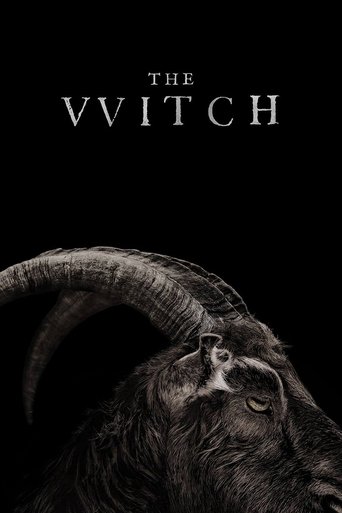
The clearest precedent for Werwulf's inheritance-of-damnation logic. Watch for how the household itself becomes the haunted object, and how Eggers refuses to let any character escape into modern skepticism.
The Lighthouse
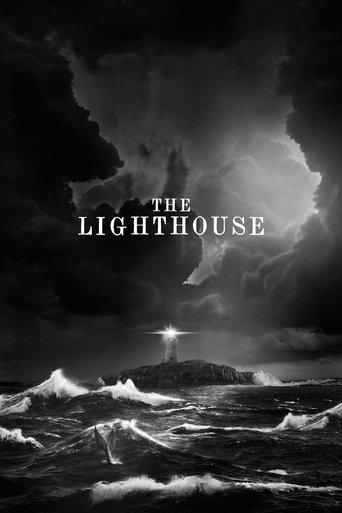
The formalist exercise — boxed aspect ratio, period emulsion, two-hander madness. The orthochromatic look in Werwulf is the same craft instinct deployed at feature scale.
The Northman
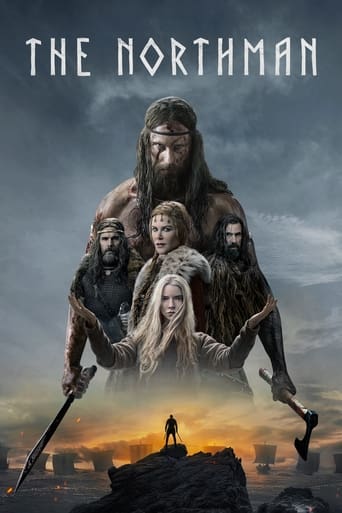
The linguistic and ritual-violence template. If you want to understand why the Old English dialogue isn't a gimmick, this is the proof of concept.
Nosferatu
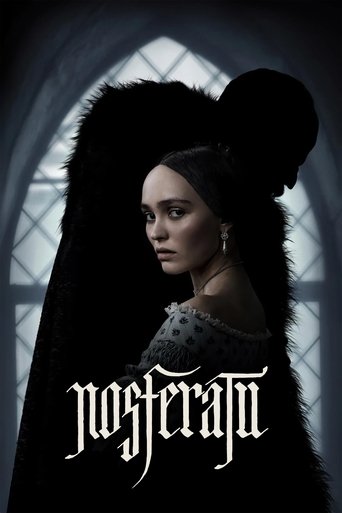
The Focus-era formal peak and the immediate aesthetic forebear. Pay attention to how Eggers uses Christian iconography as a working belief system rather than dressing.
Willem Dafoe has been reported as part of the Werwulf cast, continuing the Eggers stock company alongside Taylor-Johnson's Nosferatu reunion. If you'd rather follow the thread sideways than do a structured rewatch, RandomFlix's folk-horror movies hub is a fast way to fall down the pre-Werwulf rabbit hole.
What to Watch For in the Full Trailer
A few predictions based on what the teaser holds back. The wolf hunters will get more screen time in the full trailer — Eggers flagged them as a personal point of historical pride, and Focus will want that hook foregrounded. Expect a clearer look at the Catholic ritual framework: priests, sacraments, possibly the explicit theology of damnation that the tagline gestures at. And expect Eggers to withhold the full creature design until release, the way he withheld Orlok's face from Nosferatu's marketing for as long as possible.
The awards-season play is obvious. Gold Derby's rundown frames the Oscar prospects as mirroring Nosferatu, which means craft categories — cinematography, costume, production design, makeup — are the realistic ceiling. The orthochromatic photography in particular is the sort of authored technical choice that Academy cinematography branches reward.
The closing argument is this: Werwulf isn't a werewolf movie trying to dress up as prestige horror. It's a medieval-history film that happens to contain a werewolf, and that inversion — putting the history first and the monster second — is the actual reinvention. Eggers has been making the same argument for ten years across four films: that pre-modern people's beliefs were real to them, and that taking them seriously is more frightening than any modern reframing.
Christmas is six months away. There's a deep bench of period horror movies to chew through in the meantime, and the Eggers filmography is finally long enough to read as a coherent project rather than a string of one-offs. Watch it that way.