The Reveal: What We Actually Know About Digger
For roughly a year, the most-anticipated mystery on the studio calendar was a placeholder: "Untitled Alejandro G. Iñárritu Project, starring Tom Cruise." That ended on December 18, 2025, when Cruise himself posted the title card and a one-sheet that didn't look like anything either man had attached his name to in the last decade. The poster — black, red, sharp-angled, unmistakably borrowing from Saul Bass — pointed not toward another Iñárritu spiritual odyssey but toward something older and meaner in the American satirical tradition.
The working title had been "Judy." Warner Bros. and Legendary slotted the film for October 2, 2026 — a date that, in studio scheduling terms, screams "awards launch" rather than blockbuster counterprogramming. Then came CinemaCon 2026, where the actual shape of the thing finally came into focus.
Cruise plays Digger Rockwell, a billionaire executive whose methane leak threatens to displace millions of people, with John Goodman starring as the U.S. president. The ecological catastrophe, per subsequent reporting, escalates to the brink of nuclear war. This is the The Revenant director's first English-language film since 2015, made with the Birdman or (The Unexpected Virtue of Ignorance) screenwriting team and shot on 35mm VistaVision — a format choice that signals scale, texture, and a refusal to look like anything streaming.
In other words: a director famous for his metaphysical heaviness is making a big, ugly, classical American comedy about an oil tycoon who might end the world. And he's doing it with the most famous action star alive.
Parsing the Tagline: 'A Brutal, Wild Comedy of Catastrophic Proportions'
At Cannes, before the title was even public, Iñárritu offered the one phrase that has shaped every subsequent piece of writing about this movie. He described it as "a brutal, wild comedy of catastrophic proportions," comparing it to Birdman.
That sentence is doing a lot of work. "Brutal" and "comedy" don't normally share a clause in Iñárritu's vocabulary; his closest analogue is the corrosive showbiz humiliation of Birdman, not the metaphysical melancholy of Bardo, False Chronicle of a Handful of Truths. By name-checking Birdman explicitly, Iñárritu is telling us which version of himself shows up to work on Digger — the one who finds violence funny, the one who weaponizes performance, the one whose camera laughs at his protagonist before it pities him.
"Catastrophic proportions" is the line's second trick. It describes the in-movie premise — an ecological disaster scaled to civilizational stakes — but it also describes the directorial swing of casting the world's most disciplined action star as a corroded southern grotesque. The Saul Bass-style poster locks that read in. This is being marketed not as Iñárritu's next prestige odyssey but as classical American satire in the Dr. Strangelove or: How I Learned to Stop Worrying and Love the Bomb lineage. Apocalypse, but the joke is on the men with the keys.
The Iñárritu Arc: From Birdman to Bardo to Digger
To understand why Digger feels like such a hard pivot, look at the staircase Iñárritu has been climbing — or, depending on your read, falling down — since Babel.
Post-Babel, he abandoned the interlocking-tragedy mode that made his name and committed to single-protagonist character studies: Biutiful, Birdman, The Revenant, Bardo. Birdman (2014) won Best Picture by weaponizing comedy against actorly vanity. The Revenant (2015) traded jokes for endurance theater and won him a second consecutive Best Director Oscar. Bardo (2022) collapsed under the weight of its own self-portrait. Each film escalated his absurdist self-interrogation — and each one moved further from the audience that loved Birdman.
Digger appears to be the corrective. Iñárritu has said the project gestated for nine years, which means the script predates Bardo's reception entirely. He's been writing this in his head since roughly 2017 — through the pandemic, through his own Netflix-funded misfire, through the cultural recalibration of what mid-budget studio cinema is even for. The comedy movies register here matters. Iñárritu working in satire is, functionally, a different filmmaker than Iñárritu working in tragedy. The methane-leak premise reads as Network-meets-Strangelove rather than 21 Grams. That's not a small adjustment to his brand. That's a key change.
The Cruise Pivot: Why This Is His Biggest Risk Since Magnolia
The other half of the bet is Cruise, and it's the half that has critics genuinely surprised.
Cruise hasn't taken a non-action acting swing since Tropic Thunder in 2008. He hasn't been Oscar-nominated since Magnolia in 1999. Deadline framed the project within Cruise's career arc and noted it's been a long time since he really stretched himself. That's a polite way of describing 25 years of an actor optimizing for control.
The CinemaCon footage description erases that control on sight. The MPA's official publication detailed Cruise's physical transformation: a beer belly, thinning white hair, a comb-over, and a southern accent — the kind of full-body disappearance act he's avoided for two decades of Top Gun: Maverick and Mission: Impossible discipline. TheWrap positioned the film as a potential awards contender, possibly Cruise's first Oscar nomination since Magnolia.
Cruise's late-career pattern has been controlled risk: practical stunts inside genre frameworks he co-authors. Halo jumps, motorcycle cliffs, plane wings. The risk lives in the body, never in the performance. Digger inverts that proposition. Working with Iñárritu means surrendering the producer-actor authorship Cruise has built into every action movies production since the mid-2000s. There's no second-unit director to defer to here. There's no helicopter sequence to retreat into. It's just a man, an accent, a comb-over, and a camera operator who answers to someone else. That's a different kind of stunt entirely.
What the October 2, 2026 Date Tells Us
Studio calendars are coded language, and early October is the awards-launch corridor that birthed Joker and Gone Girl. TheWrap connected Digger to Warner Bros.' new auteur-driven strategy, and the date confirms it. This is not blockbuster counterprogramming. This is a flag planted in the prestige calendar.
The bet underneath the date is bigger than one movie. Warner Bros. is wagering that director-driven, mid-budget films can still anchor a release frame — that the audience for {{movie:Killers of the Flower Moon} or Oppenheimer is real and renewable. If the CinemaCon buzz holds through the fall, Cruise enters his first real Best Actor conversation in a generation, and Iñárritu enters his fourth (after Babel, Birdman, and The Revenant).
The 2020s movies have been thin on movie-star-meets-auteur events at this scale. The closest comparison is Scorsese-DiCaprio on Killers of the Flower Moon, and even that pairing had the comfort of an established collaboration. Iñárritu and Cruise have never worked together. Neither one is known for surrendering authority on a set. The fact that the footage exists at all suggests something interesting happened in the room.
The Ensemble and the Methane Leak
John Goodman as the U.S. president is the casting choice that confirms the tonal register. Goodman's Coen-brothers DNA — Barton Fink, The Big Lebowski, Inside Llewyn Davis — brings a specific kind of American absurdism into the frame. He's been the face of stately, sweaty, declamatory power for thirty years. Casting him as the leader of the free world in a film about an oil baron triggering geopolitical apocalypse is its own joke before he opens his mouth.
The premise itself is new territory for Iñárritu. His disasters have always been intimate: a son lost in Babel, a daughter buried in Biutiful, a marriage rotting in Birdman. An ecological catastrophe that could trigger nuclear war is geopolitical disaster movie scale, but filtered through a director who has never made a disaster movie. Reading the premise generously, Digger could be the rare climate-themed studio film that uses satire instead of disaster-movie machinery — closer to Don't Look Up in subject but Iñárritu in execution, which is a far more interesting proposition than either reference suggests on its own.
Reading it skeptically: nine years of development on a billionaire-villain comedy means the script may have been overtaken by the reality it's satirizing. The world's richest men have spent the past decade making the satirist's job harder by behaving more outrageously than any screenplay could justify. Whether Digger feels prescient or already-dated when it lands in October will depend almost entirely on how specific Iñárritu's gaze is — whether he's making a movie about an idea or about a man.
Where to Start If You Want to Be Ready
The tonal blueprint for Digger lives almost entirely in one Iñárritu film, and it's the one he keeps name-checking himself.
Birdman or (The Unexpected Virtue of Ignorance)
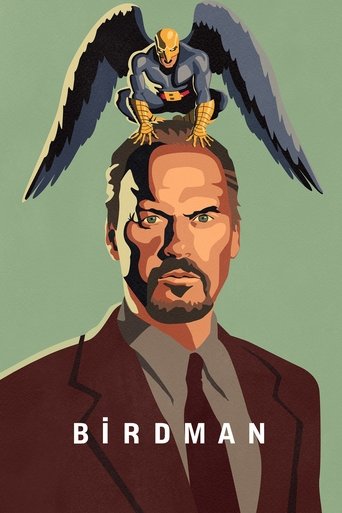
The corrosive comic register, the contempt-for-vanity edge, the willingness to humiliate a movie star in service of a bigger argument — all of it is here. If Iñárritu compared Digger to Birdman at Cannes, this is the homework, and it's worth a rewatch with the methane-leak premise in mind. The shape of the joke is likely the same. Only the stakes have scaled up.
Magnolia

Cruise's last great dramatic peak. Frank T.J. Mackey is, not coincidentally, also a grotesque — a man hollowed out by his own performance of masculinity. The Digger character almost certainly lives somewhere on the spectrum between Mackey's rage and the broader caricature work Cruise did later.
Tropic Thunder
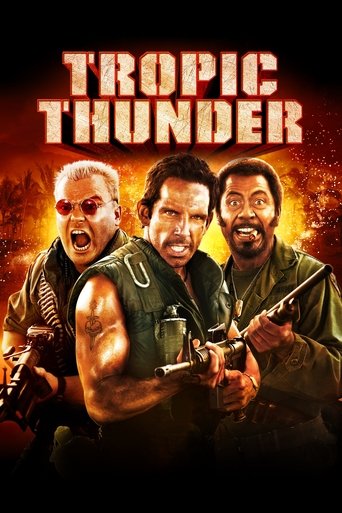
The last time Cruise vanished into prosthetics and accent work. Les Grossman is a cartoon, where Digger Rockwell sounds like he'll be a tragedy in a fat suit, but the underlying impulse — disappearance, transformation, the deliberate erasure of the Tom Cruise face — is the same instinct, dormant for nearly two decades.
[Dr.
Strangelove or: How I Learned to Stop Worrying and Love the Bomb](/movie/935) The Saul Bass-adjacent poster is begging for this comparison. Kubrick's apocalypse-as-farce remains the template for any film that wants to laugh at the men with the keys, and Iñárritu's tagline reads like a direct descendant. If Digger has any ambition at all, it's the ambition to belong in this conversation.
For the broader corporate-greed lineage, the corporate-greed movies catalog runs deep, and the satirical comedies of the 1970s — Network, Being There, the early Altman pictures — are the spiritual ancestors of whatever Digger is trying to be. RandomFlix's dice is a useful way to wander into that catalog without a plan, especially if you've already seen the obvious entries and want the auteur-comedy deep cuts.
October 2, 2026 is a long way off, but the contours of the bet are already clear. Iñárritu is swinging for a legacy correction. Cruise is swinging for a second life as an actor. Warner Bros. is swinging for the idea that adult cinema still exists. The pleasure of a film like this — even before anyone has seen it — is watching three different kinds of risk converge on a single release date. Whatever Digger turns out to be, it will tell us something about whether that kind of convergence still works.