July 17, 2026: The Release That Already Sold Out
The numbers came in fast, and they were a little absurd. The Odyssey broke BFI IMAX records by selling 28,000 tickets in its first 24 hours, outpacing both Oppenheimer and Dune: Part Two in single-day presale gross. Across the United States, the rush for limited IMAX 70mm seats spawned hour-long virtual queues — a phenomenon that, until last year, was reserved for Taylor Swift tours and PlayStation hardware drops.
The basics are simple enough. Universal opens Christopher Nolan's adaptation of Homer on July 17, 2026, billed as a "mythic action epic" and — crucially — shot entirely on IMAX film. This is Nolan's first feature since Oppenheimer swept the Oscars, and the expectations attached to it are correspondingly unhinged. A literary adaptation by the most ratings-proof director of his generation, executed at the largest analog format ever sold to general audiences, with a cast that reads like an Oscars seating chart.
What follows is the primer: who's playing whom, what shooting on IMAX film actually means, and why this Homer adaptation is meaningfully different from every one that came before it.
The Cast: Who's Playing Whom in Nolan's Ithaca
Nolan has assembled the largest ensemble of his career, and the role distribution tells you a lot about his intentions. The marquee names are clustered around the human storyline in Ithaca, not the monsters — a sign that this is a character piece dressed in the costume of an action film.
Matt Damon as Odysseus
Damon anchors the picture, and he hasn't been shy about what it cost him. He has called it the hardest movie he's ever made — a notable claim from an actor whose résumé includes solo survival in The Martian and the full Jason Bourne tetralogy.
It's also a clear elevation inside the Nolan universe. Damon's previous collaboration was a small but pivotal turn in Interstellar, where he played a single, scenery-chewing pivot point. Casting him as Odysseus is a promotion, and it makes intuitive sense: Homer's hero is famously the polymetis — the man of many turns, the trickster who survives by being more human than the gods around him. Damon has spent twenty-five years building exactly that screen presence. He brings the everyman gravitas the role demands, plus the residual action credibility to swing a bronze sword without looking ridiculous.
Anne Hathaway as Penelope
Hathaway reunites with Nolan as Penelope, the wife whose twenty-year wait drives the back half of the poem. She and Damon are now the only actors to appear in three Nolan films, and her Interstellar performance — that monologue about love as a measurable force — is precisely the register Penelope's arc demands.
The interesting question is structural. Homer splits the Odyssey between Odysseus's wanderings and Penelope's domestic siege; Nolan loves parallel timelines. It would be very on-brand to cut between the Cyclops's cave and the loom Penelope unweaves every night, collapsing a decade of separation into intercut minutes.
Tom Holland as Telemachus
Holland plays Telemachus, the son searching for the father he barely remembers. The Telemachy — the first four books of the poem — is essentially a coming-of-age story bolted onto the front of an adventure epic, and giving it to Holland is canny casting. He has the screen youth to make the search credible and the seriousness to keep it from feeling like a side quest.
It's his first Nolan collaboration, and it reads as a deliberate bid to move him beyond the superhero movies sandbox where he's spent the last decade. The Spider-Man pictures gave him the world; this gives him a different kind of weight.
Robert Pattinson as Antinous
Pattinson plays Antinous, the lead suitor pestering Penelope — the de facto antagonist of the Ithaca storyline and one of literature's great preening villains. It's his third Nolan film after Tenet, and early trailer footage has already singled him out as the breakout performance to watch.
That tracks. Pattinson has built the back half of his career on playing men who are slightly too pleased with themselves — the central reactor of his Bruce Wayne, the entire performance in The Lighthouse. Antinous needs that exact quality: a man who has convinced himself he deserves another man's house, wife, and kingdom.
Zendaya as Athena, Charlize Theron as Circe
Zendaya plays Athena, Odysseus's divine patron, while Charlize Theron is Circe, the sorceress who turns men into swine. The goddesses get the splashy roles, and the marketing is leaning hard on both — cast members are narrating the official IMAX format videos to help viewers pick how to watch, and Theron and Zendaya are front and center.
Theron's Circe sequence is, by most accounts from people who've seen rushes, the most visually adventurous stretch of the film: a contained chamber piece that turns into something closer to surrealist horror. It's the kind of set piece IMAX 70mm was built for — texture, scale, and a face that can carry a giant frame without props.
The Supporting Bench: Safdie, Bernthal, Marshall-Green
The Trojan War veterans frame Odysseus's journey, and Nolan has cast them with directors and character actors rather than additional movie stars. Benny Safdie plays Agamemnon and Jon Bernthal plays Menelaus — two performers who can puncture a scene without warning. Safdie, fresh off his own director's chair on The Smashing Machine, brings a specific kind of distrustful intelligence; Bernthal brings the bruised soldier energy he has been refining since The Punisher.
Logan Marshall-Green replaced Cosmo Jarvis late in pre-production, a casting shuffle Deadline first reported. Round out the bench with Lupita Nyong'o, Mia Goth, and John Leguizamo in roles Universal has so far refused to clarify, and you have a roster that's deeper than any Nolan ensemble to date — Oppenheimer included.
Shot Entirely on IMAX Film: What That Actually Means
Here's where this stops being a casting story and starts being a craft story. The Odyssey is the first feature-length movie filmed entirely on IMAX — not just the set pieces, as with Oppenheimer or Dunkirk, but every single frame from the first studio logo to the final fade.
The numbers behind that decision are genuinely staggering. IMAX 70mm uses an expanded 1.43:1 aspect ratio captured on 15-perforation horizontal film frames — roughly the resolution of a giant medium-format still photograph, exposed twenty-four times per second. Nothing else commercially available comes close. Nolan, speaking to 60 Minutes from FotoKem in Burbank — the last lab still striking 70mm prints — called IMAX film the highest quality imaging format ever devised.
That technical context matters because the format determines the experience in a way most modern releases don't. Here's the rough hierarchy of how you can see The Odyssey:
- IMAX 70mm film: the unicorn. Roughly thirty screens worldwide. Full 1.43:1 frame, projected from actual 70mm prints. This is what Nolan engineered the film for, and why the presale queues exist.
- Standard 70mm: the consolation prize, but a generous one — still photochemical, still large-format, still meaningfully better than digital.
- IMAX digital: the laser projection most people will encounter. A cropped aspect ratio, but a properly massive screen.
- Dolby Cinema: strong sound, strong image, but standard widescreen framing.
- Standard digital: everything you'd expect, none of the format-specific awe.
The difference between the top and the bottom of that list is unusually large for The Odyssey, because Nolan composed every shot with the tallest frame in mind. Sequences set in caves, palaces, and ship hulls reportedly extend vertically in a way that simply doesn't read in a cropped 2.39:1 transfer.
How Nolan's Odyssey Differs From
Every Previous Homer Adaptation
Hollywood has been trying to film the Odyssey for seventy years. None of the prior attempts treated it the way Nolan apparently is.
The 1954 Kirk Douglas Ulysses was a swords-and-sandals production that played the poem as romantic adventure. The 1997 Andrei Konchalovsky miniseries with Armand Assante was earnest, four-and-a-half hours long, and shot for television scale. The Coen Brothers turned the bones of the poem into Depression-era Mississippi farce with O Brother, Where Art Thou? — brilliant, but explicitly not Homer as Homer wrote him. Wolfgang Petersen's Troy is the closest cousin in scale, but it's an Iliad adaptation, and one that famously strips the gods out entirely.
The pattern across all of them is the same. Prior screen Odysseys leaned mythological pageant or sword-and-sandal romance. None treated the source as legitimate action movies cinema at modern blockbuster scale. None handed it to a director whose primary instinct is to build set pieces around physical, in-camera spectacle.
Nolan's tell is in the marketing copy. Universal is selling this as a "mythic action epic," which strongly implies Cyclops, Sirens, and Scylla as full IMAX set pieces rather than effects-light interludes. The Polyphemus sequence alone — a one-eyed giant in a sealed cave, a sharpened olive stake, a man hiding under a ram — is the kind of contained, mechanical, gore-adjacent thriller Nolan has been building toward for two decades.
The structural question is whether he'll honor Homer's in-medias-res, nonlinear structure. The poem famously begins in Calypso's cave, flashes back to Troy via Odysseus's own narration at a banquet, then leaps forward again. That is the most Nolan structure imaginable. Straightening it out would be a choice; preserving it would feel inevitable.
For readers who want to put the film in conversation with the broader tradition of myth and ancient-world cinema, RandomFlix's epic movies hub is a quick way to graze the lineage without much fuss.
What to Watch Before July 17
Not homework — just useful context.
Oppenheimer
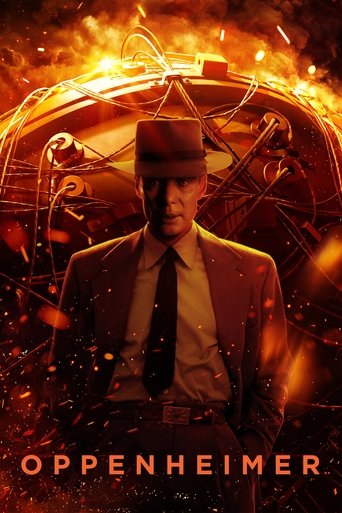
The most recent calibration of Nolan's IMAX instincts, and the picture that earned him the latitude to attempt this one. Pay attention to how he composes faces inside the giant frame.
Dunkirk
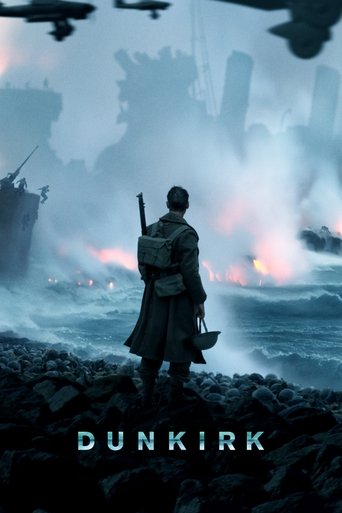
The closest Nolan has come to telling a story without traditional dialogue scaffolding. The Odyssey will almost certainly borrow that compressed, sensory approach for its sea sequences.
Gladiator
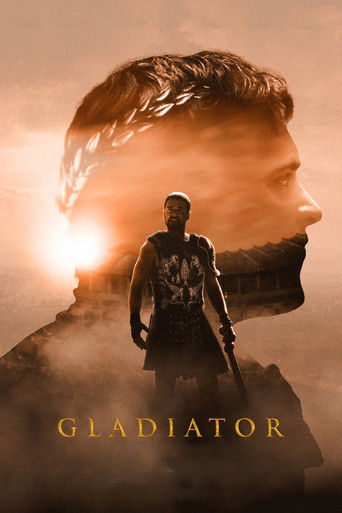
The tonal cousin in ancient-world action staging. Ridley Scott's film proved a swords-and-armor epic could carry serious dramatic weight without curdling into camp.
O Brother, Where Art Thou?
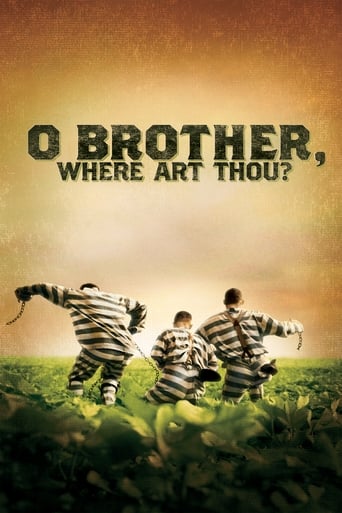
The Coens' transposed Odyssey, and a useful reminder that Homer's structure is portable. Watching it back-to-back with Nolan's version is going to be an unusually entertaining exercise.
Troy
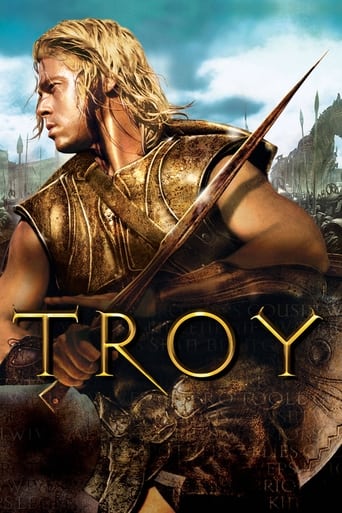
The Petersen companion piece. Imperfect, but the only other modern attempt at Homeric cinema at this scale, and a useful baseline for what Nolan is trying to surpass.
The broader 2020s movies blockbuster landscape is worth a look too, just to register what The Odyssey is competing against — a market that has gotten very good at spectacle but has largely abandoned literary adaptation as a default mode.
The Bottom Line
The thesis is simple. This is the first time Homer has been handed to a filmmaker who treats spectacle as the primary text rather than a delivery system for the themes — and the cast reflects that bet. Damon, Hathaway, Pattinson, Holland, Zendaya, Theron: movie stars who can carry IMAX close-ups, not just costume-drama declamation. Safdie and Bernthal: actors who can puncture the grandeur when the script demands it. The whole roster is calibrated for a film where the frame itself is doing as much narrative work as the dialogue.
The format note matters too. If you can get an IMAX 70mm ticket, take it; the film was engineered for those thirty-odd screens, and a Nolan picture composed for 1.43:1 loses real information on any cropped transfer. Failing that, standard 70mm or IMAX digital. The cheap seats will still look extraordinary, but The Odyssey is one of the rare modern releases where the venue is part of the film.
July 17 is going to be the loudest movie event of the decade. Show up early.