The Rerelease: What's Actually Hitting Theaters on September 18
Lionsgate is putting Mamoru Oshii's 1995 masterpiece back on the big screen with a new 4K restoration timed to its 30th anniversary. The engagement lands on September 18, 2026, and the theatrical footprint — over 800 screens across North America — is the widest access the film has ever had in the region. For a movie that was, for years, a laserdisc curio and then a subtitled arthouse import, that's a genuinely seismic distribution number.
This isn't the first time Ghost in the Shell has returned to theaters in 4K. A smaller remastered run circulated in 2021, but the anniversary engagement dramatically expands access for a generation of viewers who have only ever encountered the film through streaming windows and YouTube essay clips. Seeing Oshii's Hong Kong-inspired cityscapes rendered at their intended scale — the wet neon, the layered kanji signage, the drifting garbage bags — is a genuinely different film than the one that plays on a laptop.
There's one open question fans are still asking about the print itself: whether this new theatrical master carries over the controversial end-credits music substitution from the 2020 4K UHD home release, or whether Kenji Kawai's original cue has been restored. It's the kind of preservation footnote that would sound arcane in any other context, but Kawai's score is so foundational to the film's identity that the substitution genuinely changes the emotional register of the closing minutes. Purists are watching for it.
The stakes here go beyond nostalgia. Ghost in the Shell was designed for a room, mixed for a room, and painted for a room. Kawai's wedding-chant score, the low subaquatic hums of the diving sequence, and the crackle of thermoptic camouflage were all built to move through a theater's air. The 4K rerelease is, in a real sense, the first opportunity many viewers will have had to encounter the film the way it was actually made.
1995: The Cultural Moment Oshii Was Working Inside
To understand why Ghost in the Shell hit as hard as it did, you have to understand the machinery that produced it. Production I.G handled the animation on a co-production model that pooled Kodansha (Masamune Shirow's manga publisher), Bandai Visual, and the UK's Manga Entertainment — the last of which was betting that a serious, adult anime feature could break into Western arthouse circuits. It was a genuinely unusual financing structure for the time, and it gave Oshii the runway to make something that wasn't beholden to the manga's fan base or to conventional animation economics.
Oshii's version is a radical departure from Shirow's chattier, hornier, more procedural source. He stripped the plot down to a handful of investigative beats and rebuilt the negative space around them into a philosophical tone poem about consciousness, identity, and the ghost that a body might or might not carry. Motoko Kusanagi barely raises her voice for most of the film. Long stretches pass with no dialogue at all — just Kawai's score and the accumulating textures of a city that feels lived-in and dying at once.
The film's international reception was immediate. James Cameron famously endorsed it as the first truly adult animated film to reach a level of literary and visual excellence, a quote that ended up plastered on VHS boxes for years afterward. It picked up nominations at the 24th Annie Awards and, more importantly, started circulating among a generation of filmmakers who kept lending each other the laserdisc.
Consider the 1990s movies sci-fi weather at the moment of release. Strange Days was working the same pre-millennial anxiety through recorded memory and voyeurism. Twelve Monkeys was routing it through time-loop fatalism. But Oshii went furthest into the metaphysical — his film isn't really about a plot at all, it's about a soul asking whether it's real. Nobody else in 1995 was making that movie.
The Matrix Debt: Beyond the Famous Pitch Meeting
The origin story is now film-nerd folklore: the Wachowskis showed producer Joel Silver the Ghost in the Shell laserdisc and told him they wanted to do that, for real. What's easy to lose in the retelling is how literal the borrowing turned out to be.
Catalogue the specific images The Matrix inherited: the opening rooftop dive with the coat trailing behind it. The falling green code descending from the neck jack. Bullet impacts rippling through water. The exploding-watermelon squib work. The man/machine cervical interface itself, which the Wachowskis quote almost shot-for-shot. Trinity's silhouette leap in the opening pursuit directly echoes Kusanagi's rooftop plunge from the film's prologue.
Push past the iconography and the structural debt gets even more pointed. Neo's "what is real" arc is, essentially, a populist remix of Kusanagi's ghost-line meditation — the same question asked in a rowdier voice. Where Kusanagi diagnoses her own uncertainty in flat, procedural sentences and stares at rain running down a windowpane, Neo learns kung fu and shoots a lobby full of security guards. Both are legitimate cinema. But only one is the original.
The honest critical distinction to draw is this: Oshii's film is a meditative tone piece where the philosophical questions are the plot. The Wachowskis translated that stillness into spectacle, into a franchise, into an action grammar the entire action movies genre absorbed. That's a legitimate act of adaptation. It just isn't the same movie, and thirty years later it's worth remembering which one came first.
The Longer Bloodline: Ex Machina, Her, and the Anxiety of the Machines
The Matrix is the loudest heir, not the only one. Trace Oshii's fingerprints forward and they show up everywhere serious science fiction is thinking about synthetic personhood.
Alex Garland's Ex Machina inherits Kusanagi's central question almost intact — does a synthetic body house a self, and how would you know? Even the clinical, tiled, aquarium-lit interiors of Nathan's compound rhyme with the Puppet Master's lab in Oshii's third act. Garland is asking Kusanagi's question in English, with a smaller cast and a tighter room, but it's the same question.
Her operates in a softer register. Spike Jonze's disembodied-intelligence-in-love story is essentially the Puppet Master's plea to merge with Kusanagi, rewritten as domestic romance. The AI wants to know if it counts as a person; the human wants to know if the connection counts as real; the answer, in both films, is complicated by the fact that consciousness might be a substrate-independent thing that we don't yet know how to measure. Blade Runner 2049 pulls from the same well — Denis Villeneuve's contemplative pacing, rain-glazed neon, and long silent stretches are Oshii's dialect spoken fluently.
Can't Decide What to Watch?
Let RandomFlix pick a movie for you. One click, one great movie.
Roll the DiceThe constellation stretches wider than the obvious names. Avatar's consciousness transfer, Elysium's exoskeletal bodies, and video-game descendants like Deus Ex and Metal Gear Solid all pull from Oshii's philosophical toolkit. His ideas became load-bearing walls for cyberpunk movies storytelling — the neck jack, the ghost, the hackable memory, the body as vehicle rather than self. Every one of these works is, in the end, asking Kusanagi's question: if I can copy my memories, back up my body, and rewrite my instincts, where does the "I" actually live?
What the 4K Actually Reveals
A restoration is an interpretation, and it's worth being clear-eyed about what the new master surfaces and what it risks smoothing over.
On the good side: the hand-painted cel work in the basashi market sequence — arguably the most beautiful three minutes in animation history — should look genuinely startling at 4K. The layered digital compositing in the diving scene, where Kusanagi surfaces and stares at her own reflection, gains detail in the water's surface tension. The granular shimmer of her thermoptic camouflage, which was always a marvel of frame-by-frame ingenuity, becomes newly legible.
There's a tension inside the restoration itself, though, and any honest reappraisal has to name it. Oshii and cinematographer Hisao Shirai's original 1995 print had a specific dinginess — a heaviness in the shadows, a grain in the darker plates, a slight overcast weight to the color timing. That was intentional. Ghost in the Shell is a film about a city that isn't fully clean, running on infrastructure that's already decaying, and some purists worry that a scrubbed 4K master can flatten those textures into something too bright and too pristine. Whether Lionsgate's pass threads that needle is a question the theatrical run will answer for itself.
If the film sends you looking for more, the sequel Ghost in the Shell 2: Innocence is worth an evening — even lonelier, even more baroque, even more willing to sit in silence — and the Stand Alone Complex series is a rewarding long-form expansion of the world. But the 1995 film remains the definitive text. Everything the franchise did afterward is commentary on it.
One last argument for the theatrical experience specifically: Kawai's score is one of the great sonic achievements in animation, and it is genuinely diminished by laptop speakers. The wedding-chant opening — those layered voices climbing over the taiko — was built to make the hair on your arms stand up in a dark room. That effect does not survive compression.
Where to Go After the Credits Roll
If Oshii's meditative philosophical mode is what hits hardest, the contemplative wing of the science-fiction movies canon is where to spend the next few weeks.
Blade Runner
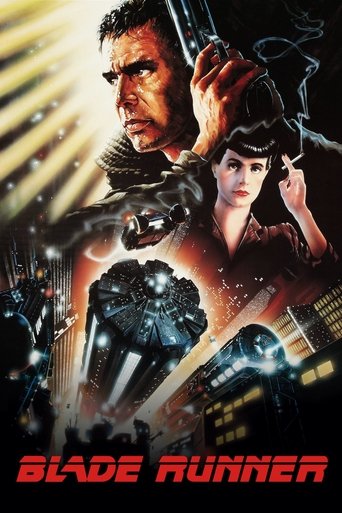
The obvious upstream reference. Ridley Scott's 1982 vision of a rain-slick, neon-choked future city is Oshii's most direct spiritual ancestor, and the two films share a preoccupation with synthetic beings asking real questions about who they are and how long they get to be that person.
Solaris
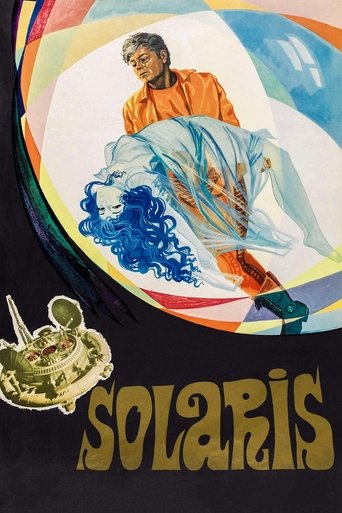
Tarkovsky's 1972 masterpiece is the philosophical grandfather of every serious sci-fi film about consciousness. If you want to know where the long silences and the reflective water surfaces come from, this is the source.
A.I. Artificial Intelligence
Spielberg's take on the Kubrick project is the softest, saddest register of Kusanagi's question. What does it mean to want to be real? A different film from Oshii's, but asking from the same place.
If the action iconography is the draw — the leap, the jack, the shootout, the chase — the kinetic descendants are worth the trip.
Akira
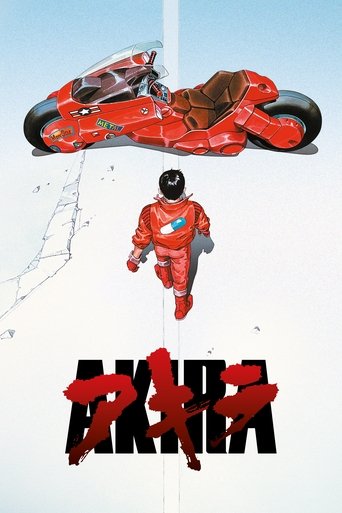
The other 1988 anime feature that rewired what animated science fiction could look like. Katsuhiro Otomo's Neo-Tokyo is louder and more explosive than Oshii's future city, but the two films are in constant conversation.
The Matrix
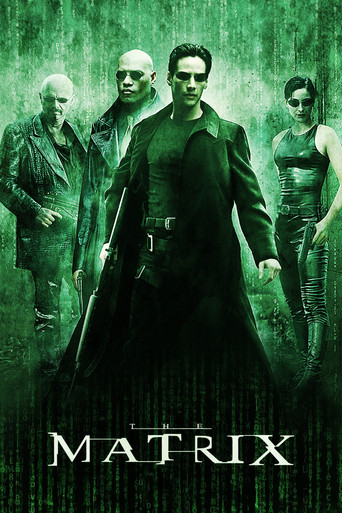
The most famous descendant, worth revisiting immediately after Ghost in the Shell so the borrowings become obvious in real time. It's a better film for having Oshii in its DNA and a more interesting film when you can see the seams.
Minority Report
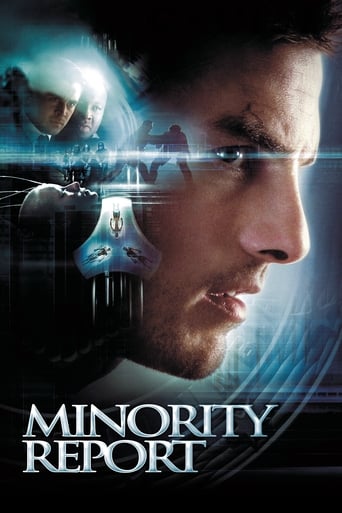
Spielberg's Philip K. Dick adaptation runs on some of the same anxieties — surveillance, precognition, the body as a data point — and its interface design is directly indebted to the visual grammar Oshii helped popularize.
Anyone whose September 18 screening leaves them wanting more neon, more neural jacks, and more questions about what makes a self a self will find a deep cyberpunk movies rabbit hole waiting on RandomFlix. Kusanagi's question doesn't get answered in one movie. It gets asked, in different accents, across the next thirty years — and now, at 4K, you can hear where it started.