Why Backrooms Feels Inevitable
On May 29, A24 releases The Backrooms — a feature debut directed by Kane Parsons, who at 20 becomes the studio's youngest-ever director, adapting the YouTube series he started making at 16. That sentence, even now, reads like a press-release prank. A creepypasta. A teenager. A studio whose imprimatur means something in horror movies circles. And yet the closer you look at what Parsons is actually doing — endless yellow corridors, humming fluorescents, a 30,000-square-foot practical set engineered for sensory deprivation — the less it looks like a novelty and the more it looks like an inheritance.
The interesting question isn't whether a kid from YouTube can deliver a competent feature. The first reactions already say he has. The interesting question is: what does it mean that the most anticipated horror debut of 2026 is an adaptation of a 4chan image? The answer, I'd argue, is that Parsons isn't grafting internet detritus onto cinema. He's completing a circuit film theory has been sketching since Kubrick — a fifty-year tradition of architectural dread that runs through the Overlook Hotel, the Black Lodge, and the half-lit suburban rooms of Skinamarink, and arrives, more or less on schedule, at a buzzing yellow hallway with no exit.
Parsons has been candid that traditional Hollywood cinema isn't really his reference library. That's the tell. His ancestors live elsewhere — in the cracks between the films older critics canonized, in the YouTube channels that recycled them, and in the academic literature on uncanny architecture that nobody bothered to connect to a Roblox-era teenager until now.
The Architecture of Dread: Kubrick's Overlook as Patient Zero
Every conversation about cinematic liminal space has to start at the Overlook. The Shining is the foundational text not because it's scary — it is — but because Kubrick understood, with a precision nobody has since matched, that a building can be a mind. The window in Ullman's office that has no business existing. The carpet pattern that loops Danny back where he started. Corridors that lengthen as Jack's marriage shortens. The hotel doesn't haunt Jack; it externalizes him.
Dread Central has made this case explicitly, treating impossible architecture as psychological projection — a reading that lands just as cleanly on Parsons's endless monochrome rooms as on Kubrick's hedge maze. The Backrooms aren't scary because something is in them. They're scary because the geometry itself is wrong, and wrongness in geometry is one of the oldest signals our nervous system has for "leave."
Kubrick had already rehearsed this once, in a register most people forget is horror. The white neoclassical hotel suite at the end of 2001: A Space Odyssey is a sensory-deprivation chamber dressed as a guest room — sterile, impossibly lit, indifferent to the human inside it. Parsons has described the logic of his own set in nearly identical terms: an environment designed to strip away the cues that tell you where, or when, or who you are. That's not a YouTube affectation. That's 1968.
The 1980s movies took the baton and ran. Hotels, hallways, dream-spaces — the decade's horror was obsessed with rooms that betrayed their occupants. Liminal architecture was already cinematic vocabulary forty years before someone uploaded a yellow carpet to 4chan.
Lynch, Twin Peaks, and the Uncanny Interior
Then there's Lynch, who is arguably the single most important figure in the prehistory of liminal-spaces movies as an aesthetic. The Wikipedia entry on the liminal space aesthetic explicitly traces its lineage through David Lynch's Twin Peaks before it ever reaches Skinamarink or Severance — and that's correct, because what Lynch did to interiors is what every analog-horror creator has been imitating, often unwittingly, ever since.
Twin Peaks: Fire Walk with Me is the purest dose. The Black Lodge — red curtains, zigzag floor, a fluorescent hum you feel more than hear — is a room that should not contain what it contains, and Lynch refuses to explain why. He turned waiting rooms and cheap motel hallways into a grammar of dread. Every YouTube creator who has ever pointed a camcorder down an empty corridor at 3 a.m. is speaking a dialect Lynch invented.
Eraserhead is the proto-analog-horror text and it isn't close. The degraded image. The unceasing industrial drone. The architectural wrongness of Henry's apartment, where every door seems to lead somewhere it shouldn't. Watch it back-to-back with five minutes of Parsons's web series and the family resemblance is almost embarrassing — the same lo-fi vocabulary, the same conviction that wrong-feeling rooms are scarier than monsters.
There's a small body of academic work — some of it summarized in the same Wikipedia entry — applying uncanny-valley theory to architecture rather than faces. The argument is that spaces familiar enough to read as "interior" but slightly off in proportion, lighting, or wear trigger the same alarm response as a face that's nearly but not quite human. Lynch was operating on this principle decades before anyone wrote it up.
The Analog Horror Generation: Skinamarink and the YouTube Pipeline
The immediate cinematic precedent is Kyle Edward Ball. Skinamarink began as Bitesized Nightmares, a YouTube channel where Ball recreated viewers' submitted dreams in scratchy, partially-framed videos. That arc — kid's YouTube horror project becomes theatrical feature with critical traction — is the template Parsons just scaled to A24 budgets.
SlashFilm's framework on analog horror is useful here. The subgenre is defined by VHS grain, partial framing, the feeling of looking at footage you weren't meant to see. SlashFilm has explicitly tied this aesthetic to Skinamarink and to the Backrooms creepypasta itself, including the "noclip" concept — the sensation of having phased through reality's geometry into a place behind the level. That's the central nervous system of both Ball's film and Parsons's series.
Then there's I Saw the TV Glow, Jane Schoenbrun's A24 sibling text, which proved liminal horror can sustain a feature without conventional plot machinery. SlashFilm's lineage piece on liminal horror positions Skinamarink and TV Glow as the precursors that made Backrooms commercially imaginable — the films that taught distributors there was an audience for this specific frequency.
And the pathway itself is no longer a fluke. RackaRacka, the Philippou brothers' YouTube channel, became the gateway to Talk to Me. Ball's channel became Skinamarink. Parsons's channel became Backrooms. As The Conversation has argued, the YouTube-to-theatrical pipeline isn't anomaly anymore; it's a formalized industry route, and the analog-uncanny aesthetic is one of its primary exports.
The 4chan Image and the Birth of a Mythos
The original post is from 2019. A single photograph — yellowed wallpaper, damp carpet, buzzing fluorescents — captioned with a few sentences about noclipping out of reality. That's it. That's the whole creepypasta. What makes it remarkable isn't the image; it's that the image immediately crystallized something cinema had been groping toward for half a century. People recognized the room before they were told what it was.
Parsons's contribution, per Collider's primer on the property, was to give the static image a narrative engine — the Async lore developed across his web series, which introduced an entity-based mythology without dispelling the original's dreadful vacancy. He extended the image without explaining it, which is a harder trick than it sounds.
The aesthetic has since metastasized far beyond horror. Lumon Industries in Severance is liminal-space cinema scored for office comedy. Susanna Clarke's novel Piranesi is the same emotional architecture in literary form. The /r/LiminalSpace subreddit canon is, functionally, a vast crowdsourced mood board for everything in this lineage. What Parsons is adapting isn't really a creepypasta. It's a collective vocabulary the internet built out of films it half-remembered — Kubrick refracted through Lynch refracted through a phone camera.
Can't Decide What to Watch?
Let RandomFlix pick a movie for you. One click, one great movie.
Roll the DiceWhat Parsons Brings That His Forebears Couldn't
Per the Hollywood Reporter coverage from CCXP Mexico, Parsons built a 30,000-square-foot practical set engineered around sensory-deprivation principles — a physical environment designed to deprive both actors and audience of orientation cues. No Film School's breakdown of his process emphasizes his Blender previs workflow, which let him plan shots in 3D space before stepping onto the set, and James Wan's on-set praise during a visit. The first-reactions roundup on SlashFilm has critics calling it the best creepypasta adaptation yet and lauding its tense, stripped-down approach.
But the real advantage isn't budget or mentorship. It's generational fluency. Parsons is making horror for an audience whose nightmare-grammar was formed online — on phone screens, in autoplay queues, in the half-noticed background of a Minecraft stream — not in revival houses or VHS rental aisles. He speaks that grammar natively because he is part of the cohort that wrote it. Older filmmakers can study the dialect. He thinks in it.
That's why Backrooms feels like a tipping point rather than a curiosity. This is the moment liminal horror stops being a subculture and becomes part of the horror movies mainstream language, the way slashers became mainstream after Halloween or found-footage became mainstream after Blair Witch. The vocabulary is going to be everywhere by 2027. Parsons just happens to be the one delivering the inflection point.
A Pre-Release Watchlist for the Lineage-Curious
These are the films worth revisiting before May 29 if you want to feel the full weight of what Parsons is building on. Each is a rung on the ladder. RandomFlix's shuffle is a low-effort way to land on one of these on a given night if you don't want to commit in advance.
The Shining
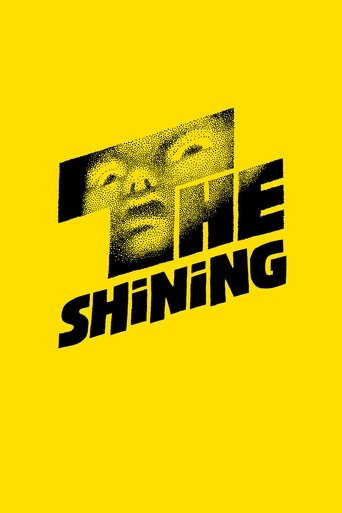
The foundational text. A hotel as a haunted brain, corridors as synapses, geometry as psychology. Watch for the spatial impossibilities — the office with no exterior, the carpet pattern that turns Danny around — that Backrooms inherits wholesale. Everything Parsons does with his yellow rooms, Kubrick was already doing with hedge mazes and ballrooms.
Skinamarink
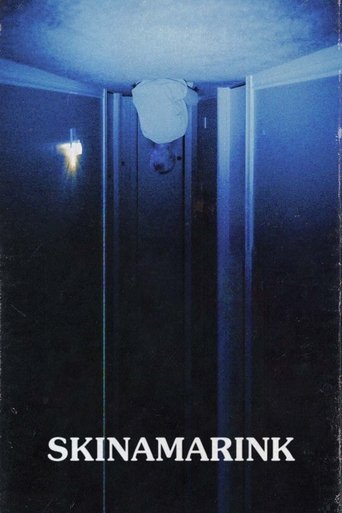
The closest aesthetic sibling. Ball's film is a child trapped in a house whose architecture has stopped cooperating, shot in the partial-frame, low-light vocabulary the analog-horror generation built on YouTube before bringing it to theaters. Ball's path to a theatrical release is the template Parsons just scaled up. Watch this and the case for Backrooms's lineage stops being theoretical.
Twin Peaks: Fire Walk with Me
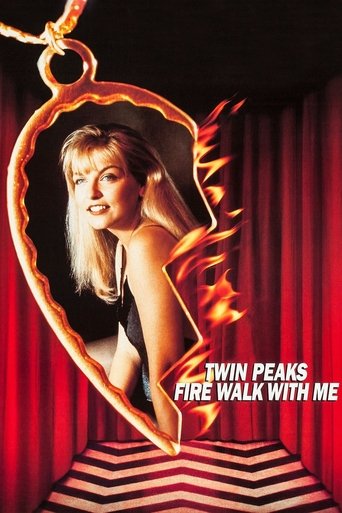
Lynch's most uncompromising statement on rooms that should not contain what they contain. The Black Lodge — its zigzag floor, its red curtains, its crawling fluorescent hum — is, more than any other single image in cinema, where Backrooms's tonal palette comes from. The colors are different. The frequency is identical.
I Saw the TV Glow
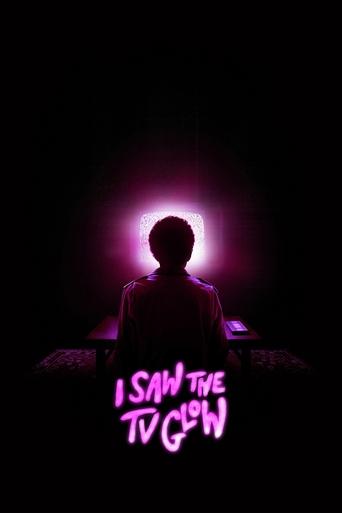
Jane Schoenbrun's A24 predecessor proves liminal horror can sustain a feature without conventional plot mechanics — that mood, texture, and the slow erosion of certainty are enough. A useful temperature check for what kind of pacing Backrooms is likely to attempt. If TV Glow's rhythm worked on you, Parsons's almost certainly will.
Eraserhead
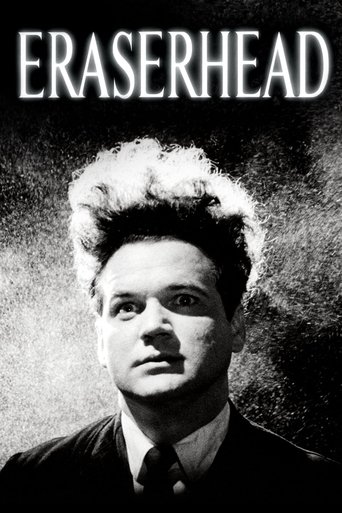
The grandfather of analog dread. Degraded image, industrial drone, wrong-feeling interiors, the conviction that ambient sound and bad light can do more damage than any monster. Watch this and the lo-fi vocabulary of Parsons's web series suddenly has a sixty-year pedigree. Kane Parsons isn't the first kid to point a cheap camera at a hallway and find something unbearable in it. He's just the first to do it after the internet taught everyone else to see what Lynch was doing.
The Backrooms isn't arriving from nowhere. It's arriving from everywhere — from the Overlook, from the Black Lodge, from a Canadian basement and a 4chan thread and an A24 boardroom that finally noticed the river had been flowing in this direction the whole time. Watch the lineage before the 29th, and the film will hit twice as hard when it does.