The 2026 Acquisitions Drought, Briefly Explained
This year's Croisette looked, from a distance, like a triumph for world cinema and a quiet emergency for anyone hoping to actually watch it. Only one U.S. film made the main Competition — Ira Sachs' The Man I Love — and the lineup tilted hard toward France, Japan, and Spain, with roughly two-thirds of the selection coming from those three countries alone. The auteurs showed up. The American buyers, for the most part, did not.
The reasons are structural rather than aesthetic. The specialty distribution market has been shrinking for years, and the latest wave of industry consolidation — most visibly the Paramount-Warner Bros. Discovery merger talks — has thinned out the small pool of companies that historically chased subtitled prestige work. Fewer bidders, smaller advances, and a theatrical market still recovering from a half-decade of disruption means even strong reviews don't guarantee a deal.
A few of the marquee titles arrived already spoken for. Neon locked North American rights on Cristian Mungiu's Fjord before the festival began; Sony Pictures Classics held Pedro Almodóvar's new film, as it almost always does. But scroll down the sales-agent grid and a striking number of Competition and Un Certain Regard titles are still in active negotiation, including some of the best-reviewed films of the festival.
The most telling case is Paweł Pawlikowski's Fatherland, a post-WWII Polish drama starring Sandra Hüller. It currently sits atop the Screen International jury grid at 3.3 stars — the highest critical consensus of the entire festival — and still has no U.S. home as of this writing. "No buyer yet" is not a verdict on quality. It's a market condition.
Johanna Moder, Jessica Hausner, and the Mid-Tier Squeeze
The films most at risk of vanishing into the U.S. release void aren't the Almodóvars or the Farhadis. Those directors have decades of relationships and built-in audiences. The real squeeze hits the mid-career European auteurs — the Johanna Moders, the Jessica Hausners, the Marie Kreutzers — whose previous films played a handful of arthouse screens, earned glowing reviews, and then quietly disappeared onto a streaming service most people forgot to check.
German-language and Eastern European drama movies has historically struggled for U.S. shelf space even when critics fall in love. The pattern repeats: festival rave, slow domestic rollout, no U.S. deal, eventual streaming dump 14 months later with no marketing. By the time the new film finally surfaces, the conversation has moved on.
The practical response isn't to wait. It's to go backward. Each of the directors below has a deep, available filmography that can be explored right now — and when their Cannes 2026 title finally lands stateside, you'll be ready for it instead of starting from scratch.
Pawlikowski's Fatherland —
Start With the Black-and-White Masterworks
Fatherland tops the Screen jury grid and remains, against all logic, unsold in the U.S. Pawlikowski's hushed, monochrome reckoning with postwar Poland is reportedly stalled in negotiations — perhaps because distributors are wary of subtitled period drama, perhaps because his asking price reflects the reviews. Either way, his back catalog is exactly the right place to spend the wait.
Ida
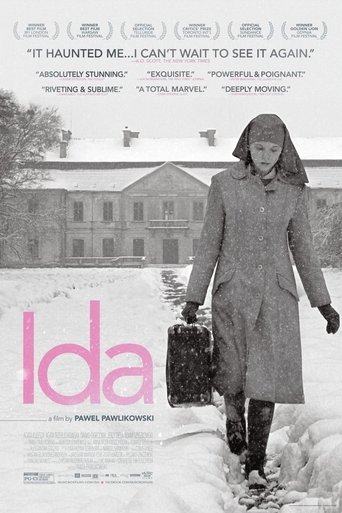
The 2013 Oscar winner for Best Foreign Language Film is the cleanest entry point into Pawlikowski's grammar: 4:3 aspect ratio, black-and-white compositions where heads sit at the bottom of the frame, silences that stretch past comfort. A novitiate nun discovers her family history in 1960s Poland. It runs 82 minutes and contains more weight than most three-hour epics.
Cold War
If you only watch one Pawlikowski before Fatherland finally arrives, make it this. Cold War already shares Fatherland's historical Polish DNA — the same postwar bruise, the same compressed romanticism, the same refusal to let any scene run past its emotional necessity. Joanna Kulig's performance remains one of the great undersung leading turns of the 2010s movies.
My Summer of Love
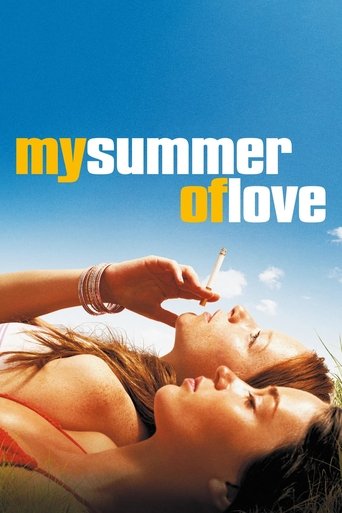
A wilder card. This 2004 film, made before Pawlikowski hardened into formalist precision, gave Emily Blunt her breakout role and operates in a looser, sun-warped register. It's useful precisely because it shows what the director sounds like before he found his austere monochrome voice — proof that the rigor is a choice, not a limitation.
The throughline across all three: compressed time, restrained emotion, faces held longer than feels comfortable. Once you've internalized that rhythm, Fatherland will feel like coming home.
Kōji Fukada — Patient Dread for Patient Viewers
Fukada's 2026 Un Certain Regard entry remains without a U.S. buyer, which is unfortunately consistent with his American history. Despite winning the Un Certain Regard Jury Prize in 2016, he has never had a stable U.S. distributor — his films tend to surface on niche streaming a year or two late, then quietly leave.
Harmonium

The essential watch. Harmonium is the 2016 domestic-horror slow burn that put Fukada on the international map: a stranger from the past insinuates himself into a small family, and the air slowly poisons. It's the film that taught a generation of festival critics to take him seriously, and it remains his clearest statement of method.
A Girl Missing
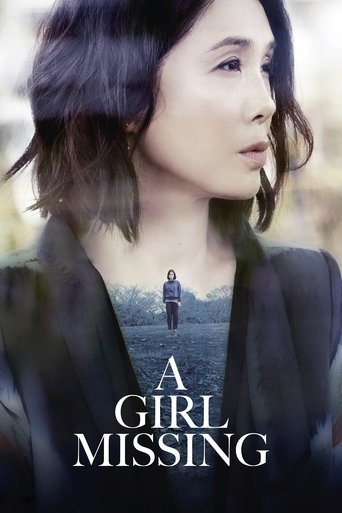
Quieter, more procedural, more interested in the social mechanics of disgrace. An ideal second helping after Harmonium — same dread, different vocabulary. A care worker becomes peripherally connected to a kidnapping case, and Fukada uses the next two hours to dismantle her life with the patience of a surgeon.
The Real Thing
For the deep end: a sprawling four-hour romantic epic originally produced as a television series and recut for festival theatrical release. It's the Fukada film for viewers who've already decided they trust him. The runtime is the point — what he can do with time when no one is rushing him.
Fukada fits naturally alongside other slow-cinema movies entries as a patient counter-program to the breathless rhythms of American studio output. He rewards exactly the attention that streaming algorithms try to train out of you.
Marie Kreutzer's Gentle Monster —
When the Critics Split
Kreutzer's new Cannes title reportedly underperformed on the Screen jury grid, which will almost certainly chill U.S. acquisition interest further. Divisive reception tends to scare off the smaller distributors who can't absorb a flop. But — and this is the unfashionable argument — divisiveness in a director whose register rewards repeat viewing is precisely a reason to dig in, not retreat.
Corsage

The obvious gateway. Her 2022 reinvention of Empress Elisabeth of Austria, anchored by a ferocious Vicky Krieps performance, is the Kreutzer film most people have already heard of. It's a costume drama that refuses costume-drama conventions: a woman past 40 in a society that has decided she's already finished. Watch it once for Krieps; watch it again for Kreutzer's framing choices.
The Ground Beneath My Feet
A 2019 corporate-thriller-meets-psychological-fracture that pre-figures everything she'd later refine in Corsage. A high-functioning consultant tries to manage a sister's mental illness while her own grip slips. It's the harder, less seductive film — and it tells you what she's actually interested in beneath the period dressing.
Her work sits inside the broader 2020s movies wave of feminist period revisionism — alongside Audrey Diwan, Mona Fastvold, and others reworking biographical material on women who history flattened. When Gentle Monster eventually lands in the U.S., it'll be much easier to argue for or against if you've already mapped the terrain.
Can't Decide What to Watch?
Let RandomFlix pick a movie for you. One click, one great movie.
Roll the DiceThree More Directors Worth Pre-Loading
Lukas Dhont
Beyond the heartbreak machine of Close, revisit Girl for his earlier formal preoccupations — the close-cropped framing of a body in motion, the refusal to look away from physical pain, the moral discomfort about which gazes are permitted. Dhont's Cannes 2026 entry extends the conversation his first two features started.
Léa Mysius
One of the most singular sensory imaginations working in French cinema today. Ava (her 2017 debut) and The Five Devils (with Adèle Exarchopoulos) reveal a filmmaker obsessed with smell, color, and the slipperiness of memory — work that already lives on a handful of art-house streaming platforms. She's the director on this list whose new film is most likely to surprise the people who think they know what an auteur drama looks like.
Cristian Mungiu
Fjord has Neon, so the wait will be shorter — but the recalibration is worth doing anyway. Pair the anticipation with 4 Months, 3 Weeks and 2 Days, his Palme d'Or-winning 2007 abortion-in-Ceaușescu's-Romania chamber piece, and Graduation, his 2016 study of small-scale moral corrosion. Mungiu works in moral grayscale; spending a weekend with his earlier films re-teaches you how to read his frames.
Most of these directors are tagged in RandomFlix's library, so if you can't decide where to begin, the dice can decide for you.
A Realistic U.S. Release Timeline
History suggests the unsold Cannes 2026 titles will, by and large, eventually surface. The usual landing spots are Strand Releasing, Kino Lorber, Music Box Films, and — increasingly — Mubi, which has been the most aggressive specialty buyer of the past two years. The timeline tends to be 8 to 18 months from Cannes premiere to U.S. theatrical or streaming release.
Some never get a real theatrical release at all, arriving on a niche streaming service one quiet Tuesday with no press push. Which is why the smart move is to bookmark the directors, not the titles. If you know Pawlikowski's voice cold, you'll find Fatherland the day it's announced. If you don't, you'll miss it entirely.
The fall festival circuit is the next inflection point. Telluride, NYFF, and the post-Toronto deal frenzy historically close a meaningful chunk of the leftover Cannes acquisitions. If you're tracking a specific title, late August through early October is when to start watching the trade announcements.
Festival FOMO isn't solved by waiting. It's solved by going backward — by treating the wait as an excuse to actually finish the filmographies you've been meaning to get to for years.
Where to Begin Tonight
If this is too much information and you just want one film per director, here's the short list:
- Pawlikowski: Cold War
- Fukada: Harmonium
- Kreutzer: Corsage
- Mungiu: 4 Months, 3 Weeks and 2 Days
Four films, four nights, and by the time the trade-paper headlines announce that Strand or Mubi has picked up one of the unsold Cannes 2026 titles, you'll know exactly whether to clear your calendar. The international movies and drama movies sections are good places to keep wandering once you're done — there's a whole adjacent shelf of European and Asian auteur work that the U.S. market has under-served for the same reasons it's under-serving Cannes 2026.
Stop waiting for the buyers to catch up. Start watching the directors they already missed.