Why Most Palme d'Or Winners Never Reach You
Cannes 2026 opens on May 12, and as it always does, the festival will produce a winner whose name will echo through cinephile group chats for a week and then, for most American viewers, disappear. That's not a knock on the prize — it's just the strange physics of the Palme d'Or. The award sits at the very top of world cinema's prestige hierarchy, but its U.S. footprint is wildly inconsistent. Only a handful of Palme winners have ever crossed over to the kind of mainstream attention that, say, Parasite earned, and that film's box office is the wild outlier — the rare Palme that broke through cultural and linguistic walls into genuine multiplex success.
Most Palmes earn under $5 million domestically. Some never receive a proper U.S. release at all. The disconnect between what Cannes juries value and what American distributors will gamble on is the real story behind the prize, and it's why so many of the most interesting Palme winners — the formally daring ones, the politically uncomfortable ones, the slow ones — are essentially invisible to viewers who haven't actively gone looking.
This is a primer on nine of those films. We're skipping the canonized hits (Parasite, Pulp Fiction, Taxi Driver, The Tree of Life) that already dominate every Palme list. Instead: a Brazilian neorealist landmark, an Italian howl about factory life, a Thai ghost reverie, a Romanian thriller the Academy couldn't even be bothered to shortlist. These are the winners that critics championed and distributors fumbled — the corrective list, the one that actually tells you what the Palme has been about for seventy years.
The 1960s & '70s: Palmes Lost to Time
The Given Word
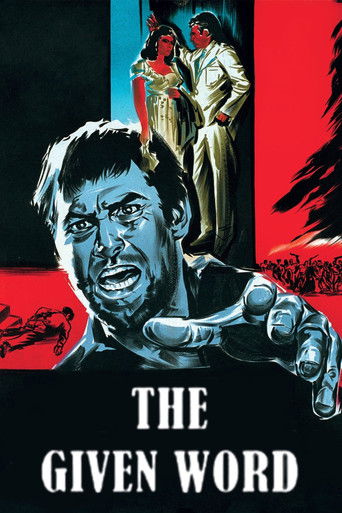
Anselmo Duarte's 1962 Palme winner remains, astonishingly, the only Brazilian film ever to take the prize. Adapted from Dias Gomes' play, it's a stark parable about a peasant who promises to carry a heavy cross to a church in Salvador if his beloved donkey is healed — a vow that quickly entangles him in the suffocating bureaucracy of the Catholic clergy and the sensational appetites of the press. It's one of the great religious films ever made, sitting comfortably alongside Bresson and Dreyer in its unblinking moral seriousness, and almost no American has seen it. U.S. distribution has been spotty for decades; physical media and the occasional festival reissue are the only reliable routes in.
The Working Class Goes to Heaven
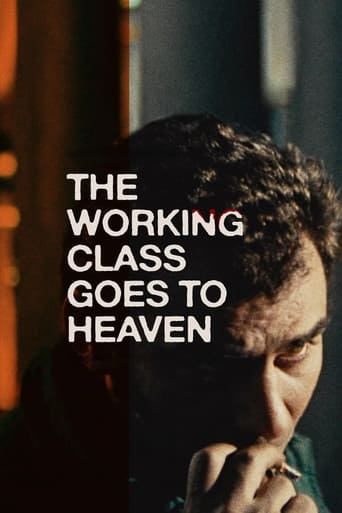
Elio Petri's 1971 winner — which shared the Palme with Francesco Rosi's The Mattei Affair — is a furious, sweat-drenched portrait of factory alienation, anchored by a Gian Maria Volonté performance that ranks among the most ferocious in European cinema. Petri's reputation in the U.S. has always tilted toward the flashier, more thriller-shaped Investigation of a Citizen Above Suspicion, and this far angrier political film slipped through the cracks behind it. Its assembly-line scenes are still some of the most visceral indictments of industrial labor ever filmed.
The Tin Drum
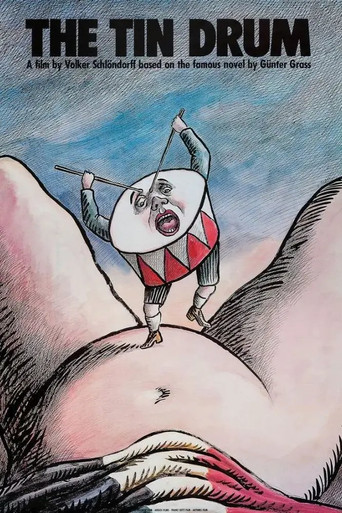
Volker Schlöndorff's 1979 co-winner (it shared the Palme with Apocalypse Now, which is itself a fact most casual film fans don't know) won the Foreign Language Oscar and has somehow still receded from active conversation. Adapted from Günter Grass's novel, it's a grotesque, indelible piece of work — the story of a boy who refuses to grow up as the Nazis rise around him — and it deserves a much more permanent place in the drama movies canon than it currently holds. If you've never seen it, the imagery alone will lodge in your head for years.
The '80s and '90s: The Ones That Got Away
The Ballad of Narayama

Shohei Imamura's 1983 winner is a brutal, earthy folktale about a remote village whose elders, upon reaching seventy, are carried up a mountain to die. It's not a horror film, exactly, but it's closer to one than most prize winners — Imamura is interested in the bodily, the agricultural, the unsentimental rhythms of survival. Imamura would win the Palme again in 1997 for The Eel, making him one of the few two-time recipients, and that second film is also worth seeking out. Both have lived for decades in the gap between critical reverence and almost zero American visibility.
Wild at Heart
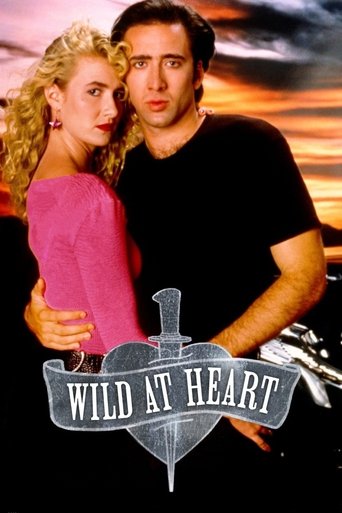
Yes, it's David Lynch — the Palme that everyone who loves Lynch forgets he won. The 1990 prize sits awkwardly between Blue Velvet and Mulholland Drive, and at the time, critics largely shrugged. A feverish Nicolas Cage and Laura Dern road movie soaked in snakeskin, Elvis, and the iconography of The Wizard of Oz, it played to many in 1990 as Lynch indulging himself. Time has been kinder. The Miramax era of U.S. distribution loved a Palme it could market (Pulp Fiction, four years later, being the textbook case), but the films on the wrong side of that calculation — Imamura, the slow ones, the angry ones — were largely left to rot. Lynch was famous enough to survive that math; most of these directors weren't.
The 2000s: Palmes the U.S. Slept On
The Son's Room
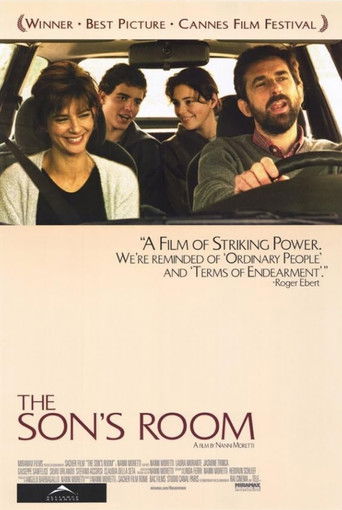
Nanni Moretti's 2001 Palme was, at the time, called a soft jury pick — a quiet domestic drama about an Italian family whose teenage son dies in a diving accident, and the slow, suffocating way grief reorganizes their life around the absence. Twenty-five years later, it plays differently. Moretti's restraint is the point; the film never reaches for catharsis, and it's that refusal that makes it land. It's aged into something close to a masterpiece, and it remains one of the great films about loss made this century.
4 Months, 3 Weeks and 2 Days
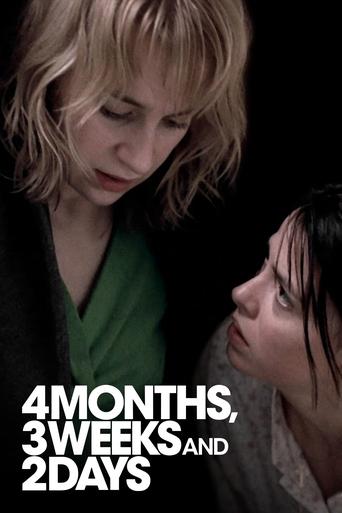
Cristian Mungiu's 2007 winner is the defining work of the Romanian New Wave — a real-time thriller about two university students arranging an illegal abortion in the final years of Ceaușescu's regime. It's almost unbearably tense, shot in long unbroken takes, and it ends on one of the most quietly devastating final images in 21st-century cinema. The Academy's failure to even shortlist it for the Foreign Language Oscar that year remains one of their more embarrassing whiffs. If you haven't seen it, brace yourself; it doesn't ease up.
The Class
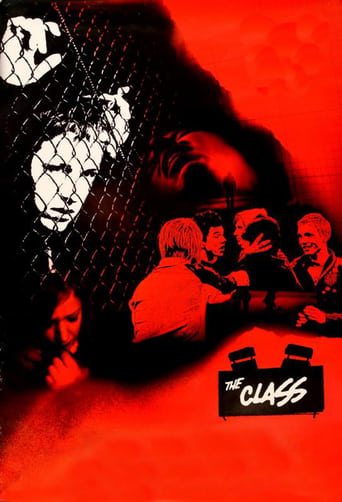
Laurent Cantet's 2008 Palme is a docu-fiction hybrid set inside a Parisian middle school, with real teacher François Bégaudeau playing a fictionalized version of himself. The naturalism is so total that the film barely registers as performance — it's just classroom, day after day, the small political collisions of teaching teenagers in a multiethnic French city. American repertory programming has almost completely ignored it, which is a shame, because it's one of the most generous, observational films of its decade.
The 2010s Outlier
Uncle Boonmee Who Can Recall His Past Lives
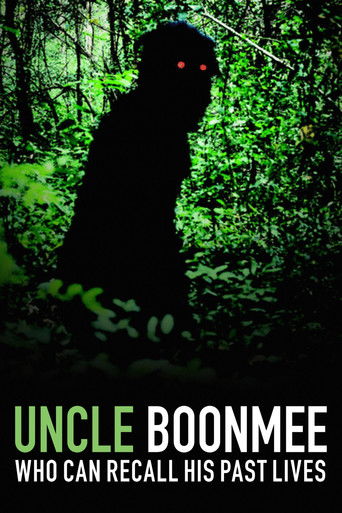
Apichatpong Weerasethakul's 2010 Palme is the win that most baffled and delighted critics in equal measure, and it's the one film on this list I'd argue is genuinely essential. A dying man in rural Thailand is visited by the ghost of his wife and the red-eyed forest spirit of his long-lost son; a princess speaks to a talking catfish; reincarnation becomes the structural grammar of the film itself. Nothing about it works the way conventional narrative does, and that's the point.
It's also the best gateway into so-called slow cinema you'll find — patient, generous, weirdly funny, and never as opaque as its reputation suggests. The 2010s movies Palme run captures the prize at its most schizophrenic, swinging between accessible social-realist picks like Ken Loach's I, Daniel Blake and radical formal experiments like Uncle Boonmee and Nuri Bilge Ceylan's Winter Sleep. That swing is the Palme's real DNA, and Weerasethakul's win is the cleanest expression of it.
Can't Decide What to Watch?
Let RandomFlix pick a movie for you. One click, one great movie.
Roll the DiceHow to Actually Watch These Before May 12
Most of these films circulate on the streamers that actually care about world cinema — Criterion Channel and MUBI carry several on rotation, Kanopy picks up the academic-leaning titles, and Max occasionally surfaces 4 Months, 3 Weeks and 2 Days and The Class. The Given Word is the genuine challenge: it usually requires physical media or a festival reissue, and that scarcity is part of why it remains the most underseen Palme on this list.
If you're hunting more broadly, RandomFlix's foreign movies and drama movies hubs are useful for surfacing other Cannes-circuit films that share DNA with these — particularly when paired with the cannes-winner movies tag, which makes it easier to see how the prize's taste has evolved decade by decade. Pairing an older Palme with a more recent one (Imamura with Bong, Petri with Mungiu) is one of the more rewarding ways to spend a weekend before the 2026 festival.
What This Primer Tells You About Cannes 2026
A pattern emerges across these nine films: Cannes juries reward formal risk, political urgency, and emotional restraint, in roughly that order. They reward filmmakers who refuse to flatter the audience. They reward films that are very specifically about somewhere — a Brazilian church, an Italian factory, a Thai forest, a Bucharest hotel room — rather than films designed to play everywhere.
Those are the qualities to watch for in the 2026 competition slate. The festival's contender conversation is already circulating among programmers and critics, and the names floating to the top tend to share that same DNA: directors with strong formal signatures, subjects rooted in specific political realities, scripts willing to sit in discomfort instead of resolving it.
The Palme isn't a stamp of crossover success. It never has been. It's a record of what world cinema's most demanding jury thought mattered each year — and the underrated winners, the ones distributors fumbled or critics shrugged at, are where that record is most honest. Start with Uncle Boonmee. Move to 4 Months, 3 Weeks and 2 Days. Get to The Given Word however you can. By May 12, you'll be ready.