197910m English
EnglishGloria!
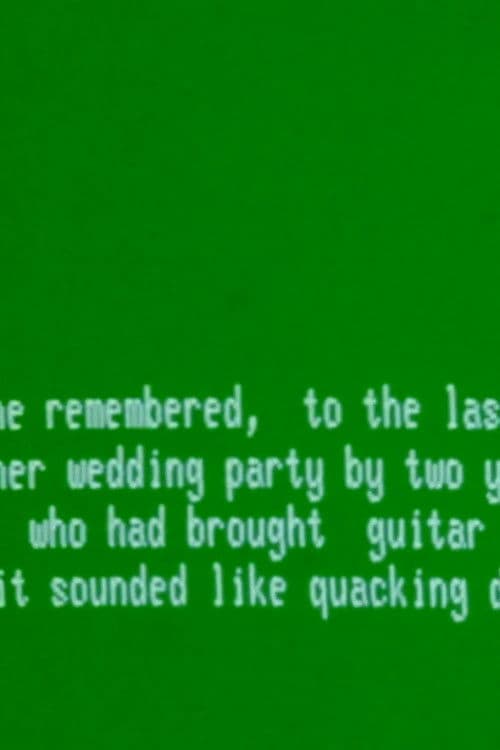
In GLORIA! Frampton juxtaposes nineteenth-century concerns with contemporary forms through the interfacing of a work of early cinema with a videographic display of textual material. These two formal components (the film and the texts) in turn relate to a nineteenth-century figure, Frampton's maternal grandmother, and to a twentieth-century one, her grandson (filmmaker Frampton himself). In attempting to recapture their relationship, GLORIA! becomes a somewhat comic, often touching meditation on death, on memory and on the power of image, music and text to resurrect the past.
DirectorHollis Frampton
In GLORIA! Frampton juxtaposes nineteenth-century concerns with contemporary forms through the interfacing of a work of early cinema with a videographic display of textual material. These two formal components (the film and the texts) in turn relate to a nineteenth-century figure, Frampton's maternal grandmother, and to a twentieth-century one, her grandson (filmmaker Frampton himself). In attempting to recapture their relationship, GLORIA! becomes a somewhat comic, often touching meditation on death, on memory and on the power of image, music and text to resurrect the past.
DirectorHollis Frampton
