The Strangest Handoff in Modern Auteur Cinema
When the Super Bowl LX broadcast cut to Brad Pitt sprawled on Cliff Booth's couch, half the room presumably grinned at the reunion and the other half squinted at the lighting. Something was off — pleasantly, deliberately off. The frame was too clean. The shadows fell with the wrong kind of intention. This wasn't the warm, 35mm haze of Once Upon a Time in Hollywood; it looked closer to the cold blue-greens of Zodiac. That's because, of course, it basically is.
The Adventures of Cliff Booth isn't a sequel so much as a cover version. Quentin Tarantino wrote it; David Fincher is directing it. Tarantino has explained he didn't want his 10th and final film to be a sequel to one of his own movies, opening the door for another filmmaker to take the reins. The result is something genuinely novel in modern auteur cinema: the first time since the mid-1990s that someone other than Tarantino has directed one of his screenplays.
That makes Fincher, in effect, an authorized cover artist — handed a song from Tarantino's catalog and asked to rerecord it in his own key. The question isn't whether the result will be good. Both filmmakers' floors are absurdly high. The question is what a Fincher-directed Tarantino joint actually looks like, and whether the friction between those two sensibilities produces something neither could have made alone.
What We Actually Know About the Plot
The teaser is light on narrative and heavy on atmosphere, but the contours are clear enough. Cliff Booth has transitioned from stuntman to Hollywood fixer in the sequel — a job description that quietly relocates the story from the hangout-comedy register of the original into something nearer to noir. Stuntmen take falls for actors. Fixers take falls for whole studios.
The film is set in 1977 Los Angeles, a deliberately darker pop-cultural moment than the sun-drenched 1969 of the original. The teaser signals this through a Looking for Mr. Goodbar poster glimpsed in the background — a movie about a woman murdered by a stranger she picked up in a bar, released the same year the story takes place. That's not nostalgia. That's a warning.
Timothy Olyphant returns as James Stacy, while Leonardo DiCaprio's Rick Dalton does not return. The economic footnote is telling: DiCaprio reportedly declined a $3 million cameo offer. Whatever the reasons, the consequence is dramatic. Cliff has been unmoored from his other half. The original film's central relationship — the easy push-pull between fading star and unflappable double — is gone. Cliff is on his own, in a year that has every intention of chewing him up.
The new ensemble suggests Fincher's bench more than Tarantino's: Scott Caan, Elizabeth Debicki, Yahya Abdul-Mateen II, Carla Gugino, Holt McCallany, JB Tadena, and Corey Fogelmanis are all aboard. McCallany in particular is a Fincher loyalist, a Mindhunter alum, and his presence is the kind of casting decision that quietly tells you whose movie this is going to feel like.
And there's the Easter egg everyone fixated on: an Oscar statuette sits on Cliff's desk in the teaser. It's a small touch with enormous implications — an implicit canonization of the original film's revisionist ending, the idea that Cliff's intervention at Cielo Drive bought a different version of the 1970s. He's a man with a trophy he can't quite explain.
Fincher's Fingerprints vs. Tarantino's Voice
The most consequential below-the-line decision is the camera. Erik Messerschmidt is shooting the film — Fincher's regular DP since Mank, and the cinematographer responsible for the clinical geometry of The Killer. This is not Robert Richardson territory. Expect digital precision, low-key blacks, the controlled framings that have defined Fincher's late period. The 1970s of Adventures will not look like the 1970s of Tarantino's memory; they will look like Fincher's idea of a crime scene.
The production schedule reads Fincher, too. Principal photography wrapped on January 15, 2026 at RSH Studios with Messerschmidt behind the camera. Tarantino, famously, shoots long and indulgent. Fincher shoots tight and takes a hundred takes to get there. Whatever else this film is, it was made on a leash.
What it presumably keeps is Tarantino's voice on the page — the monologues, the genre-deep digressions, the foot fetish telegraphed and the trunk shot framed. The interesting question is what Fincher does with that material in the edit bay. Does he cut Tarantino's signature long scenes tighter, or does he let them breathe in a way he's never let his own writing breathe? That tension is the entire experiment.
There are hints Tarantino is still threading his shared-universe Easter eggs through, regardless. A Big Kahuna burger establishment was leaked from set — the Pulp Fiction fast-food chain making one of its periodic universe-binding cameos. The writer may not be directing, but he's clearly not letting his world go either. For the broader stylistic context, Fincher's place in the 2020s movies thriller movies landscape is the relevant frame.
The $200M Question: Why Netflix Is Spending Like This
The above-the-line economics are not subtle. Per Puck's Matt Belloni, Pitt is taking $40 million, Fincher $20 million, and Tarantino $20 million while keeping ownership, with DiCaprio declining a $3 million cameo, against a reported $200 million budget. That's roughly $80 million committed before a single grip is hired.
Producers David Heyman, Ceán Chaffin, and Stacey Sher are aboard alongside Pitt and Tarantino — a producing slate that fuses Tarantino's longtime camp (Sher) with Fincher's (Chaffin) and the broader Pitt orbit (Heyman). Nobody on this picture is auditioning.
The awards calculus is equally aggressive. Gold Derby pegs a Summer 2026 release with a possible Cannes launch, and the original earned ten Oscar nominations. A repeat across Best Picture, Director, Actor, and Original Screenplay is not just plausible — it's the obvious target. For Netflix, this is a prestige bet that doubles as proof the platform can host event cinema on the same scale as theatrical releases.
If You're Catching Up: The Cliff Booth Cinematic DNA
The clearest way to prepare for Adventures is to triangulate it — to read the films sitting in its bloodstream and understand the genome the new movie is mixing. These five span Hollywood mythology, '70s grime, and fixer noir, with detours into both filmmakers' Los Angeles obsessions across the crime movies and drama movies shelves.
Once Upon a Time in Hollywood
The obvious starting point. Tarantino's 1969-set hangout movie established Cliff as the loose-limbed enforcer-in-cowboy-boots that Pitt won an Oscar for. It's worth revisiting specifically for the Spahn Ranch sequence — the moment Cliff stops being comic relief and reveals exactly what kind of man he is. The teaser's Oscar-on-the-desk gag depends on that scene having happened the way the original told us it did.
Zodiac
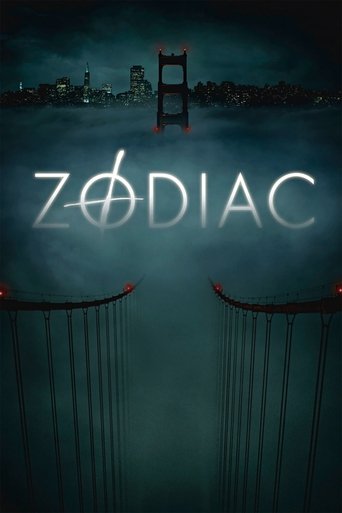
Fincher's other great 1970s film and the clearest template for how he'll shoot Los Angeles a few years on from where Tarantino left it. Pay attention to how Fincher uses period without nostalgia — almost the opposite of Tarantino's needle-drop maximalism. The fog, the basements, the offices lit by fluorescent buzz. Zodiac respects the decade by refusing to romanticize it. Adventures will almost certainly do the same.
Jackie Brown
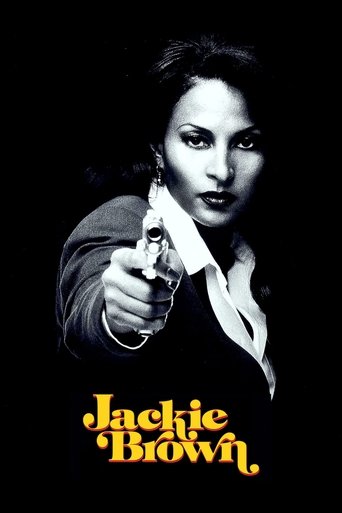
The Tarantino film closest in spirit to a Hollywood fixer story: weary professionals, deals going sideways, late-career grace. If Cliff has matured into someone who solves problems for a living, Jackie Brown is the emotional register to expect — not the cartoon swagger of Kill Bill: Vol. 1, but the bruised, lived-in patience of people who know the game has cost them.
The Long Goodbye
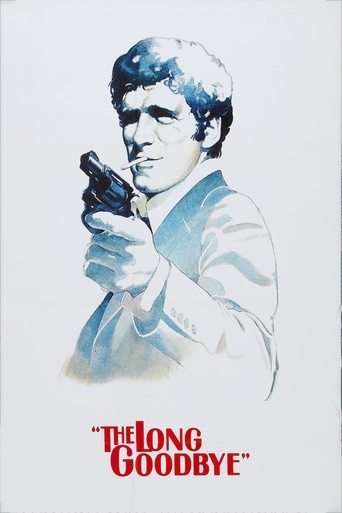
Robert Altman's 1973 L.A. noir is almost certainly in the Tarantino-Fincher bloodstream here: a man out of step with a city that's gotten meaner. Elliott Gould's Philip Marlowe wanders through a Los Angeles he no longer recognizes, and if Cliff Booth in 1977 isn't doing some version of that walk, the title is misleading. Pairs naturally with the los-angeles movies thread running through both filmmakers' catalogs.
The Killer
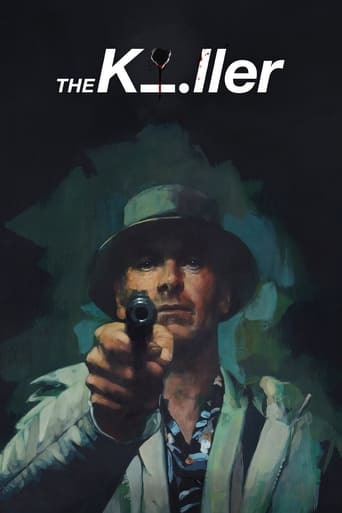
Fincher's most recent Netflix film and the most direct preview of his working method on this one. Same DP, same platform, same austere visual grammar, and a protagonist defined entirely by craft and routine. Imagine Cliff Booth filtered through that discipline — the breathing exercises, the punctilious procedure, the dry voiceover — and you have a working sketch of Adventures. If you only watch one of these as warm-up, make it this one. If you'd rather be surprised, RandomFlix's dice will happily land on something adjacent.
What to Watch For When the Trailer Drops Again
A few diagnostic markers will tell you, in seconds, whose movie this really is.
Music cues. A full Tarantino-curated needle-drop soundtrack — deep-cut soul, forgotten rock, Italian library music — would suggest the writer's sensibility won the war room. A Trent Reznor and Atticus Ross score, on the other hand, would tell you instantly that Fincher is in charge of the film's nervous system. The two are not mutually exclusive, but the balance will be the headline.
Editing rhythm. Fincher's cuts are precise, unsentimental, and engineered for forward momentum. Tarantino's scenes often run long by design — the table conversations in Inglourious Basterds are the canonical example. The cutting pattern in Adventures will be the most reliable tell.
Cliff's interiority. The original film kept him deliberately opaque — a man whose past (did he kill his wife?) was offered as ambiguity rather than answer. A fixer movie almost requires him to think on camera, to weigh options, to scheme. That's Fincher specialty terrain. Watch for whether the film cracks Cliff open or doubles down on the mystery.
The 1969 question. Whether Adventures directly acknowledges the original's revisionist ending or treats it as ambient mythology will reveal how much of a sequel this actually is. The Oscar on the desk suggests the latter — that the events of 1969 are now simply part of Cliff's biography, no more dwelt on than any other line on a résumé.
The Bottom Line
The Adventures of Cliff Booth is the rare event movie whose interest is structural before it's narrative. Two of the last great American auteurs are sharing a character. One wrote him; the other is staging him. Whether the result is a masterpiece, an interesting failure, or something stranger than either, it will reframe how we read both filmmakers' catalogs — Tarantino's as a body of work that can survive translation, Fincher's as a sensibility flexible enough to host another voice.
That alone makes it the 2026 release worth paying closest attention to. Mark the calendar, sharpen your eye, and when the next trailer drops, watch the cuts.