A Pride Month Return 30 Years in the Making
On June 7 and June 10, 2026, The Birdcage returns to American multiplexes — a two-night Fathom Entertainment engagement presented alongside Park Circus and Amazon MGM Studios, with an exclusive on-screen introduction from critic and historian Leonard Maltin. That Maltin framing matters. Anniversary screenings of studio comedies don't usually arrive with a canon-builder's blessing; they arrive as nostalgia bait. This one is being positioned as something closer to restoration work — a Pride Month celebration of love, family, and chosen family thirty years after Mike Nichols and Elaine May quietly rerouted what a mainstream comedy could say out loud.
The stakes are not small. A $31 million farce that grossed more than $185 million worldwide is coming back to theaters during a Pride Month when LGBTQ+ representation is again politically contested, school libraries are being audited, and drag itself has become legislative shorthand. The film's themes — performance, passing, the right of a queer family to simply host a dinner — read in 2026 less like period charm than like a thesis still being defended.
If the recent returns of Thelma & Louise and other 1990s touchstones signaled a wave of canon-revisits, this one feels distinct. It isn't asking to be remembered fondly. It's asking to be reappraised.
1996: The Political Climate That Made The Birdcage Radical
It is easy, three decades on, to forget how exposed everyone involved felt. The Birdcage opened in March 1996 into a country still operating under Don't Ask, Don't Tell, still inside the long tail of the AIDS crisis, and only months away from President Clinton signing the Defense of Marriage Act. Indiana University's Establishing Shot essay on the film documents how the cast and crew braced for backlash that, remarkably, never came at the scale they feared.
Instead, the film became the first major studio release to cross $100 million domestic with two openly gay leads at its center. GLAAD nominated it for a Media Award and praised its depth and humanity — a meaningful endorsement at a moment when queer-community advocates were sharply divided about whether mainstream visibility was a gift or a flattening. Larry Kramer, the most reliably furious voice in American queer letters, gave it his approval. That alone tells you Nichols and May had threaded an almost impossible needle.
Look at what surrounded it in the 1990s movies studio landscape. Queerness in mainstream comedy movies was, more often than not, either a punchline or a deathbed. The Birdcage refused both. Albert and Armand aren't tragic, aren't predatory, aren't punished, aren't asking permission. They're just exhausting each other the way long-married couples do, while their son brings home future in-laws who happen to be a Republican senator and his wife.
Why Nichols and May's Craft Still Holds Up
Elaine May's adaptation of the 1978 French farce La Cage aux Folles is, structurally, one of the great screenplay magic tricks of the decade. She kept the bones of Jean Poiret's original — the closeted dinner, the panicked redecoration, the mother who arrives too late — and Americanized everything else: the Senate subplot, the South Beach setting, the specific moral panic of a Coalition for Moral Order co-founder discovering his son's future father-in-law runs a drag club. The Goldman/Keeley dinner is built like a stage play in three pressure-cooker acts, and May trusts the audience to feel the lid tightening without ever winking at them.
Roger Ebert gave the film three stars in 1996, praising Nichols' direction and the casting, and noting how the screenplay let the actors find the comedy rather than imposing it on them. Re-reading that review now, you can see what contemporaneous critics partially missed: not the jokes, which everyone clocked, but the emotional architecture underneath. The film's funniest scenes are also its most tender, and that doubling is the whole point.
The craft credits are stacked. Emmanuel Lubezki — yes, that Lubezki, three Oscars later — shot it, and his camera treats the apartment above the club as a kind of theatrical box where light has to do the dramaturgical work. The South Beach production design earned an Academy Award nomination for Art Direction. The ensemble won Outstanding Cast at the Screen Actors Guild Awards. These are not the receipts of a disposable studio comedy. These are the receipts of a film the industry knew, even then, was doing something rare.
Robin Williams and Nathan Lane: The Partnership That Protected the Movie
Here is the choice that makes The Birdcage work, and it is almost entirely Robin Williams': he plays Armand as the straight man. Not "straight" in the orientation sense, obviously, but in the comedic one. Williams — the most combustible improviser of his generation — locks himself down so Nathan Lane's Albert can detonate. In a star-driven comedy movies that kind of generosity is genuinely uncommon. Williams could have wallpapered the movie with riffs. He chose, instead, to be the man who loves Albert enough to listen.
That generosity didn't end when the cameras stopped. In the years since Williams' death, Lane has told the same story in several venues — at the Critics Choice Association's LGBTQ+ Career Achievement ceremony and on Sunday Today — about the 1996 Oprah press tour, when Oprah Winfrey began circling questions that would have effectively outed Lane on national television. Williams stepped in. He redirected, he riffed, he absorbed the heat. Lane has said plainly that Williams protected him, and that the protection mattered, because 1996 was not a safe year for an unestablished gay actor to be involuntarily disclosed to Middle America.
That offscreen ethic is continuous with the onscreen one. The Birdcage is, at its center, a film about love as defense — Armand defending Albert from a world that would humiliate him, Val defending his parents from a senator who would erase them, the whole household closing ranks. Williams understood the assignment so deeply that he extended it past the call sheet.
This is also where The Birdcage sits in Williams' larger 1990s run of empathetic performances. Mrs. Doubtfire and, a year after The Birdcage, Good Will Hunting share the same DNA: a man choosing tenderness as the most interesting available choice. It is the throughline of his best work.
Can't Decide What to Watch?
Let RandomFlix pick a movie for you. One click, one great movie.
Roll the DiceThe Lineage: What The Birdcage Made Possible
You can draw a fairly direct line from 1996 outward. In & Out arrived the next year, with Paul Rudnick explicitly building on the permission slip Nichols and May had secured. Will & Grace launched in 1998 on the same cultural runway. Brokeback Mountain in 2005 took the dignity-without-apology posture into tragedy, and contemporary studio queer comedies like Bros cite The Birdcage as their grandparent text.
A HuffPost retrospective went as far as calling it Hollywood's most monumental gay movie, and the phrase is worth sitting with. "Monumental" carries weight in two directions. It registers what the mainstreaming gained — sheer reach, the ability to make queer family legible to audiences who had never knowingly met one — and it acknowledges what mainstreaming costs, which is always some sanding-down of edge.
The honest reappraisal has to include the critiques that have aged with the film. Hank Azaria's Agador, brilliantly performed, is also a caricature whose accent-and-bare-feet routine reads differently now than it did in 1996. The film's underlying politics of passing — the idea that the Goldmans must temporarily perform straightness to survive the Keeleys — is a compromise the film both stages and critiques, but doesn't fully resolve. None of this dismisses the achievement. It situates it.
What The Birdcage absolutely did was reframe what a family movie could look like. It belongs to a small shelf of chosen-family movies stories that insist family is something you build, defend, and feed dinner to — not something you're issued at birth.
What to Watch After the Re-Release
La Cage aux Folles
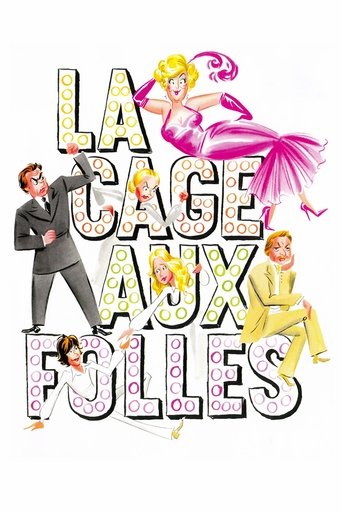
Édouard Molinaro's 1978 original is essential viewing alongside the remake — not as a curio but as the source whose rhythms May preserved and whose specifics she rewrote. Watching them in sequence is a master class in adaptation as translation rather than transcription.
In & Out
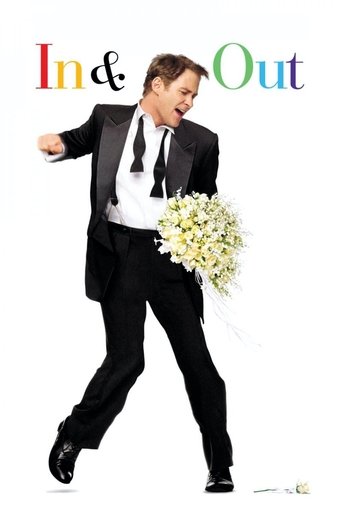
The 1997 Paul Rudnick comedy that arrived in the immediate wake of The Birdcage and made the permission slip explicit. Kevin Kline as a small-town teacher publicly outed at the Oscars; Joan Cusack as his fiancée; Tom Selleck as a kissing reporter. It would not exist in this shape without Nichols' film.
Paris Is Burning
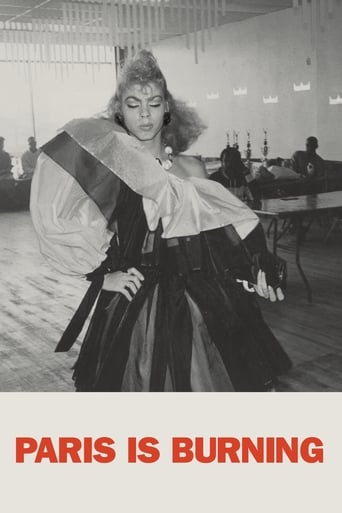
Jennie Livingston's 1990 documentary on Harlem ballroom culture is the indispensable contextual companion. It places Albert's drag artistry inside a real, living queer lineage — one The Birdcage borrows from without ever quite naming.
Philadelphia

Jonathan Demme's 1993 drama is the somber pole to Nichols' farce. Together they describe the narrow corridor of what mainstream 1990s Hollywood could say about queer life: a courtroom death and a drag-club dinner, the tragic mode and the comic mode, both essential, both insufficient on their own.
For readers who want to keep exploring after the theatrical run wraps, RandomFlix's lgbtq movies hub is a good place to spend an evening.
Why It Still Defines Pride Month
The thesis returns where it began: this is a film that insists love — romantic, parental, performative, hosted, plated, toasted — is not negotiable. That insistence reads as quaint only if you've forgotten what 1996 actually looked like, and it reads as urgent again in 2026 for reasons that don't require spelling out.
The 30th anniversary screenings are doing real cultural work, not just commemorative work. They put The Birdcage back on the largest available screen during the month when visibility itself is being relitigated, and they let a new audience watch Williams hand Lane the movie, scene after scene, the way you'd hand someone your coat.
There is a critical phrase that has attached itself to the film over the years — "piercing the toast" — borrowed from the dinner scene where Albert, in drag as Val's mother, can't quite get the fork through the bread. It has come to stand for the film's whole quiet radicalism: the impossible task, performed with grace, in front of people who don't yet know they're witnessing something brave. Thirty years on, the toast still gets pierced. The dinner still gets served. The family still gets to keep itself.
Catch it on the big screen while it's there.
Keep Exploring
Browse the lgbtq movies and comedy movies hubs for more films in conversation with Nichols and May's farce — from the chosen-family canon to the broader landscape of studio comedies that learned, slowly, to follow The Birdcage's lead.