The Return of the Summer Spielberg
For the first time since Indiana Jones and the Kingdom of the Crystal Skull cracked the multiplex open in 2008, Steven Spielberg is making a summer movie again. Disclosure Day lands on June 12, 2026, and the symmetry is almost too clean: the man who effectively invented the modern summer blockbuster with Jaws in 1975 is reclaiming June as his home field, and he's doing it with the subject he's been circling his whole career — what happens if we are not, in fact, alone.
The intervening years have been Spielberg's prestige era. The Fabelmans, West Side Story, and The Post were grown-up pictures made by a director consciously sorting through his own legacy. A return to popcorn science-fiction movies on this scale matters because it suggests Spielberg has something left to say in the register he built — wonder at scale, projected onto a hundred-foot screen with an audience holding its breath together.
He's not doing it alone. Cinematographer Janusz Kaminski, composer John Williams, and producer Kristie Macosko Krieger are all collaborating with Spielberg again, which is the closest thing the modern American film industry has to a varsity squad reassembling for one more game. Williams especially feels load-bearing here — you don't bring back the man who wrote the five-note motif from Close Encounters of the Third Kind unless you mean to have a conversation with that earlier movie.
Which is the question this whole piece is built around. Is Disclosure Day a spiritual sequel to Spielberg's 1977 contact film, or something stranger — a closet sequel, a rhyme, a rewrite?
What the Trailer Actually Shows
The marketing campaign has been unusually patient. A teaser dropped in December, a Super Bowl spot followed, and only later did we get the full theatrical trailer with its now-famous alien-fingers reveal. From those breadcrumbs, we can sketch the shape of the film without spoiling much, because Spielberg and Universal haven't shown much.
Josh O'Connor's character is shown accessing government secrets about extraterrestrial beings, while Emily Blunt's meteorologist mysteriously speaks in tongues on air — that broadcast moment is the trailer's signature image. Her character experiences what's been described as an "alien brain scramble" during a Kansas City weather broadcast, and Colin Firth appears wired to a sinister mind-melding machine, all of which suggests a film built around different kinds of contact: linguistic, neurological, governmental.
The trailer leans into Roswell imagery, which is the foundational text of American UFO mythology — the desert, the wreckage, the cover-up. That iconography places Disclosure Day squarely inside the conspiracy tradition while keeping the door open for awe. The tonal needle the trailer threads is the interesting part: it splits the difference between the open-armed wonder of Close Encounters of the Third Kind and the white-knuckle dread of Signs. There are upturned faces bathed in light, but there's also a pervasive feeling that whatever is arriving might not be benevolent.
Decoding the Cast
Spielberg's casting is rarely accidental. Each face here seems chosen to embody a specific facet of the contact story — the believer, the digger, the gatekeeper, the witness.
Emily Blunt as the Meteorologist
Blunt is the engine of the fan-theory discourse, and not by accident. Her Empire magazine quote suggesting Disclosure Day answers questions posed by Close Encounters has fueled fan theories that it's a closet sequel to the 1977 classic. A meteorologist is a brilliant audience surrogate — someone professionally trained to read the sky, suddenly confronted with a sky that's reading her back. If she's the linguistic-contact figure, she's the closest thing the film has to a Lacombe, the awe-struck specialist Truffaut played in 1977.
Josh O'Connor as the Whistleblower
Coming off Challengers and La Chimera, O'Connor has quietly become the most interesting young leading man in English-language cinema, and his casting as the figure cracking into the government's UFO files is shrewd. He plays curiosity with a kind of bruised intelligence — exactly the texture you want in a man whose discovery is going to break him.
Colin Firth in the Machine
Firth in a Spielberg movie strapped to a mind-melding apparatus is a casting choice that telegraphs faction. He's not the warm Lacombe figure; he reads as the institutional heavy, the man who knows too much and intends for you to know nothing. If Truffaut's scientist in Close Encounters was the audience's hand-holder, Firth's character feels like his shadow — a Lacombe in reverse, gatekeeping rather than translating.
Colman Domingo, Wyatt Russell, Eve Hewson, Henry Lloyd-Hughes
The full main cast includes Blunt, O'Connor, Firth, Hewson, Domingo, Wyatt Russell, and Henry Lloyd-Hughes, which is a roster suggesting multiple converging storylines rather than a single hero's journey. Domingo, fresh off a run of award-season heat, doesn't take small roles. Russell brings a military bearing that's been useful in genre work. The shape of the ensemble points to a faction structure — civilians, scientists, soldiers, spooks — colliding over a single event.
The Close Encounters Conversation
The most telling Spielberg moment of the last year wasn't a trailer; it was a panel. At his SXSW keynote, Spielberg made direct comments about believing in extraterrestrial life and explicitly referenced the Close Encounters connection, with the panel even featuring the iconic five-note motif played onstage. Playing those five notes in 2026 is not a neutral gesture. It is an invitation to read the new film through the old one.
Then there's the time-travel theory. In a 2023 Stephen Colbert interview, Spielberg floated the theory that UAPs are humans time-traveling from the future. If that idea has any presence in Disclosure Day, it would represent a profound rewrite of the Close Encounters mythology — those weren't visitors from elsewhere in space, the new film might suggest, but visitors from elsewhere in time. The "us" we've been waiting to meet has been us all along.
The script's pedigree backs up the closet-sequel reading. Spielberg developed a 40-50 page treatment before screenwriter David Koepp wrote the script, with Spielberg deeply involved throughout. Forty to fifty pages is not a logline; that's a director laying down architecture. Koepp is the journeyman who wrote Jurassic Park and War of the Worlds for Spielberg, which makes him the right hand for this kind of personal-mythology project — a craftsman who knows how to translate Spielberg's instincts into pages without imposing his own voice on top of them.
A "closet sequel" framing fits Spielberg's late-career pattern. He's been rhyming with his own work for a decade now — Ready Player One nostalgia, The Fabelmans autobiography, West Side Story as a return to the musical form he grew up on. Disclosure Day may be the rhyme he's been building toward.
The Spielberg UFO Lineage
To understand where Disclosure Day sits, it helps to trace the line.
Close Encounters of the Third Kind — the wonder doctrine, 1977
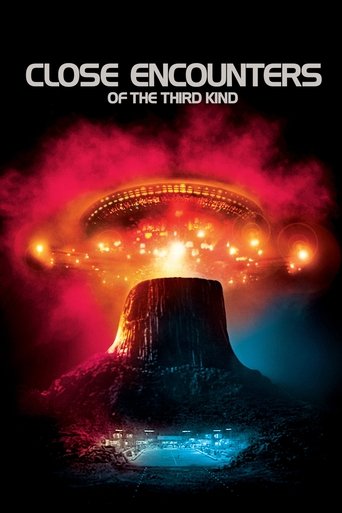
The original thesis statement: aliens as transcendence, contact as religious experience, the sky opening up and meaning it kindly. Roy Neary abandons his family to climb aboard the mothership and the movie thinks this is, on balance, beautiful.
E.T. the Extra-Terrestrial — aliens as family, 1982
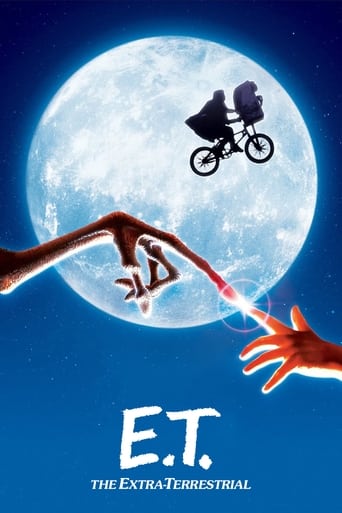
Five years later, Spielberg shrunk the scale and made the alien intimate — a creature you could love, lose, and bury in the woods behind your house. E.T. is the suburban counter-text to Close Encounters' grand opera.
War of the Worlds — aliens as terror, 2005
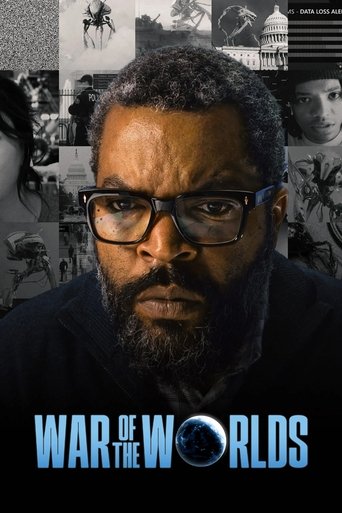
Post-9/11, Spielberg flipped the polarity. The arrival is an attack, the tripods are sublime in their cruelty, and the famous shot of ash falling like snow turns first contact into a horror movie. The wonder is gone.
Super 8 (produced) — Spielberg-by-proxy nostalgia, 2011
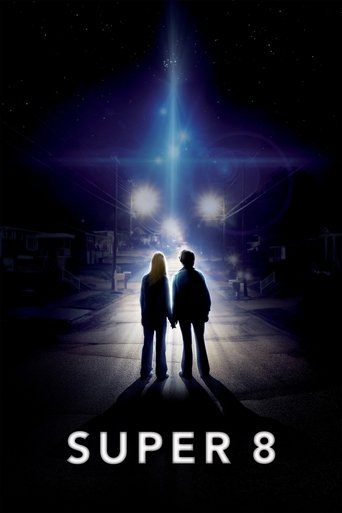
J.J. Abrams' love letter, produced by Spielberg, packaged the Amblin sensibility for an audience that grew up on it. It's the moment Spielberg's UFO mode officially became a genre other people could practice.
Disclosure Day appears to fold all three of his original modes — wonder, intimacy, terror — into one film. Blunt's meteorologist for the awe, O'Connor's whistleblower for the human-scale stakes, Firth's apparatus for the dread.
Can't Decide What to Watch?
Let RandomFlix pick a movie for you. One click, one great movie.
Roll the DiceIf You Want to Prep Before June 12
If you feel like spending an evening with the films Disclosure Day is in conversation with, three rewatches make sense.
Close Encounters of the Third Kind is non-negotiable — it's the source code Spielberg keeps returning to, and the five-note motif alone will hit differently in June if you've sat with the original recently. Signs is the dread companion, a small-scale alien story that understands silence and rural unease in a way the Disclosure Day trailer seems to want to inherit. And Arrival earns its place because of Blunt's character — if her speaking-in-tongues sequence is what it looks like, the linguistic-contact angle Denis Villeneuve and Ted Chiang explored is the most useful recent reference point.
For conspiracy texture, the 1990s movies paranoia tradition — The X-Files' big-screen years, the deep-state thrillers of that era — feeds directly into the Roswell strand the trailer is mining. The alien-contact movies corner of the catalog is broader than just Spielberg, and worth wandering. If you'd rather a science-fiction movies pick come at you sideways instead of from a planned list, RandomFlix can shuffle one for you.
What We're Still Watching For
A few open questions remain heading into June.
The first is craft: is the alien design practical or digital? Spielberg has historically favored practical effects when the creature has to carry emotional weight — Carlo Rambaldi's E.T., the puppet-led mothership beings of 1977 — but modern VFX would let him stage things he could only dream about then. The Super Bowl spot's hand reveal looked tactile, but a single frame can be deceiving.
The second is theory: does the film actually commit to the time-travel-humans premise Spielberg floated to Colbert? Floating an idea on late-night TV three years before release is either a coincidence or the world's most expensive seed-planting.
The third is context. A Spielberg UFO film in 2026 lands in a different culture than one in 1977. The Pentagon has held public UAP hearings. AARO, the All-domain Anomaly Resolution Office, is a real federal entity. Public belief in non-human intelligence is no longer fringe. Spielberg himself has spoken about a strong suspicion we're not alone, and he's saying it into a microphone the culture is finally inclined to listen to.
The marketing's restraint is itself a tell. The mothership of 1977 was famously hidden until the final reel, and the Disclosure Day rollout — December teaser, Super Bowl spot, alien-hand reveal, full trailer — has the same logic of withholding. Spielberg knows that the most powerful image in a UFO movie is the one you haven't shown yet.
Whether Disclosure Day turns out to be a sequel, a remix, or a capstone, it's Spielberg returning to the sky one more time. That alone is worth showing up for on opening weekend.