The 30-Minute Screening That Started the Hype
Sony did something a little strange with Zach Cregger's Resident Evil: instead of dropping the full film for a festival crown before rollout, they invited a small group of press to watch only the opening half-hour. That truncated screening lit the fuse for a wave of first reactions ahead of the September 17 Fantastic Fest premiere and the September 18 wide release, and the tweets that followed carried a very specific rhythm — praise for tone, praise for a lead performance, and one recurring exclamation point over a single set-piece scare.
The recurring notes are worth pulling out. Critics highlighted Austin Abrams' chaotic, clumsy energy as medical courier Bryan, a darkly funny undercurrent, and what several called one of the most inventive jump scares of the year. That's a very specific cocktail — comedy of nerves, a protagonist who feels out of his depth, and a director confident enough to hinge a marketing cycle on a single scare's reputation.
There's a credibility problem, though, and every honest reader should hold it in mind: nobody outside the production has watched the entire 94-minute cut. Every glowing tweet comes with an asterisk the size of Raccoon City. The last third of a horror movie is usually where things either land or unravel, and thirty minutes is barely more than a long trailer.
What the screening did confirm is that Cregger has made a deliberate pivot. Where Barbarian operated as a puzzle box and Weapons built out a multi-POV mosaic, this one sounds leaner and more punishing — a filmmaker actively resisting the density that made his last two movies work.
Why the Trailer Broke the Fanbase in Half
The trailer, meanwhile, has done the opposite of the screening. It has fractured the horror movies audience along a fault line the franchise has been walking for two decades.
The complaints are easy to catalog. A vocal contingent argues the movie doesn't look like Resident Evil, takes liberties with the Raccoon City geography, and abandons the faithful game adaptation many were hoping for. The specific flashpoint is casting: no Leon Kennedy, no Claire Redfield in the way fans have been trained to expect them, and instead an original protagonist named Bryan carrying the movie. For a series whose fanbase can recite item-box inventories from memory, that's not a minor swerve.
The counter-argument is equally loud. The Paul W.S. Anderson era already spent six films chasing literal fidelity in various forms, and a Cregger-shaped detour is either a reset or nothing at all. If the point of a reboot is to reintroduce a property to people who don't know it, then handcuffing the director to a checklist of fan-service beats defeats the purpose.
Cregger himself has been unusually candid about the whole thing. In an interview picked up widely from IGN, he compared the promotional tour to a political campaign and admitted he underestimated the backlash over sidelining iconic characters like Leon Kennedy in favor of Bryan. That's a rare piece of directorial honesty in a marketing cycle typically built on nothing but reassurance. He also acknowledged that many fans wanted a direct game adaptation and were unreceptive to anything different from that.
None of this is new. Every prestige horror movies reboot has faced the same purity test — Suspiria was going to be a disaster until it wasn't, Halloween in 2018 had to justify its own existence to a fandom that had memorized every prior continuity, and even Evil Dead in 2013 had to survive the "this isn't Ash" argument before finding its audience. The pattern is consistent: purists revolt at trailer, film releases, argument moves on.
What Cregger Actually Made: The 94-Minute R-Rated Sprint
Here's the skeleton of the actual film, stripped of speculation. The MPA rated it R for strong bloody violence, gore and language throughout. The runtime is 94 minutes on an $80 million budget, with a Fantastic Fest premiere on September 17 followed by US wide release on September 18, and the story parallels the outbreak-night structure of Resident Evil 2 (1998) in a modern setting.
That's a very specific set of choices. Ninety-four minutes is short by modern studio-horror standards — closer to a genre programmer than a franchise-launching tentpole. Eighty million dollars is enough to build serious creature work and set-pieces without sinking into the bloat that has killed lesser IP films. And an R rating is the point, not the risk: this series has never sanded itself down for a wider audience, and Sony seems content to let Cregger do what he does at full volume.
The ensemble is the other tell. Cregger built the film around unconventional casting, with Austin Abrams leading alongside Paul Walter Hauser, Zach Cherry, and Kali Reis. That's not a cast anyone would assemble to sell action figures. Abrams brings a nervy, adolescent quality; Hauser is one of the most interesting character actors working; Cherry does deadpan panic better than almost anyone; Reis is a former world-champion boxer who broke through in prestige TV. It's a lineup built for texture, not spectacle.
The tight runtime is the connective tissue. Cregger is reportedly trading world-building for sustained dread — the DNA of 28 Days Later rather than a shared-universe blueprint. That fits inside a broader current in 2020s movies horror, where studios have started to trust that ninety lean minutes and a strong idea outperform a bloated franchise setup.
The Cregger Signature: Structural Chaos as a Feature
If you've watched Barbarian, you know what Cregger does. The film's brand is disorientation — a hard-left tonal pivot at the exact moment you think you've mapped the movie. Weapons extended that trick into a multi-POV mosaic where the audience is constantly recalibrating who to trust and what the story is even about.
Here's the case for why that instinct might be the most faithful thing anyone has ever done with Resident Evil. The games' opening hours are, functionally, panic. You don't know the layout. You don't know what's around the corner. You're rationing ammunition against enemies you don't fully understand. Every Resident Evil movie to date has explained too much, too fast — bio-weapons briefings, corporate conspiracies, ticking clocks. A version where the audience is as lost as the protagonist is arguably closer to the source than a version that painstakingly recreates the Raccoon City Police Department lobby.
There's also a lineage to consider. Outbreak body-horror movies descends from a very specific chain — Carpenter, Cronenberg, early Romero — and Cregger's sensibility, which lives in the gap between comedy and rupture, fits that tradition. The best body horror has always been funny in a queasy, wrong-laugh way. That's very much Cregger's register.
The final variable is Abrams. He isn't an action-hero type. He's an actor known for twitchy vulnerability, for playing people slightly too fragile for their circumstances. If the reinvention works, it works because Bryan is the guy who was never supposed to be in this story — and every scream, stumble, and panicked wrong turn is legible on his face. The studio synopsis frames the film as a thrilling and terrifying reinvention following medical courier Bryan through one horrifying night of chaos. That's a survival-horror pitch, not a shooter pitch.
Five Films to Watch Before September 18
If the screening reactions are any guide, Cregger is drawing from a specific horror lineage. Here are five films that sketch the neighborhood.
Barbarian
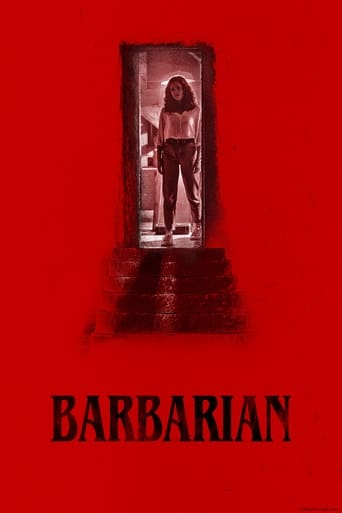
Cregger's own tonal playbook — the film that made a case for him running a studio-horror IP in the first place. Watch it to remember how he handles the moment where a movie stops being one thing and starts being another, because you're going to see that muscle used again.
28 Days Later
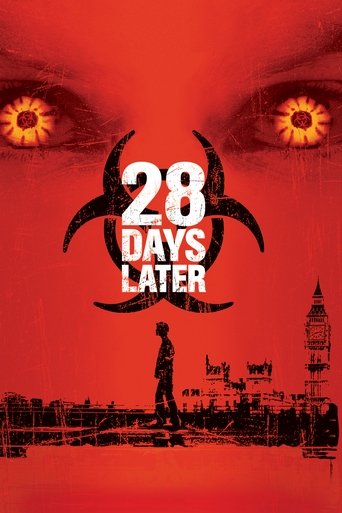
The gold standard for outbreak kineticism — infected who sprint, a protagonist waking up into a broken world, digital-video urgency that made the whole subgenre feel newly dangerous. If the 94-minute runtime is doing what it sounds like it's doing, this is the tempo Cregger is chasing.
The Mist
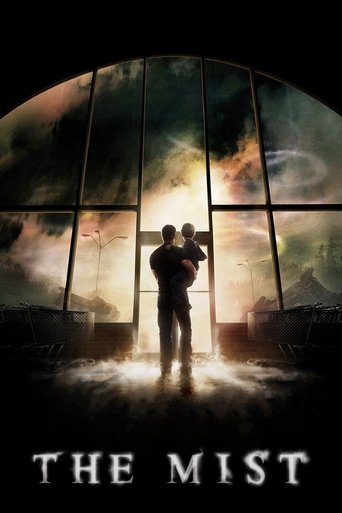
The argument for small-cast dread and a merciless final act. Frank Darabont proved a studio horror film can be built almost entirely on claustrophobia and moral panic, and its ending remains the model for what a mainstream horror movie is allowed to do to its audience.
Train to Busan
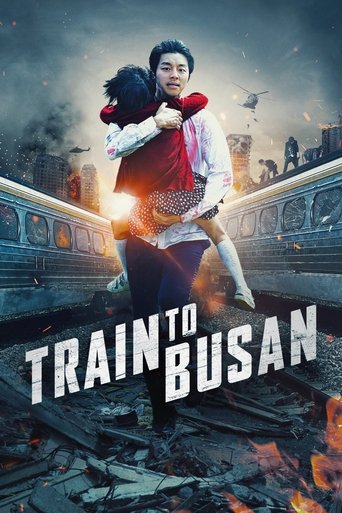
Infection choreography at its peak. Every set-piece is a geometry problem — bodies moving through confined space, sightlines collapsing, one wrong choice cascading into disaster. That's the exact grammar a Raccoon City outbreak needs.
Overlord
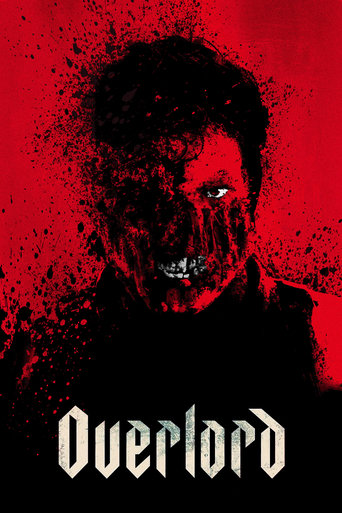
The closest recent analog to what Cregger appears to be attempting: studio-scale gore with a genre-mash sensibility, an R-rated budget spent on practical creature work, and a protagonist who isn't quite equipped for the horror around him.
If you'd rather let the algorithm land somewhere in this neighborhood on its own, Roll the Dice through RandomFlix's horror shelf gets you there without the pre-game homework.
Can't Decide What to Watch?
Let RandomFlix pick a movie for you. One click, one great movie.
Roll the DiceThe Bigger Question: Who Is a Video-Game Movie For?
Zoom out and the September 18 opening starts to look like a stylistic referendum, not a commercial one.
Sony's Resident Evil reboot continues a 24-year franchise streak, with every film in the series carrying an R rating. That's a quiet vote of confidence in Cregger — the studio isn't trying to broaden the tent. They're trusting a filmmaker with a distinctive voice to make a distinctive movie, and they're pricing the risk accordingly with an $80 million budget rather than a $200 million one.
The fan-versus-filmmaker tension here is the defining fight of the current video-game adaptation boom. On one side, the faithful-to-a-fault school: shot-for-shot fealty, canonical characters, geography preserved down to the last corridor — the model that The Last of Us and the recent Silent Hill entries have leaned on to win over hardcore audiences. On the other, Cregger's swerve: take the mood, take the outbreak, take the survival-horror grammar, and throw the rest away.
Neither approach is inherently correct. Faithful adaptations preserve what people already loved. Free adaptations create the possibility of something new. What makes the September 18 opening interesting is that it's one of the first times a studio has bet real money on the second option for a game this beloved.
The honest read of the first 30 minutes is that Cregger seems to have delivered the movie he promised — lean, funny in the wrong places, mean when it needs to be, anchored by a lead performance that plays vulnerability instead of heroism. Whether that's the Resident Evil anyone actually asked for is the real cliffhanger, and it's the one the back sixty-four minutes will have to resolve.
Buy the ticket. Argue about it after.