A 29-Year-Old Movie Just Beat the Multiplex
The numbers don't make sense until you sit with them. A 1997 hand-drawn Japanese animated film, released nearly three decades ago, opened its 2026 re-release weekend at a $12,134 per-screen average on 330 IMAX screens — by far the top in the box-office top 10. The film pulled in $1.2 million in previews alone before the actual opening weekend began. In a market where current studio tentpoles are grinding for every ticket, a re-release of Princess Mononoke is out-intensifying them on a per-theater basis.
This isn't a marketing blitz. It isn't a novelty screening. It's a film older than most of the audience buying tickets, and it's outperforming the season on the metric that actually matters — the concentrated hunger of the people who show up.
Which raises the question this article wants to sit with: what is 2026 finding in this specific movie that 1999 audiences, watching Miramax's clumsy first American release, didn't quite grasp? And why has Princess Mononoke — not the more decorated Spirited Away — quietly become the Studio Ghibli text that feels urgent right now?
The 4K Restoration and Why GKIDS Picked This Fight
The physical object being sold this September is a genuine event. GKIDS' 40th-anniversary restoration was overseen by Ghibli's longtime cinematographer Atsushi Okui, marking the studio's 40th anniversary. That matters because Okui isn't a restoration technician parachuted in for the occasion — he's the eye that shot the film originally. The 4K version is authored, not conserved.
But the pitch around the re-release has done something more interesting than sell a pretty transfer. GKIDS' VP of distribution Chance Huskey framed the theatrical run as a stand for hand-drawn craft "at a time when technology tries to replicate humanity." The subtext is unmistakable: generative AI, and specifically the flood of AI-generated Ghibli-style images that has become an ambient irritation of 2025 and 2026. The distributor is quietly reframing what Princess Mononoke is about.
For most of its life, this was an eco-parable with samurai iconography. In 2026, it's also a manifesto for human-made art — an argument, made in ink and cel and Joe Hisaishi strings, that the labor of drawing forests by hand is itself the meaning. That shift lands hard in a year when the broader animation movies conversation has become inseparable from questions of authorship, training data, and what a "style" even is when it can be summoned in a prompt.
Why Mononoke Reads Differently Than It Did in 1999
The 1999 Western reception of the film, once you go back and read it, is almost quaint. Critics received it as exotic fantasy — a lush, violent ecological fable full of gods and demons and unfamiliar mythology. It was reviewed like a curiosity. Something admirable arriving from somewhere else.
That framing has completely collapsed. The film's central human-vs-nature conflict now maps directly onto present-day climate crisis realities like accelerated deforestation and wildfire. Irontown isn't an allegory anymore. It's a Wednesday. Displaced communities, extractive industry chewing through old-growth forests, ecosystems collapsing faster than we can name them — the film has been slowly overtaken by its own subject matter.
But the deeper reason Princess Mononoke reads differently in 2026 is what it refuses to do. The film dismantles the good/evil dichotomies of typical eco-cinema, offering a more nuanced Anthropocene framework than almost any climate-themed movie of the last two decades. Lady Eboshi is not a villain. She protects lepers and former sex workers, she gives them dignified work, she builds a society for people the rest of feudal Japan discarded — and she is destroying the forest. San, the wolf-raised girl fighting for the forest, is not clean either; she wants humans dead and would kill Ashitaka if she could. The Deer God's forest is not a paradise. It is dangerous and alien and, when wounded, apocalyptic.
Audiences fatigued by clean-villain climate narratives — the oil executive twirling his mustache while the plucky teens save the reef — finally have language for what this movie has always been doing. It's the rare environmental movies story that treats the crisis as a genuine collision of legitimate needs, not a morality play with an obvious answer.
The Spirited Away Comparison Nobody Wants to Make
Spirited Away is the canonical Ghibli film. It won the Oscar. It sits at the top of most critical consensus. It's the movie that made the studio globally legible, the first Miyazaki most Americans saw, the reliable answer to "what should I watch first?" Nothing here is arguing against its greatness.
But the case for Princess Mononoke's ascendance in 2026 is worth making bluntly. Chihiro's story is a personal fable — a child's interior transformation, rendered as bathhouse surrealism. It's a masterpiece of psychological animation. San and Ashitaka's story is a civilizational reckoning. It's about how societies fail, how ecosystems die, how people trying to do good end up complicit in catastrophe.
The 2020s have made the civilizational film feel more urgent than the interior one. That's not a knock on interiority — it's a diagnosis of the moment.
You can see it in the theatrical afterlife of each film. Spirited Away re-releases coast on reverence; audiences show up to worship. Mononoke re-releases generate discourse. People argue about Eboshi on the way out of the theater. They post about the boar god's despair. Rotten Tomatoes has framed the two as Ghibli's twin international pillars, and that framing is starting to tilt.
Five Films to Watch Alongside the Re-Release
These aren't a marathon. They're companion pieces — films that sharpen what Princess Mononoke is doing, whether by contrast or by echo. Some are Ghibli. Some are live-action. Some are from the 1990s movies, some are much more recent. All of them get more interesting when you hold them next to Mononoke.
Nausicaä of the Valley of the Wind
Miyazaki's 1984 eco-fable is the clear ancestor — same ecosystem-as-character logic, same conviction that the forest is a moral agent rather than a backdrop. But Nausicaä herself is a hero in a way San refuses to be. She reconciles. She saves. She heals.
Watching the two back-to-back reveals how much darker and less redemptive Miyazaki's worldview became over the thirteen years between them. It's essential context for anyone claiming to understand his environmental thinking. Nausicaä believes humans and nature can find harmony. Mononoke isn't sure, and has stopped pretending it is.
Pom Poko
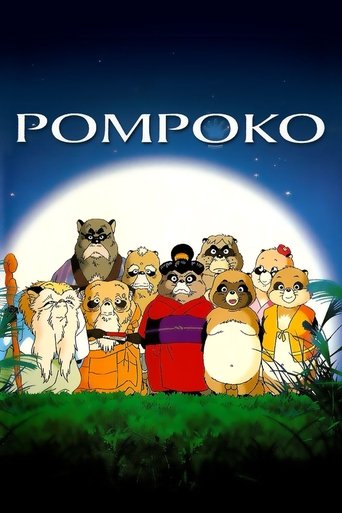
Isao Takahata's 1994 companion piece is the great overlooked Ghibli film about ecological collapse. Shape-shifting tanuki lose their forest to Tokyo suburb development. They try everything — resistance, spectacle, magic, protest — and lose anyway. Where Mononoke ends in fragile, negotiated truce, Pom Poko ends in resigned assimilation, its surviving tanuki putting on human clothes and blending into the very society that erased their home.
It's arguably the more honest 2026 ending, and it's the Ghibli film the current re-release should send viewers back to more than any other.
Can't Decide What to Watch?
Let RandomFlix pick a movie for you. One click, one great movie.
Roll the DicePrincess Mononoke (worth a second theatrical sit)
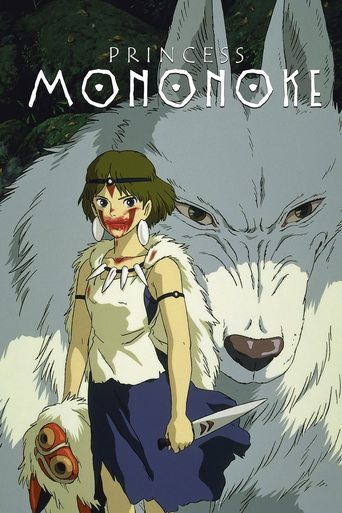
A brief note on why the IMAX 4K matters specifically. The Deer God sequence and the forest lighting were designed for a scale most of us have never actually seen them at. TV screens flatten the god's face, mute the bioluminescence of the kodama, compress the horror of the decapitation sequence into something manageable. In a properly calibrated theater, it isn't manageable at all.
The Joe Hisaishi score, played at proper volume through a room instead of leaking out of a soundbar, is essentially a different composition from the one people remember from DVD. If you've only ever seen this movie at home, you haven't quite seen it.
First Reformed
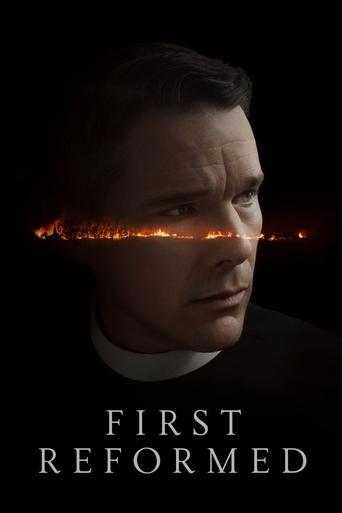
Paul Schrader's 2017 climate-despair drama shares Princess Mononoke's central refusal — no easy villains, no comforting resolution. Ethan Hawke's Reverend Toller is trying to do good and failing. The corporation poisoning the community is real, but the film is more interested in what happens inside a person who has understood the scale of the catastrophe and doesn't know what to do about it.
Both films locate the crisis inside the people trying to solve it. It's an unlikely double feature that clarifies why 2026 audiences are hungry for moral ambiguity in environmental movies storytelling — the clean-conscience climate movie has become unwatchable, and Schrader and Miyazaki both figured out why decades apart.
Annihilation
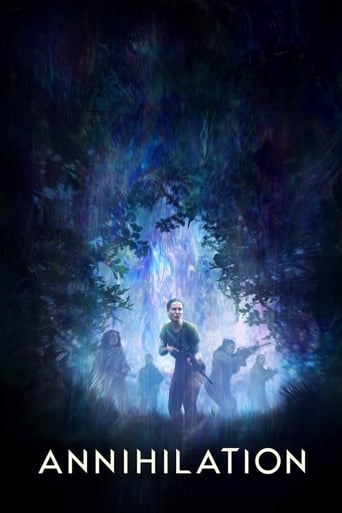
Alex Garland's Shimmer and Mononoke's cursed forest are cousins. Both are nature not as pastoral refuge but as something transforming, refracting, becoming other. The forest in Mononoke gets sicker and stranger the more it's wounded. The Shimmer rewrites the DNA of everything that enters it.
Both films refuse the pastoral fantasy that most fantasy movies eco-cinema falls back on — the idea that "nature" is a benign green thing waiting to be restored to its default settings. It's a useful modern data point for the argument that Mononoke's aesthetic sensibility has quietly become the template for serious ecological cinema, whether the filmmakers realize they're working in it or not.
What the Re-Release Tells Us About 2026 Audiences
Come back to the per-screen numbers. $12,134 per screen across 330 IMAX screens, topping the box-office top 10. That isn't Ghibli loyalty. Loyalty produces steady numbers, not chart-topping intensity. What those numbers describe is a specific hunger — audiences actively seeking a film that doesn't flatten complexity into a marketable shape.
Between AI panic, climate fatigue, and the exhausted state of franchise cinema, a hand-drawn film about irreconcilable moral claims — one where the industrialist is decent and the nature spirits are terrifying and no one gets to be right — feels genuinely radical. It's the opposite of the algorithmic content it now competes against. Every frame was drawn by a person who made a choice.
The reframe, once you see it, is hard to unsee. Spirited Away made Ghibli globally beloved. Princess Mononoke is the film making Ghibli feel necessary. One is the studio's greatest achievement. The other is the one that describes the world we actually live in.
If the theatrical run leaves you wanting to keep pulling threads on Miyazaki, Takahata, and the filmmakers working in their long shadow, RandomFlix is a decent place to keep the search going once the IMAX lights come up. But first, go see this on the biggest screen you can find. The Deer God is waiting, and he's bigger than you remember.