The Summer No One Predicted
Three weeks before release, the tracking on Backrooms pegged it at a $20 million opening. Respectable for A24, embarrassing for a summer slate built around $200 million tentpoles. Then Thursday previews hit: $10.4 million. Then Friday: $38 million from 3,442 theaters. By Sunday, Kane Parsons' adaptation of his own viral YouTube series was staring down an $85-90 million opening weekend — more than triple A24's previous record holder Civil War, which managed $25.5 million in 2024.
This wasn't supposed to be the summer of horror movies surprises. Summer 2026 was engineered for franchise dominance: Resident Evil, Insidious 6, Evil Dead Burn, the inevitable Scary Movie reboot, a phalanx of nine-figure-budgeted IP plays from every major studio. And yet Obsession, Curry Barker's $1 million debut, opened to $16 million in 2,615 theaters and landed third at the domestic box office against major tentpoles, then did something almost no horror movie ever does — it grew in week two.
At the Produced By Conference 2026, Jason Blum and James Wan sat on a panel discussing why original horror from young directors Curry Barker (26) and Kane Parsons (20) is connecting with theatrical audiences. The subtext was hard to miss: even the two men who built modern genre filmmaking didn't quite see the scale of this coming.
Three films. Three different theories of what "original" means in 2026. And one shared verdict on a slate that mistook brand recognition for desire.
Three Films, Three Different Theories of Original Horror
Backrooms
The Backrooms phenomenon should have been impossible to translate. Parsons' YouTube series was a vibe — fluorescent humming, damp carpet, the specific anxiety of a hallway that doesn't end. Adapting it required casting actors prestigious enough to ground the dread without smothering it. So A24 brought in Chiwetel Ejiofor, Renate Reinsve, and Mark Duplass, and let a 20-year-old direct them.
What's most telling isn't the opening number. It's the audience composition. 43% of the opening crowd was aged 18-24 — the exact demographic studios have spent five years insisting had migrated permanently to TikTok and streaming. They showed up because they had been waiting for this movie since they were fourteen, watching Parsons' shorts on phones under their bedsheets. The liminal-space movies aesthetic isn't a marketing hook for them. It's a native language.
Obsession
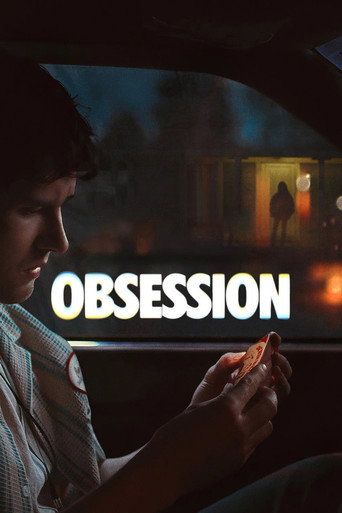
If Backrooms is the fandom-cashing-in story, Obsession is the festival-discovery fairy tale. Curry Barker's debut was acquired by Focus for $14 million at TIFF 2025 — a number that looked aggressive at the time and now looks like the bargain of the decade. The film earned a 94% Rotten Tomatoes score, but the more important metric came in week two.
Obsession posted an unprecedented 40% second-weekend bump and is closing in on a $100 million domestic milestone. Horror movies don't grow in week two. They front-load, then collapse 60% on Friday. A 40% increase is the signature of word-of-mouth burning through group chats faster than any marketing spend could replicate. Barker built his audience the same way Parsons did: shorts on YouTube, slowly, for years, until the demand pre-existed the product.
Send Help
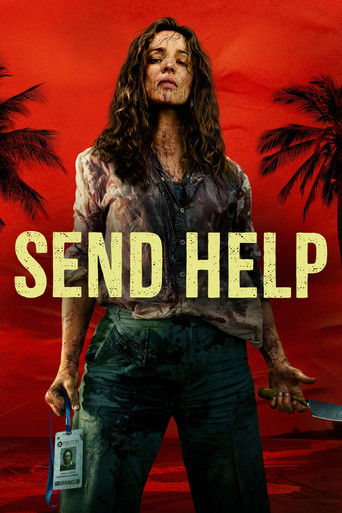
And then there's Sam Raimi, sixty-six years old, reminding everyone that "original" doesn't have to mean "first feature." Send Help isn't tied to any cinematic universe, isn't a reboot, isn't a legacy sequel. It's Raimi back in his Evil Dead mode — gross, funny, unhinged, fluid-camera mania. SlashFilm framed it as a return to gross, funny, unhinged Evil Dead-style filmmaking, and called 2026 a year horror feels unpredictable and committed to original concepts.
The economics back it up. Send Help has done $94 million on a $40 million budget, currently sitting at #2 on the year's horror chart. That's not blockbuster math, but it doesn't need to be. Horror's narrow margins mean a healthy multiple on a mid-budget original outperforms a struggling tentpole, every time.
What unites these three? Each one is reducible to a single image. The hallway. The watcher. The arm. You can sell each in one trailer beat, one poster, one TikTok. None of them required forty minutes of lore from a previous film to function. And all three were made for prices where a hit actually feels like a hit, not like a panicked recoupment.
Why Studios Got It So Wrong
The math broke first. A $200 million tentpole needs roughly $500 million globally just to be healthy after marketing and exhibition splits. A $1 million horror movie needs $4 million. The risk asymmetry between these two production models has never been wider in modern Hollywood — and yet, 2026's summer green-lights skewed harder into IP than any year since 2019. Studios looked at the math and chose the worse bet.
The deeper failure was generational. Studio executives spent the back half of the 2020s optimizing for an audience that remembered 2000s movies torture porn and 2010s movies Conjuring-verse mechanics. They greenlit movies for the people who showed up to Saw sequels. Meanwhile, Parsons and Barker were making movies for an audience raised on creepypasta, analog horror VHS aesthetics, SCP wiki rabbit holes, and short-form YouTube dread. That audience is now 22 and buying opening-night tickets.
Tracking systems are the third failure. NRG-style trackers measure awareness through TV spots, trailer views, and unaided recall. But Backrooms wasn't built through advertising. It was already a fandom before A24 bought a single ad. The demand was invisible to legacy measurement because it lived in places legacy measurement doesn't look — embedded YouTube views, Discord servers, Reddit megathreads, TikTok edits set to ambient noise.
The post-Reddit ghost story. The AI-paranoia thriller. The analog-horror found-footage hybrid. These aren't subgenres any studio has a development slate for. They're sensibilities, and sensibilities don't show up in a spreadsheet column labeled "franchise potential."
The Lineage: How We Got Here From Get Out
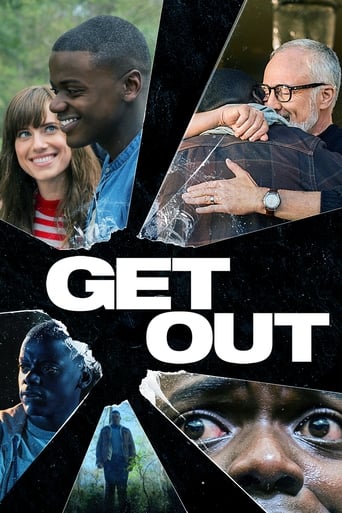
This summer didn't come out of nowhere. The modern original-horror boom traces a clear lineage through Get Out (the moment Blumhouse proved a $4.5 million concept-driven thriller could net $255 million and an Oscar), then Hereditary (A24's first true horror sensation, built on dread instead of jump scares), then Talk to Me (the Philippou brothers turning a YouTube background into a $90 million debut), and most recently Longlegs (Osgood Perkins and Neon weaponizing a mysterious marketing campaign into the highest-grossing indie horror of 2024).
Each of those was, at the time, called a fluke. Each time, studios failed to replicate the formula because the formula was never the point. The point was the triangulation: cheap, director-driven, festival-launched, marketed on vibe rather than star power. Blumhouse pioneered the economics, A24 and Neon perfected the cultural positioning, and a generation of young directors learned to make movies that could survive that exact pipeline.
horror movies is uniquely suited to this. It's the only genre left where "I haven't seen this before" is a selling point rather than a marketing problem. Audiences don't want a comfortable horror movie. They want to text their friend at 1 a.m. asking what they just watched. Originality isn't a risk in horror — it's the product.
What makes summer 2026 the inflection point is that this is the first time original horror has outperformed franchise horror on the same weekends. Not in counter-programming windows. Not in the dead zones of January or late August. Head-to-head, in June and July, on screens that were supposed to belong to Resident Evil and Insidious.
Start a Watchlist
Keep track of every movie that catches your eye. Your watchlist, your rules.
Start Your WatchlistWhat This Means for Fall 2026 and Beyond
JoBlo's summer 2026 preview contrasted franchise sequels like Resident Evil, Evil Dead Burn, Insidious 6, and Scary Movie with original genre projects including Backrooms, Obsession, Passenger, and Ice Cream Man. The back half of the year is already pivoting. Expect a wave of sub-$15 million originals chasing the Backrooms template through the back half of 2026 and into 2027.
The new development question in every executive's office: What's your one image? It's quietly replacing What's your franchise potential? — at least for now. The director class to track is short, young, and largely self-taught: Parsons at 20, Barker at 26, the Philippou brothers in their early 30s, and a bench of internet-native filmmakers who never needed a studio's permission to find an audience because they had already built one.
The risk to watch is the obvious one. Studios will absolutely try to franchise Backrooms by 2028. There will be a Backrooms 2, a Backrooms cinematic universe, an Obsession prequel about the killer's childhood. And the entire lesson of summer 2026 — that audiences crave the unfamiliar — will have to be relearned the hard way, probably by a different 20-year-old on YouTube with a different camcorder aesthetic and a different fluorescent hallway.
Where to Start If You're Catching Up
If you're a liminal-space movies believer who hit play on Backrooms and immediately wanted to live inside that feeling longer, the natural companions are Skinamarink (Kyle Edward Ball's pitch-black analog dread) and Talk to Me (the other recent example of YouTube creators translating short-form scares to features without losing the texture).
If Obsession's slow-burn paranoia hit harder, chase it with Longlegs for the same patient marketing-meets-mood approach, and Hereditary for the family-rot foundation that the whole modern wave is quietly built on.
If Send Help reminded you that horror is allowed to be a riot — gross, funny, mean, alive — go back to Evil Dead for the original blueprint, then to Malignant for James Wan operating in pure go-for-broke mode.
RandomFlix's roll-the-dice pick is a quick way to land on something from this original-horror wave without doomscrolling six platforms.
The studios spent summer 2026 learning a lesson they're going to forget by 2028. You don't have to wait that long — the movies that scared everyone this June are the same ones that'll be talked about for a decade. Catch up now, before the inevitable reboots show up to ruin them.