Why Primetime Feels Like a Culmination, Not a Debut
The first image in Primetime that really sticks is Robert Pattinson in the blazer. Not a costume so much as a signifier: broad-shouldered, slightly-too-clean, the exact silhouette a generation of cable viewers learned to associate with a folder full of chat logs and a kitchen island stocked with prop iced tea. Behind him, drywall. Behind the drywall, a camera crew. In front of him, a man whose life is about to end on tape. Nick Oppenheim's film locates itself, before a word of dialogue, inside a very specific tradition of thriller movies filmmaking about spectacle-as-justice—the queasy handoff between a moral crusade and a ratings meeting.
Oppenheim arrives here from documentary. His previous work on Ren Faire and Some Kind of Heaven gave him a taste for closed American ecosystems where performance is indistinguishable from identity, and Primetime pulls from an Esquire investigation into the 2006 death of Bill Conradt, the Texas prosecutor who shot himself as a To Catch a Predator crew massed outside his house. The film has already become its own media event: Chris Hansen has publicly feuded with A24, saying the studio refused to screen the film for him, and he's been buying preshow ads on every screen showing Primetime in a counter-marketing campaign that would be hilarious if it weren't such a perfect illustration of the film's thesis. Critics have responded in kind: the film currently holds a 92% Rotten Tomatoes score, with reviewers framing it as a study of populism, moral decadence, and justice-as-spectacle.
Here's the argument this piece wants to make: Primetime is not a fresh provocation. It's the endpoint of two converging bloodlines—the media-manipulation satire and the vigilante-voyeurism drama—and the best way to feel the full weight of what Oppenheim is doing is to watch backward through both. The eight films below aren't tonal matches. They're ancestors. Each supplies a piece of Primetime's uneasy moral architecture.
The Media-Manipulation Bloodline
This half of the canon treats the newsroom, the broadcast booth, or the camera itself as the true predator. The crusader and the ratings machine share a bloodstream. Primetime inherits the queasy energy of the Dateline NBC stings directly—the Hollywood Reporter frames the film as revisiting the ethically muddy Dateline ratings phenomenon—but it filters that energy through decades of cinema that already understood television as a moral solvent.
Network
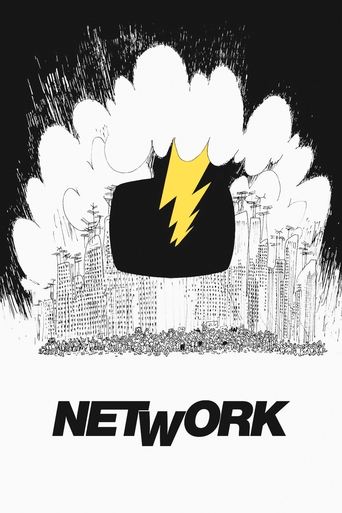
Sidney Lumet and Paddy Chayefsky's 1976 prophecy is the direct grandfather of Primetime's central queasiness. Howard Beale's "mad as hell" broadcast is the template Pattinson's character seems to be re-enacting fifty years later, except the audience isn't shocked anymore—it's complicit, phones out, tabs open. Both films argue that righteous anger, once televised, becomes indistinguishable from entertainment, and that networks will happily monetize the distinction until it collapses. Chayefsky's screenplay reads today less like satire than like a leaked memo.
Nightcrawler
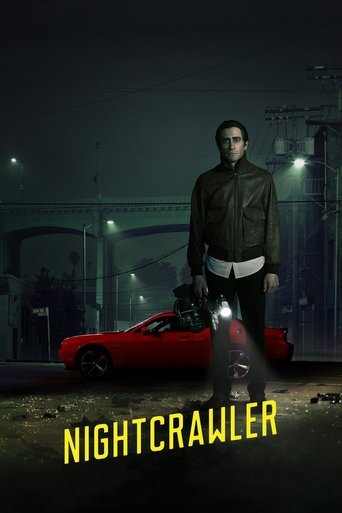
Dan Gilroy's 2014 nocturne is the closest tonal cousin on this list. Jake Gyllenhaal's Lou Bloom, a freelance stringer who discovers his own moral vacancy is a career-perfect economic engine, and Pattinson's crusader are the same species: both weaponize a camera, both mistake escalation for ambition, both are terrifying precisely because they're competent. Nightcrawler also shares Primetime's fluorescent-and-taillight visual grammar—cities that only exist after 10 p.m., lit by dashboards and news trucks. If Network diagnosed the disease, Nightcrawler showed you the freelancer chasing the ambulance.
Broadcast News
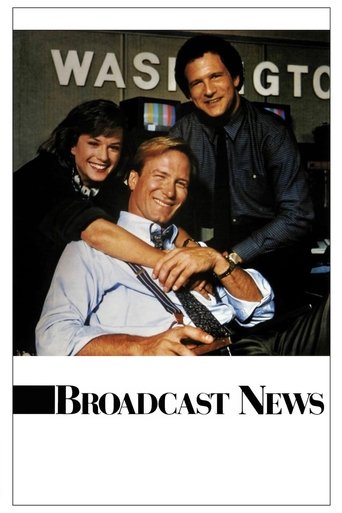
James L. Brooks' 1987 newsroom "romance" turns out, on rewatch, to be a stealth ethics thriller about the exact moment television news chose charisma over substance. William Hurt's telegenic anchor is a beautifully-tailored hollow man; Holly Hunter's producer is the last person in the building embarrassed by it. Where Primetime is the endpoint of that choice—Pattinson's on-air presence is pure performative empathy weaponized for ratings—Broadcast News is the origin story. The last time, arguably, the industry could still be embarrassed by itself.
To Die For
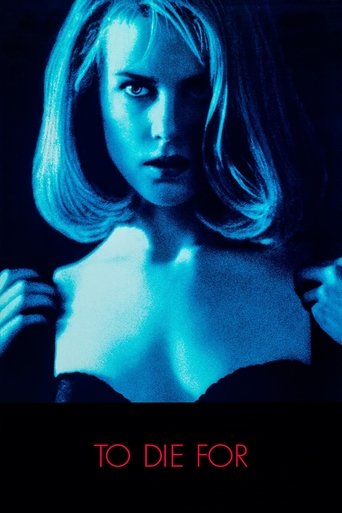
Gus Van Sant's 1995 Nicole Kidman vehicle understood, before almost anyone, that fame is not a byproduct of accomplishment but its replacement. Suzanne Stone would kill (does kill) to be on television, and the film's mockumentary-adjacent structure—talking heads, faux-interviews, characters rehearsing their own eventual scandal footage—shares real DNA with Primetime's interest in how ordinary people rehearse for cameras that may not be watching. Both films know the camera is the point; the crime is just the pretext.
The Vigilante-Voyeurism Bloodline
Now pivot to the second lineage: films where a lone crusader believes the camera sanctifies their violence, and the audience is asked, quietly, whether they agree. This is where Pattinson's own filmography converges with a broader tradition of crime movies storytelling about men who confuse observation with justice. IndieWire places Primetime within a lineage of "vigilante voyeurism" that To Catch a Predator pioneered, and connects Pattinson's role to his history of playing characters trapped in social ecosystems he doesn't quite control—Good Time, The Lighthouse, The Batman. CBR goes further, framing the character as an inversion of Pattinson's Batman: a manic, frenzied crusader instead of a stoic one.
Taxi Driver
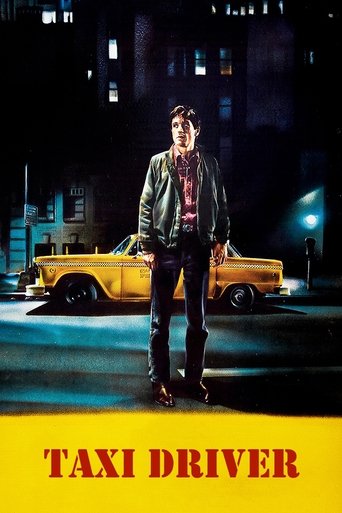
Scorsese's 1976 urtext of the self-appointed cleaner. Travis Bickle would have loved a livestream. He already narrates his own life as if someone were transcribing it, already curates his mission for an implied audience, already rehearses his violence in a mirror. Primetime's protagonist inherits Travis's mission-creep almost wholesale, but replaces the mohawk with an earpiece and a producer whispering cues. The difference between 1976 and now is that the audience Travis fantasized about actually exists, and it's paying a subscription fee.
The King of Comedy
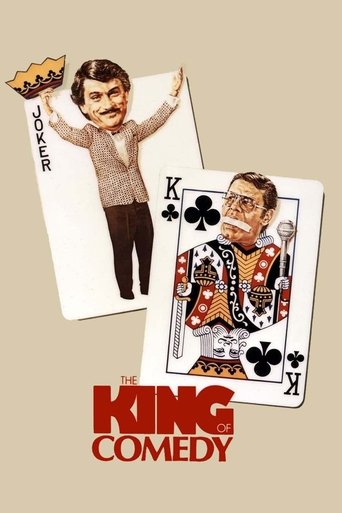
Scorsese and De Niro's other, stranger media study is arguably the more prescient one. Rupert Pupkin is the patron saint of anyone who believes television owes them a moral platform, a stage, a hearing. The film's ending—delusion rewarded with celebrity, kidnapping monetized into a book deal—is the exact rhetorical move Primetime pulls in its final act. Both films refuse the catharsis of punishment because both films understand that punishment, once televised, becomes just another segment.
Good Time
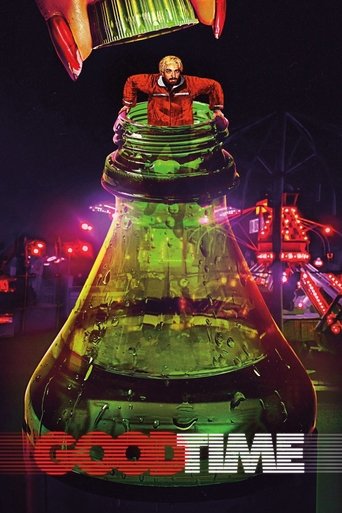
The Safdies' 2017 showcase is the single clearest predictor of what Pattinson does in Primetime. Connie Nikas is a jittery, high-frequency portrait of a man absolutely convinced he's the smartest person in a room he does not understand, and the film's neon-and-sweat visual palette—corner-store fluorescents, hospital greens, the specific yellow of a New York night—is clearly the template Oppenheim's cinematographer studied. Watch Good Time and then watch Primetime and you'll see the same actor building the same nervous system twice, refining the frequency.
Nocturnal Animals

Tom Ford's 2016 revenge-narrative-inside-a-novel-inside-a-marriage might feel like the outlier here, but its structural interest in fiction as an accountability weapon is deeply Primetime-adjacent. Both films are willing to let the audience feel dirty about enjoying the payoff. Both understand that vengeance, once shaped into narrative, becomes a story we tell to make ourselves protagonists—and that the person telling the story is always slightly implicated by the elegance of the telling.
Where to Go From Here
Zoom back out and these eight films form a coordinate grid. Satire on one axis, vigilantism on the other, television as the shared background radiation of both. Primetime sits at their intersection almost algebraically. It's worth noticing how much of the grid was drawn in the 1970s movies: Network, Taxi Driver, and The King of Comedy (a hair over the line into 1982, but spiritually of a piece) all diagnosed, half a century ago, everything Oppenheim's film is dramatizing now. The camera as deputy. The anchor as prophet. The audience as jury and, eventually, as the crime scene.
For anyone who wants to keep pulling this thread, RandomFlix's media-satire movies and vigilante movies tags collect deeper cuts in both traditions—everything from mid-'90s tabloid thrillers to more recent films about influencers who confuse their platforms for pulpits. There's a surprising amount of overlap between the two lists, which is itself the point.
What Primetime finally confirms, though, is a thesis about its lead actor. Pattinson's best roles—Connie in Good Time, Ephraim in The Lighthouse, Bruce in The Batman, and now Oppenheim's frenzied crusader—are always about men trapped inside systems they mistakenly believe they're operating. The blazer isn't armor. It's a costume the show made him wear. The kitchen isn't a set he controls. It's a set that controls him. And the camera crew hiding behind the drywall isn't there to record his justice. It's there because his justice is the product, and always was.
Watch the ancestors. Then watch him again.