The TIFF 2026 Premiere That Reopens a 50-Year Argument
On September 20, the 51st Toronto International Film Festival closes its Primetime program with the world premiere of Mike Flanagan's Carrie, an eight-episode Prime Video reimagining with Summer H. Howell in the title role. It's the highest-profile prestige-festival launch a Stephen King TV adaptation has received in years, and the timing is not accidental. Flanagan arrives in Toronto with a filmography — Doctor Sleep, The Haunting of Hill House, Midnight Mass — that has made him the closest thing modern horror movies has to a house adapter of King, a filmmaker studios trust to translate the author's particular blend of small-town intimacy and cosmic dread into images.
Which means the comparison is unavoidable. Brian De Palma's 1976 Carrie sits at 93% on Rotten Tomatoes and, until this year's The Long Walk nudged past it at 95%, held the title of highest-rated King adaptation ever made. It is not merely the standard against which every subsequent Carrie is measured; it is the standard against which every serious King adaptation, of any novel, has quietly been measured for nearly fifty years.
The question worth asking, before the TIFF reviews start landing, is what exactly De Palma invented that has proven so durable. Because the answer isn't "a bucket of pig's blood." The answer is a visual grammar — a specific way of putting a King protagonist inside horror imagery rather than in front of it — and it is the grammar Flanagan will either extend or ignore.
What De Palma Actually Invented at That Prom
Strip the prom sequence down to its mechanics and it's an argument about simultaneity. De Palma runs split-screen, split-field diopters, slow motion, and cross-cutting through the same three minutes so that Carrie's face and her tormentors' panic occupy the same visual field at the same moment. There is no cut from her to them; the frame refuses the courtesy of separation.
That refusal was deliberate. De Palma's own rationale, quoted in the ASC's reconstruction of Mario Tosi's cinematography, was that the split-screen keeps Carrie the author of the chaos rather than a witness to it — the images enforce that we are watching her powers, filtered through her psychic point of view, rather than a disaster movie she happens to be standing inside of.
The craft team behind this was extraordinary. Tosi lit the gym in candy-colored gels that curdle into hellfire; editor Paul Hirsch cut the parallel timelines so premonition, humiliation, and revenge run on separate visual tracks that finally collide; art director Jack Fisk built a space designed to be desecrated. The BFI, in its survey of De Palma's masterful set-pieces, singles out the sequence as emblematic of his craft precisely because it fuses operatic melodrama with horror grammar at a scale 1970s movies American cinema had not previously attempted.
The prom, in other words, is not a moment. It's a template. It proposes that the correct way to film King is to keep the protagonist's inner life inside the horror imagery, not adjacent to it.
The King Adaptations That Honor the Lineage
Every King adaptation of consequence over the past fifty years has been in some form of negotiation with that template. The films that endure tend to be the ones that grasp its underlying principle — subjectivity is the special effect — even when their surface style looks nothing like De Palma's.
The Shining
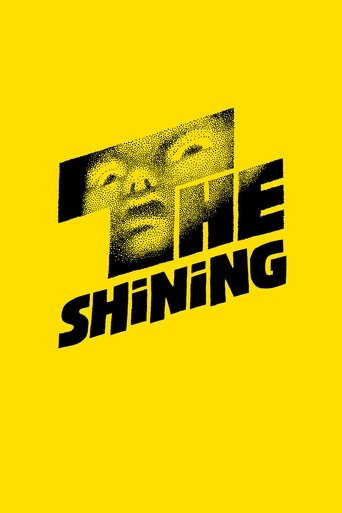
On paper, Kubrick's symmetrical Steadicam corridors are the opposite of De Palma's fractured frames. In practice, both directors refuse to let horror happen off-camera from their protagonist's consciousness. Danny's REDRUM sequence is pure De Palma logic in Kubrick's dialect: premonition and present-tense violence layered into the same visual field, the mirror doing the work of a split diopter. The Overlook's ballroom sequences, too, echo the prom's fusion of glamour and inevitable catastrophe — a room dressed for celebration that we already know is going to be a slaughterhouse.
Carrie (1976)
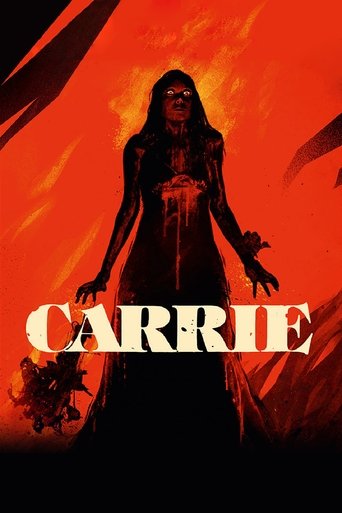
The original text. Sissy Spacek's face held in slow-motion as blood cascades, split against the crowd's laughter, remains the most-copied 90 seconds in King cinema. In his Hollywood Authentic essay, Edgar Wright names De Palma's Carrie his favorite King adaptation precisely because the film treats teenage humiliation as Greek tragedy rather than genre exercise — the pig's blood is the mask of a chorus, not a splatter gag. Everything that follows on this list is, in some measurable way, reacting to that scene.
It (2017)
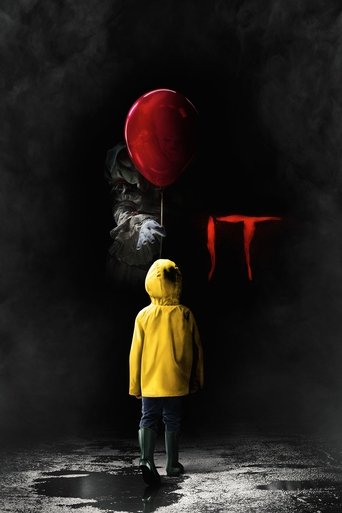
Andy Muschietti's Neibolt house sequences deploy cross-cutting and slow motion in a recognizably De Palma tradition — most obviously the projector sequence, where Pennywise emerges from a shifting frame that behaves less like a screen and more like a rupture in perception. What connects the film to 1976 is its willingness to hold on children's faces during supernatural assault. That insistence on subjectivity — that the horror is not the monster but the child's experience of the monster — is the prom's inheritance, translated to Derry.
Doctor Sleep
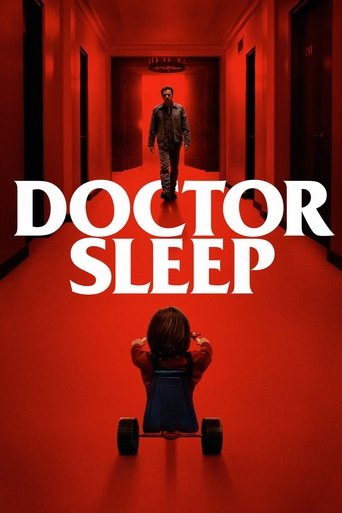
This is Flanagan's own dry run for what he's about to unveil in Toronto, and it is the strongest evidence that his Carrie will engage with 1976 rather than pretend it doesn't exist. The True Knot's attack on Bradley Trevor is staged as cross-cut telepathic witnessing: Rose the Hat's group feeds on the boy while, hundreds of miles away, Abra experiences it — and Flanagan makes the two spaces bleed into one another with a formal patience that is unmistakably De Palma's. Then the film literally returns to Kubrick's Overlook while honoring King's page, proving Flanagan already knows how to negotiate a double inheritance: the novel on one side, a canonical adaptation on the other. Nobody working in mainstream horror has more experience carrying that weight.
The Long Walk
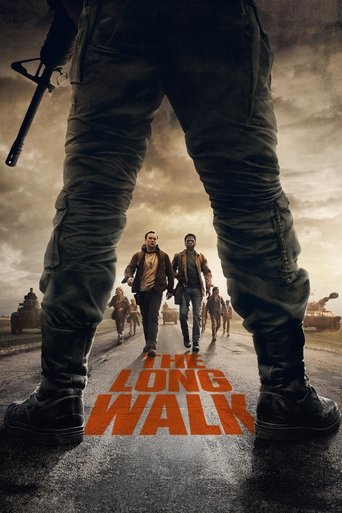
The recent adaptation that finally edged past De Palma on Rotten Tomatoes earns its 95% by doing something De Palma pioneered: refusing to let the horror become an action scene. Every death stays anchored to the protagonists' faces; the violence is not spectacle but consequence. It's a useful contemporary benchmark for whatever Flanagan is about to unveil in Toronto, and a reminder that the way to unseat 1976 is not to out-scale it but to out-face it.
The King Adaptations That Broke the Chain
The counter-examples are instructive. Kimberly Peirce's 2013 Carrie literalized the telekinesis with CGI and, in doing so, lost the split-screen's emotional simultaneity. The prom set-piece became a superhero climax — Chloë Grace Moretz visibly manipulating objects with outstretched hands, the camera pulling back to admire the scope — where De Palma had insisted the camera stay in Carrie's face and let the chaos happen around the still center of her expression. The remake honored King's text and ignored De Palma's grammar, and the result is a cautionary tale.
The broader pattern is familiar to anyone who follows stephen-king-adaptation movies projects: mid-budget films that treat the source as plot rather than tragedy tend to underperform critically, no matter how faithful their beats. King's novels are almost never really about their premises; they are about the interior lives of people whose interior lives are being overrun. Cameras that don't know this produce competent pilots for shows nobody watches.
This is why the series format is a genuine variable for Flanagan. Eight hours grants him room to build the operatic patience the 2013 film lacked — space to give Sue Snell, Chris Hargensen, and Margaret White the full arcs King's novel sketches but the 1976 film compresses. It also gives him more places to lose the throughline. Length is not the same thing as depth.
Can't Decide What to Watch?
Let RandomFlix pick a movie for you. One click, one great movie.
Roll the DiceWhat to Watch For When Flanagan's Carrie Premieres
Once the Toronto reviews start dropping, a few specific tells will indicate whether Flanagan is extending De Palma's inheritance or working around it.
Does the prom episode use simultaneity? Watch for split diopters, overlapping timelines, cross-cut consciousness — any technique that puts Carrie's face and her tormentors' panic into the same visual moment. If Flanagan cuts linearly through the sequence, moving cleanly from cause to effect, he's made a different film than the one 1976 made possible. Given the True Knot sequence in Doctor Sleep, it would be a genuine surprise if he did.
Does the camera trust Summer H. Howell's face? Sissy Spacek's performance is built into the grammar of De Palma's film; the split-screen only works because her expression is worth splitting the frame around. Howell's performance will live or die on whether Flanagan grants her the same close-up patience, particularly in the shower scene that opens the story and the confrontation with Margaret that closes it.
Does the series earn its length? The eight-hour runtime is only an asset if it deepens Sue Snell's guilt, Chris Hargensen's cruelty, and Margaret White's theology into something more than motive. King's novel gestures at all three; the 1976 film, brilliantly, chose Carrie's interiority over theirs. A series has the room to have both — if it wants to.
The Inheritance, Fifty Years On
De Palma didn't just adapt one King novel. He wrote the visual constitution for how to film King's particular brand of intimate apocalypse — the recognition that the horror is not the telekinesis or the clown or the hotel, but the consciousness experiencing them. Every director who has since tried to put King on screen has been, knowingly or not, working with or against that constitution.
Whatever Toronto audiences see on September 20, the review headlines will implicitly measure it against 1976, and that is the highest compliment American horror movies pays its own history. The best King adaptations don't imitate the split-screen. They understand why it existed. Watch Flanagan's Carrie for the answer to that question, and you'll know within the first hour whether the fifty-year argument has a new chapter or a familiar echo.