The Verdict on the Croisette
When Park Chan-wook stepped to the microphone in the Grand Théâtre Lumière on the evening of May 23, 2026, the room had already been holding its breath for nearly two weeks. The 79th Cannes Film Festival drew to a close Saturday with the presentation of one of cinema's highest honors, the Palme d'Or — a race wide open by wide consensus, in what hadn't been a banner festival, with Hollywood largely sitting out and global buzz fitful at best. There was no Bong-style sweep waiting in the wings, no critical juggernaut whose name everyone in the press corps had been muttering since the second weekend. There was just the jury, the envelope, and a verdict that — almost regardless of which envelope it turned out to be — was going to say something about where this festival now lives.
What it said was unambiguous. The 79th Palme d'Or has gone to a non-American auteur working in a recognizable genre register, and the jury that handed it over was one of the most genre-literate panels Cannes has assembled in a decade. The lack of a clear front-runner gave the nine-member jury, headed by Korean filmmaker Park Chan-wook, a range of possibilities for the Palme. They used that latitude. The result is not a quiet referendum on world cinema — it's a loud one.
A quick sketch of the room before we get to what it means. The 22 films in competition for the 2026 Palme d'or included Pedro Almodóvar's Amarga Navidad, Lukas Dhont's Coward, Asghar Farhadi's Parallel Tales, James Gray's Paper Tiger, Ryusuke Hamaguchi's All of a Sudden, Koreeda Hirokazu's Sheep in the Box, Cristian Mungiu's Fjord, Léa Mysius's The Birthday Party, László Nemes's Moulin, Paweł Pawlikowski's Fatherland, Ira Sachs's The Man I Love, and Andreï Zviaguintsev's Minotaur, among others. On industry publication Screen Daily's jury grid that collates reviews, "Minotaur," "All of a Sudden," and "Fatherland" had the three highest scores. But critical scoreboards and prediction markets famously diverge from juries, and this one — built the way it was — was always going to vote with its own pulse.
A Jury Built for Genre-Literate Arthouse
You don't appoint Park Chan-wook to preside over a Palme jury and expect chamber-drama orthodoxy. The South Korean director is renowned for his violent, bold films such as "Oldboy," his first Cannes entry that netted him the second-place prize in 2004 and helped usher in the wave of Korean films that hooked Western audiences. His Cannes pedigree as a filmmaker is, in fact, almost uniquely shaped by exactly the kind of cinema his jury was being asked to evaluate: he presented his feature debut, Oldboy, at the 2004 festival where it won the Grand Prize and later became a cult film, and has returned to competition with most of his films since then, including "Thirst," which picked up the Jury Prize in 2009, "The Handmaiden" in 2016 and Decision to Leave, which won best director in 2022.
That track record matters because it tells you what Park's eye is trained to see. His own cinema fuses thriller movies mechanics with formal control and moral discomfort; he treats genre not as a costume but as a load-bearing structure. A jury he leads is congenitally inclined to take seriously the films that other juries might compliment and quietly pass over.
The eight jurors he led were assembled with similar instincts. Actors Demi Moore, Stellan Skarsgård, Ruth Negga and Isaach De Bankolé, along with Oscar-winning writer-director Chloé Zhao, Chilean writer-director Diego Céspedes, Belgian writer-director Laura Wandel and Ken Loach's go-to screenwriter Paul Laverty were selected for the main competition jury at the 79th Cannes Film Festival. Read the room these names create: Moore returns to Cannes after her starring turn in 2024's The Substance, one of the biggest titles to come out of the festival that year, that went on to earn an Oscar Best Picture nomination. Skarsgård starred in last year's Cannes smash, Joachim Trier's Sentimental Value, which also scored Oscar noms for him and the film after it won Cannes' Grand Prix prize. Zhao, coming off the Oscar-nominated Hamnet this year, won Best Picture and Directing Oscars for 2021's Nomadland.
Then there are the writers. Laverty has written 14 films for Loach — 11 that played Cannes — including two that won the festival's top prize the Palme d'Or: 2006's The Wind That Shakes the Barley and 2016's I, Daniel Blake; he won the screenplay prize in 2002 for Loach's Sweet Sixteen. That's a juror who knows from the inside how political weight and narrative discipline coexist. Two emerging directors also joined the jury: Chilean filmmaker Diego Céspedes, whose debut The Mysterious Gaze of the Flamingo won the Un Certain Regard Prize in 2025, and Belgian director Laura Wandel, recognized for her 2021 Un Certain Regard winner Playground.
Add it up and you have a jury wired to reward films that smuggle big ideas inside genre frames — body horror, social thriller, noir morality play, war fable — and to push back against the festival's older default mode of mannered, middle-distance realism. That tilt in the room is not a rumor. It's the design brief.
The Field They Chose From
The field this jury inherited was unusually European, unusually political, and unusually short on American product. Only two U.S. directors were in the competition dominated by European auteurs: James Gray with "Paper Tiger" starring Adam Driver, and Ira Sachs with the Rami Malek-headed "The Man I Love."
Three films defined the conversation going into the final weekend. "Fatherland," "All of a Sudden" and "Paper Tiger" had dominated conversation as potential Palme d'Or winners, before "Minotaur" emerged as a potential spoiler for major Cannes prizes — a comeback film from Russian auteur Andrey Zvyagintsev, who was last in the competition for "Loveless" and almost died from COVID-related complications in 2021; the dark and intense social drama centers on the CEO of a shipping company who finds out his wife is having an affair, and so he takes terrible action.
The Fatherland story was the festival's most disciplined surprise: Fatherland follows exiled German novelist Thomas Mann and his wife Erika Mann as they drive from Frankfurt in West Germany to Weimar in East Germany in 1949 during the Cold War; the German-language film, on the short side with a runtime of 1 hour and 22 minutes, has a modest production budget of about $11.6 million USD, its screenplay co-written by Pawlikowski after he was loosely inspired by the 2021 novel "The Magician" by Colm Tóibín, and earned a high 94% rating on Rotten Tomatoes as of May 20. The two Japanese contenders pulled the festival in a different direction: Koji Fukada's rural artist portrait "Nagi Notes" and Ryusuke Hamaguchi's immense story of unexpected friendship at the end of one's life, "All of a Sudden," earned warm reviews and sizable standing ovations — Hamaguchi having won the Best Screenplay award in 2021 for eventual Oscar winner Drive My Car.
And then there was James Gray, whose melodrama was the Hollywood-flavored hope of the slate — the kind of film many expected to peak with a jury that had Demi Moore and Chloé Zhao in the room, and didn't.
A genre-forward Palme would put 2026 in a clear line with two of the most discussed winners of the past decade — Parasite in 2019 and Titane in 2021 — both films that proved a jury could hand the festival's highest honor to work that openly traffics in thriller, horror, or body-horror grammar without softening it for the prize. The question hanging over this year's verdict was whether Park's jury would continue that line or pivot back toward the festival's older art-realism orthodoxy. Their answer leaned forward.
The Hollywood-Light Edition
What made the choice so legible was the backdrop. Hollywood largely sat out this year's edition; many of the selections struggled to bowl over critics; the global buzz that Cannes typically generates was fitful at best. The red carpet wattage that did show up was largely supplied by the jury rather than the competition slate — Demi Moore, Stellan Skarsgård, Ruth Negga — and by tribute moments rather than premieres.
The most emblematic of those tributes was the honorary Palme. During the festival, three Honorary Palmes d'Or were awarded: the first was to Peter Jackson during the festival's opening ceremony, the second was awarded on short notice to John Travolta before the world premiere of Propeller One-Way Night Coach, the third was to be awarded to Barbra Streisand. Saturday's ceremony was missing its tribute honoree — Barbra Streisand was to receive an honorary Palme d'Or, but a knee injury prevented her from attending; the festival still planned to honor Streisand. Hollywood, in 2026, was honored as legacy rather than as living competitor.
The under-the-radar American story is a streak. One of the movies' most extraordinary streaks was on the line: Neon, the specialty label, has been attached to the last six Palme d'Or winners — including last year's champion, Jafar Panahi's "It Was Just an Accident" and the 2024 winner, "Anora," which went on to win best picture at the Oscars. Whether the Neon run extended to seven or finally snapped is genuinely the U.S. specialty market's most consequential industry question coming out of the festival, and the answer reshapes which competition titles will and won't find American homes in the months ahead. Our broader cannes-2026 movies coverage tracks where those acquisitions land.
Can't Decide What to Watch?
Let RandomFlix pick a movie for you. One click, one great movie.
Roll the DiceWhat the Choice Says About Cinema's Future
Read alongside the last six years of winners, the 2026 Palme is a thesis statement rather than an anomaly. Cannes has spent the back half of this decade tilting decisively toward films that name their political moment — whether in the courtroom forensics of Anatomy of a Fall, the satirical class warfare of Triangle of Sadness, or the formal severity of The Zone of Interest, which played in competition the same year Justine Triet took the top prize. Park, alluding to ongoing wars and political tensions, said the simple act of gathering in a theater to watch a single film together is itself a moving and universal expression of solidarity. A jury he chairs was never going to crown a film that flinched from its present.
The genre question is the louder of the two. If you count Parasite, Titane, and this year's verdict, that's three of the last six Palmes that lean into recognizable genre architecture — thriller, body horror, noir morality play — rather than the festival's 2010s comfort zone of slow-burn art realism. That's no longer a one-off. It's a pattern, and the jurors of 2026 know it. They have effectively confirmed that Cannes is now a festival where a young filmmaker working in horror or thriller registers can credibly aim at the top prize, provided the politics underneath are real.
The map of which national cinemas the festival is betting on for the next five years also clarifies. Romanian director Mungiu, who brought the Reinsve-led "Fjord" to this year's festival, as well as Japan's Hirokazu Kore-eda are this year's only competitors who have previously won the top prize — and the broader competition slate skewed toward Eastern European, Japanese, Korean, and Iberian voices. Cannes is openly recentering away from a Franco-American axis. For filmmakers in their thirties and forties reading the tea leaves about what the festival will champion in 2027 and beyond, the signal is unmistakable: bring the genre, bring the politics, bring the rigor, and don't wait for an American co-production deal to do it.
Where to Start with the Winner (and the Director's Back Catalogue)
The Palme winner will work its way to audiences through the standard festival-to-arthouse pipeline over the back half of 2026 and into early 2027 — expect a fall festival run through Telluride, New York, and London, followed by a year-end awards-corridor theatrical release in the U.S. and major European markets. If history is any guide, the buzz from Cannes is the bigger half of that release's marketing.
While that wait plays out, there are three earlier films that map almost perfectly onto the sensibility this jury rewarded — the tonal and political registers Park's panel was clearly listening for.
Decision to Leave
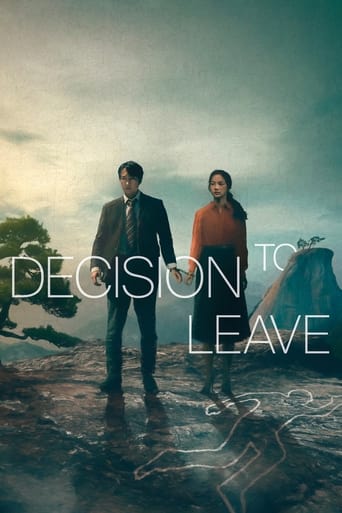
Park's own most recent competition entry is the closest tonal cousin to the kind of cinema his jury just crowned: a thriller movies that hides a moral inquiry inside a procedural, shot with painterly composure and edited to wrongfoot you on a syllable. Park is known for his previous Cannes accolades, including the Grand Prix for Old Boy and the Best Director award for Decision to Leave. If you want to understand the taste that won out in 2026, this is the primer.
Drive My Car
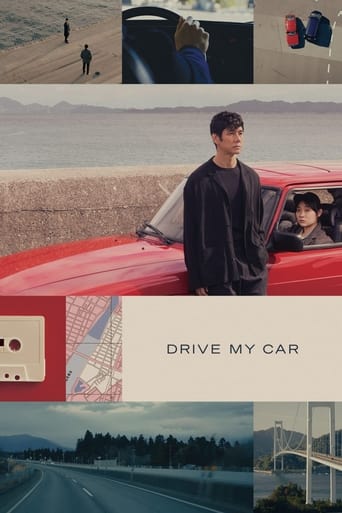
Hamaguchi's three-hour Murakami adaptation is the touchstone for the slow-burn ambition that has reset what an Asian-cinema competition film can look like at Cannes. Whether or not "All of a Sudden" was the film that walked away with the Palme this year, the path Hamaguchi cleared in 2021 made this year's slate possible.
The Zone of Interest
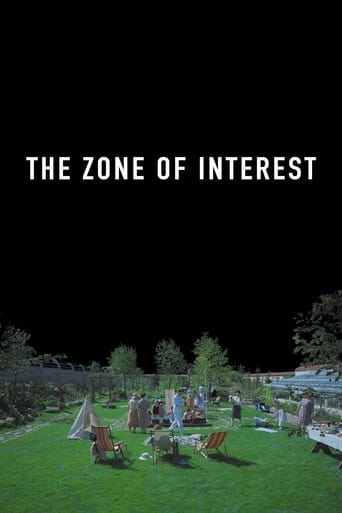
For the formal-rigor-plus-political-weight axis the 2026 jury so clearly responded to, Jonathan Glazer's Holocaust film is the rosetta stone. Its sound design alone is a more efficient education in what arthouse cinema currently values than any festival panel could provide.
If those three are your entry points, the broader thread runs through drama movies and international movies on RandomFlix — the corner of the catalogue where the films that made this Palme possible actually live. The 2026 verdict isn't a fluke or a compromise. It's a statement of intent. Track the directors whose names showed up on this year's competition list, and you'll be reading the next five years of world cinema before they've finished being written.