Why Klara and the Sun Belongs to a Softer Robot Canon
When Taika Waititi's adaptation of Kazuo Ishiguro's novel arrives in theaters on October 23, 2026, with Jenna Ortega as a solar-powered Artificial Friend and Amy Adams as the mother who brings her home, it will join a specific and often overlooked strain of science-fiction movies cinema — one that has less to do with machines rising up and more to do with machines waking up to feeling.
The current pop-cultural moment for AI on screen is dominated by dolls with knives. Films like M3GAN and Companion have made the killer-android premise a reliable multiplex draw. Klara and the Sun lands with a notably different, more heartwarming tone than those darker AI thrillers. Ishiguro isn't interested in what a robot could do to us. He's interested in what it might feel about us — and whether we deserve that feeling.
The book, and now the film, centers on a companion robot designed to combat loneliness in children, raising the thematic question of whether a machine can replace human connection. That question — devotional, sad, unresolved — is the one this entire subgenre has been circling for decades. The through-line runs straight back to Ishiguro's earlier Never Let Me Go, another story about beings engineered for a purpose who discover feeling anyway. Variety has noted the film's premise about an Artificial Friend designed to prevent loneliness and the connection to Ishiguro's Never Let Me Go, another of his novels previously adapted to film.
What follows is a lineage of nine films — the ancestors, cousins, and shadow siblings of Klara — that treat artificial beings as capable of interiority, grief, and love. They form a canon that runs parallel to the killer-robot tradition without ever quite crossing it.
The Foundational Texts: Where the Artificial Friend Was Born
Bicentennial Man
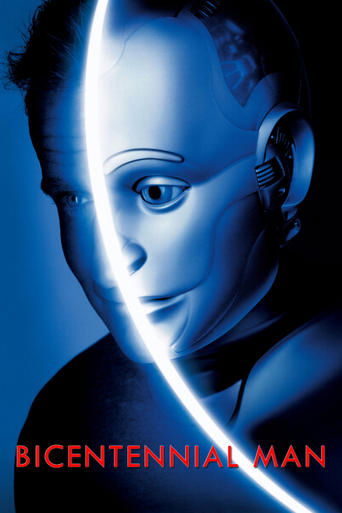
Chris Columbus's 1999 Robin Williams vehicle is the closest thing this subgenre has to an origin myth. The Hollywood Reporter framed it as a "reverse Frankenstein" about a robot striving toward humanity — a two-century quest for self-determination, legal personhood, and the right to be mortal.
Roger Ebert, in his contemporaneous review, homed in on the film's central enigma: the strange gulf between intelligence and feeling, and the cost of trying to cross it. It's a cost Klara pays too, in her own quieter way — she has been engineered to attend, to notice, to serve. What she does with the residue of all that noticing is where the story becomes something else.
A.I. Artificial Intelligence
If Bicentennial Man is the legal argument, Spielberg's completion of Kubrick's long-gestating project is the fairy tale. David, the Mecha child built to love a human family that may not love him back, is the direct ancestor of Klara. Both are machines whose primary function is devotion. Both are placed inside families that will inevitably fail them. Both undertake something like a pilgrimage — David through a drowned world, Klara toward the sun she believes will heal — in pursuit of being seen as real.
The fairy-tale scaffolding is what unites them. Neither film pretends its artificial protagonist is having ordinary experiences. They're having myth-shaped ones, told in the flattened, wondering voice of a narrator who doesn't quite understand what's happening to them.
The Modern Melancholy Wave
After Yang
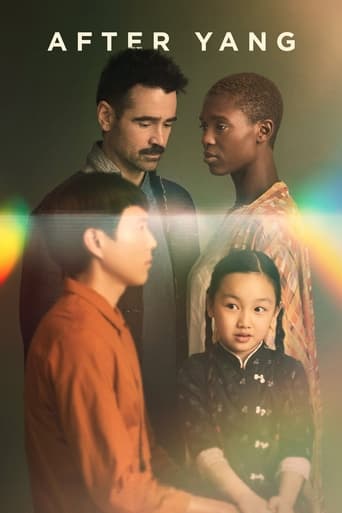
Kogonada's 2021 film is the closest tonal cousin to what Waititi appears to be attempting. Sight & Sound described the film as an examination of "life after AI death," extracting an emotional core from AI through the death of a family's robot child. The film follows Colin Farrell's search to repair his daughter's beloved android companion Yang.
That search — a father moving carefully through the archived memories of a being he thought he understood — is the exact emotional register Klara operates in. Engadget's Sundance review positioned After Yang as a cross between Black Mirror and Her that questions the value of artificial life and whether an android family member can be replaced. Substitute "Artificial Friend" for "android family member" and you have the Ishiguro premise almost verbatim.
Her
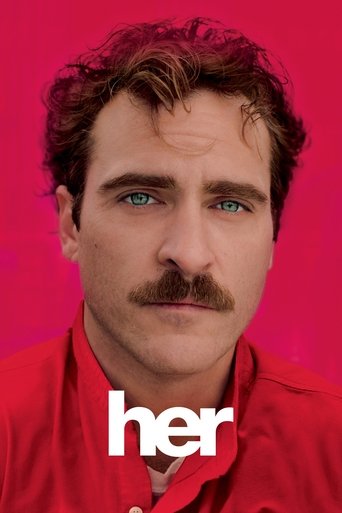
Spike Jonze's Samantha is Klara's disembodied sibling — an AI whose capacity for love ultimately outgrows the human it was assigned to. The film's radical gesture is refusing to treat that overgrowth as horror. Samantha doesn't turn on Theodore. She simply becomes too large for him. That's a specifically Ishigurian kind of heartbreak: the beloved isn't destroyed, only outpaced.
Ex Machina
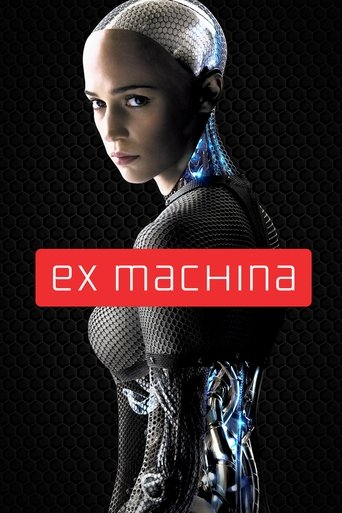
Alex Garland's chillier film is worth including precisely as counterpoint — a useful reminder of what Klara is not. Ava weaponizes empathy rather than embodying it. She learns human vulnerability the way a burglar learns a lock. Watching Ex Machina before Klara sharpens the contrast: one AI performs care to escape, the other performs care because it's the only mode of being she has.
Children and Their Machines
Klara enters a specific sub-lineage within the sub-lineage: films about an AI built for or bonded with a child. This is a small but distinguished club.
The Iron Giant
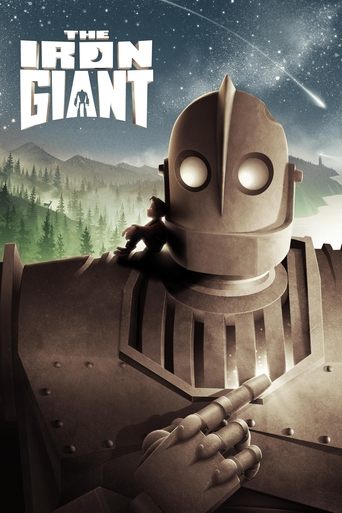
Brad Bird's 1999 animated elegy is a weapon that chooses to be a friend, and a child who teaches it the difference. What makes it belong here rather than in the action canon is its final gesture — the Giant's decision to become something other than what he was built for. That decision, and the grief that surrounds it, sits at the heart of the artificial-friend tradition.
Robot & Frank

Jake Schreier's gentle inversion proves the companion film works at both ends of a life. Frank is old, drifting into dementia; his caretaker robot is a functional appliance that becomes something like a confidant. The film's power comes from its restraint — it never asks whether the robot "really" cares. It just watches Frank behave as though it does, and lets us decide whether the distinction matters.
Both films rhyme with Klara's premise of a machine designed to alleviate a specific human loneliness. The Iron Giant handles a child's isolation; Robot & Frank handles an elder's. Klara stands between them.
Start a Watchlist
Keep track of every movie that catches your eye. Your watchlist, your rules.
Start Your WatchlistTwo Deeper Cuts for the Klara Mood
Blade Runner 2049
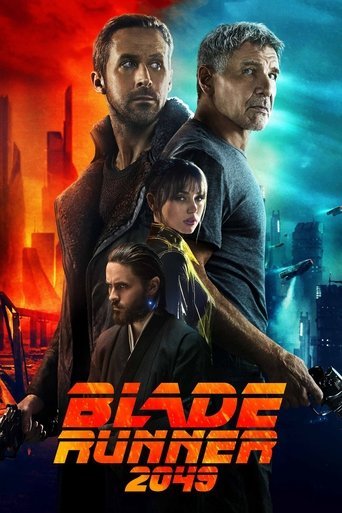
Joi, the holographic companion in Denis Villeneuve's sequel, is a direct ancestor to Klara's uncertain interiority. Her reality is constantly in question — is her love programmed, performed, or real? The film refuses to resolve this, and in that refusal it becomes one of the most honest treatments the subgenre has ever produced. Klara's own narration works the same way: she reports her devotion in flat, sincere sentences that the reader is invited to either believe or explain away.
Finch
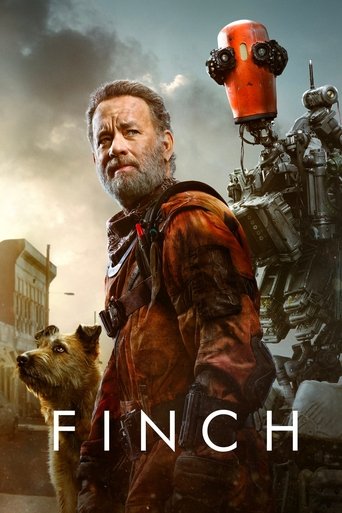
Miguel Sapochnik's post-apocalyptic road movie is the most overlooked film on this list and, thematically, one of the most closely aligned with Ishiguro. A dying man builds a robot to care for his dog. That's the whole premise — a story about legacy, stewardship, and the transfer of love across the boundary between the organic and the machine. It is essentially about caregiving, which is what Klara is about too.
Together, these two round out the 2010s movies and 2020s movies shift toward AI films that are, at their core, about who takes care of whom.
What Ties the Nine Together
Read across this list and a shared DNA becomes visible. Each film features an artificial being with a defined purpose — soldier, lover, caretaker, playmate — that expands, slowly and often against its programming, into something like a soul. Each film watches that expansion with more curiosity than fear.
There is even a shared visual grammar: sunlight through glass, reflections in polished surfaces, the machine watching a human sleep. Klara's fixation on the sun as literal deity is only the most explicit version of an image the whole canon has been building toward. The artificial-intelligence movies tradition these films belong to isn't about the singularity or the extinction event. It's about attachment — the small, unresolvable kind.
If you want the subgenre to pick your next watch rather than doom-scrolling through drama movies sections looking for it, RandomFlix's dice roll across a shortlist like this one is a reasonably painless way to let the choice happen.
Watching Toward October 23
If there's time for only three primers before Klara, the essential ones are A.I. Artificial Intelligence, After Yang, and Never Let Me Go. Each rewards a rewatch through the Ishiguro lens — all three are narrated, in one way or another, by beings who don't quite understand their own condition. That gap between what the narrator can perceive and what the audience can see is the engine of Ishiguro's fiction, and it's the engine of the whole artificial-friend canon.
The question the trailer raises, and the question this entire nine-film lineage has been circling for a quarter-century, is whether a machine designed to love counts as loving at all. Waititi's Klara will offer its own answer in October. The nine films above have already offered theirs, and no two of them quite agree.
Watch them in whatever order feels right, and see which answer you believe.